About Protea cordata Thunb.
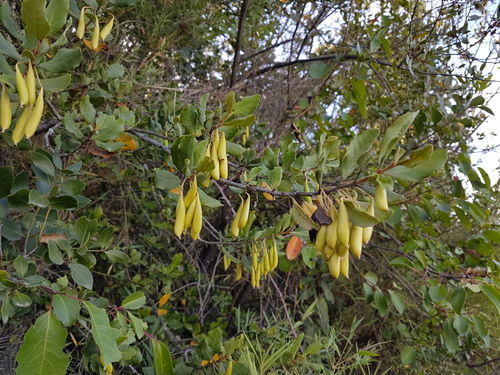
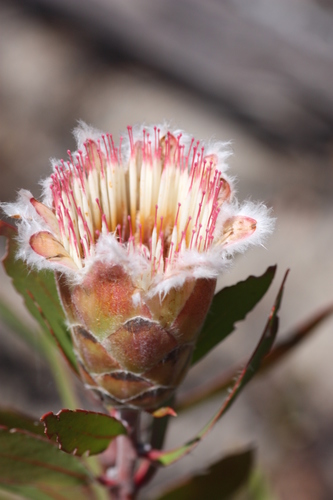
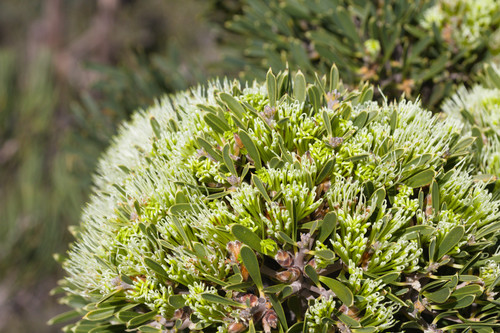
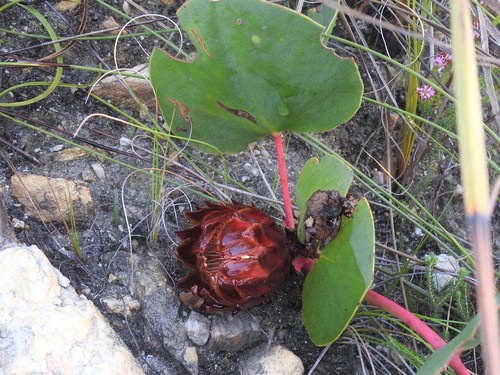
Protea cordata, commonly called heart-leaf sugarbush, or hartblaarsuikerbos in Afrikaans, is a plant species native to Southern Africa. It grows in or on woody soils. Its unbranched, smooth red trunk can reach 500 mm in length. Brown, lance-shaped, scaly leaves grow at the base of the stem. Further up the stem tip, some stalkless, heart-shaped leaves arrange in a zigzag pattern, while other leaves reduce in size gradually. This species is self-incompatible, and small mammals and insects have been found to contribute to its reproduction and seed distribution. Its inflorescence is shaped like a cup, formed by dry, brown papery bracts. The cup surrounds a cream-colored flower with a red tip, and an orange-brown flower sits at the base of this flower. A new trunk grows from the woody subsoil; the old trunk dies after one to two years and is eventually blown away. Each inverted fruit holds a single seed. The infructescence is covered by a thick layer of green, brown or orange-brown bracts, and the individual fruits are covered with a thin layer of white upturned hairs, and fruits can be yellow, green or yellowish-orange in color.