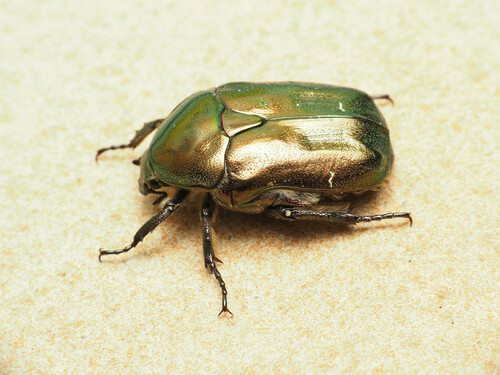
About Protaetia cuprea (Fabricius, 1775)
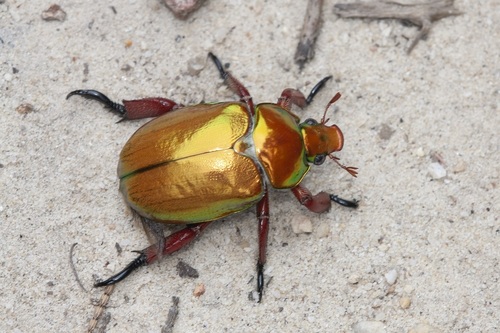
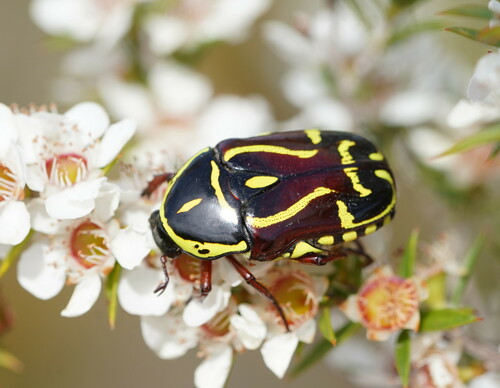
Morphology: The Protaetia cuprea species complex shows high morphological variability. Across the entire genus Protaetia, including P. cuprea, the consistent chromosome number is 2n = 20. Despite this overall genetic stability, researchers have observed small differences in X-chromosome morphology between some subspecies. The complex’s extensive morphological variability does not match phylogenetic insights gained from mitochondrial DNA studies. Traditional taxonomic morphological traits such as coloration, body structure, and reproductive organ shape display significant variation that does not align cleanly with genetic relationships. Two specific traits — the distal sculpture of the elytra and white "knee" markings — are clade-specific, but their taxonomic importance remains unclear. Geometric morphometry analyses have shown that variation in certain morphological traits across the complex is more gradual than discrete, which further complicates the mismatch between morphological and genetic data. High color variation within the species complex also does not reflect observed mitochondrial DNA (mtDNA) structures. This suggests that color polymorphism may be shaped by non-genetic factors, including environmental conditions and biotic interactions such as mimicry and aposematism. This indicates morphological diversity in the P. cuprea complex is regulated through multiple pathways, with genetic, environmental, and other potential biotic factors all contributing to the species’ phenotypic plasticity.
Geographic range: The beetle species P. cuprea has an extensive geographic distribution across multiple regions, demonstrating its strong adaptability and wide range of habitat preferences. It can be found throughout Europe and Asia. Its range stretches from the Canary Islands, Portugal, and Spain eastward to Vladivostok in the Russian Far East, and also includes Mongolia and North China. The species has confirmed populations in the Middle East, specifically in Turkey, the Levant, northern Egypt, and Iran. It is also documented in South Asia, in Pakistan and Nepal. The diversity of subspecies within P. cuprea reflects its evolutionary complexity and broad geographic spread. The subspecies Protaetia cuprea obscura is notably absent from Germany, but occurs across Central and Eastern Europe, including the Czech Republic, Slovakia, lowland Austria, Hungary, the area near Venezia in Italy, Bosnia and Herzegovina, Croatia, Romania, Bulgaria, and Greece. This subspecies is known to hybridize with P. cuprea metallica in Slovakia and Romania, demonstrating rich inter-subspecies interaction. The subspecies P. cuprea bourgini, along with the closely related P. cuprea brancoi, are distributed in Spain, separated by the natural Pyrenees Mountains barrier, which demonstrates how geographic features shape this species’ distribution. The subspecies P. cuprea metallica occurs in Northern Europe, with recorded populations in Norway, Sweden, northern England, and southern Scotland. In the southeast, across the area from Turkey to the Caucasus, multiple new subspecies including obscura, cuprina, ignicollis, caucasica, and hieroglyphica have been recorded, adding to the species’ full distribution profile.
Habitat: Protaetia cuprea has ecological adaptability as notable as its broad geographic spread. This species thrives in a wide range of environments, from dense forests to open, arid steppe regions, demonstrating broad ecological tolerance. This adaptability also covers a wide altitude range, with P. cuprea populations established from sea-level shorelines up to challenging conditions at elevations of 2000 meters. This wide altitude range includes diverse environmental conditions, highlighting the species’ ability to adapt and survive across varying climatic and geographic landscapes.
Life cycle: The typical life cycle of Protaetia cuprea lasts one year. However, under specific conditions, this beetle can develop more quickly, reaching adulthood within the same year that the parent generation laid its eggs. In the larval stage, P. cuprea is primarily sapro-xylophagous, with a particular preference for deciduous trees, and oaks (Quercus spp.) are a favored larval habitat. Despite this preference, larvae can also shift to fully saprophagous feeding; this is confirmed by reports of larvae developing in compost heaps, or living in association with ant colonies.
Food resources: Research shows that P. cuprea feeds primarily on decaying organic matter, including fruits, flowers, and plant debris. Studies of larval feeding habits have found that larvae mostly consume rotting wood and plant material. Adult beetles are known to feed on ripe fruits and sap exudates from damaged trees. Additionally, P. cuprea has been observed to have opportunistic feeding behavior, consuming a broad range of organic materials based on local availability in their habitat. This adaptability in food preference indicates a generalist feeding strategy, which may contribute to its ecological success across diverse habitats.
Agricultural use: A 2018 study by Babarabie et al. outlines the potential agricultural benefits of using P. cuprea larvae to compost organic materials, including kitchen waste and various types of leaves. The study compares the nutrient content and physical properties of compost produced by P. cuprea larvae to that of traditional vermicompost. Results show that compost made from kitchen waste processed by these larvae contained higher levels of essential nutrients including nitrogen, potassium, and phosphorus. Compost produced from lawn clippings processed by the larvae also had improved pH levels and uniformity, two properties important for agricultural use. These findings indicate P. cuprea larvae have the potential to improve compost quality and usability, which in turn can support more sustainable agricultural practices.