About Prosopis nigra (Griseb.) Hieron.
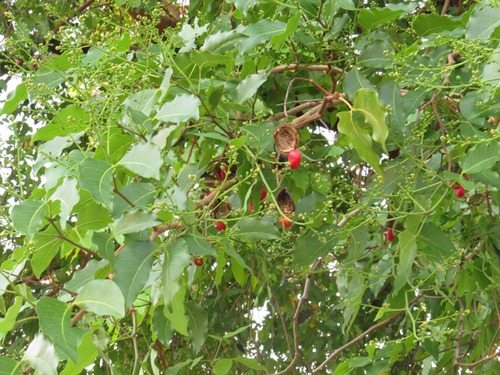
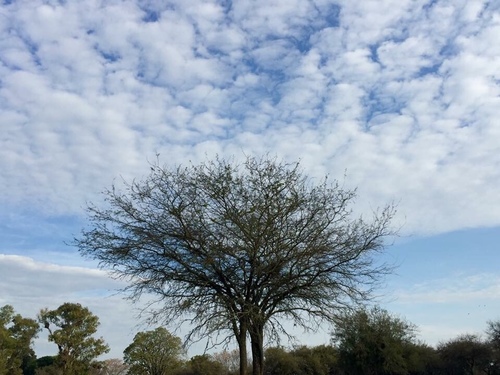
Neltuma nigra, formerly classified as Prosopis nigra, is a leguminous tree species native to South America. It grows in the Gran Chaco ecoregion, specifically in the transition zone between Wet Chaco and Southern Chaco, within Argentina and Paraguay. In Spanish, it is called algarrobo negro, which translates to "black carob tree". Spanish settlers gave this name, as they did for many other species in the former Prosopis genus, because the tree resembles the European carob tree. It also has several other common Spanish names: algarrobo dulce, algarrobo morado, and algarrobo amarillo, which translate to "sweet carob tree", "purple carob tree", and "yellow carob tree" respectively. This tree produces flowers in September and October, and bears fruit from November to March. It grows alongside the vinalillo tree (Prosopis vinalillo), and grows beneath the canopies of the palm species Copernicia alba. Like other species originally placed in the Prosopis genus, it can tolerate arid climates, and is also able to survive for long periods in flooded ground. Its heartwood is dark brown with streaks, very heavy, weather resistant, and considered a high-quality wood by local carpenters.