About Proserpinaca palustris L.
Proserpinaca palustris L. is a heterophyllous species, meaning its leaves develop different structures depending on environmental conditions. Humidity has the greatest impact on this leaf variability. There is no standard internode length or consistent leaf orientation for this species.
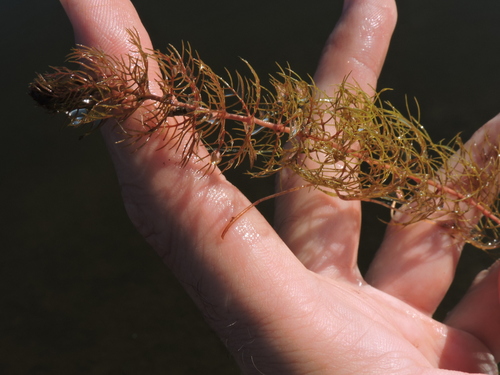
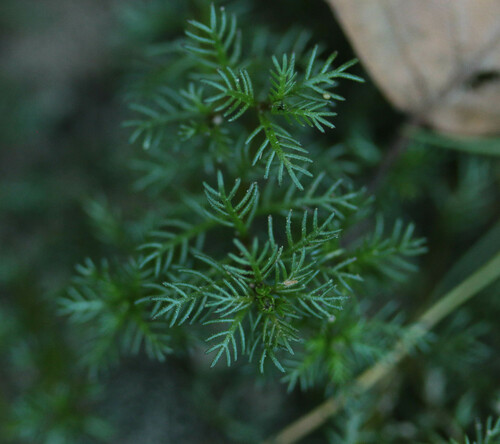
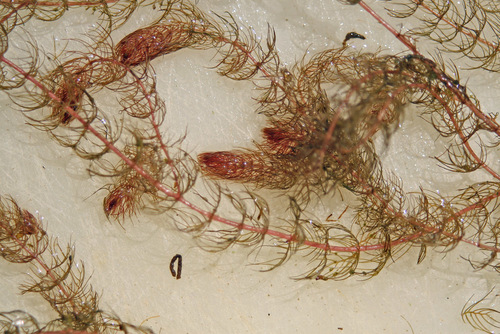
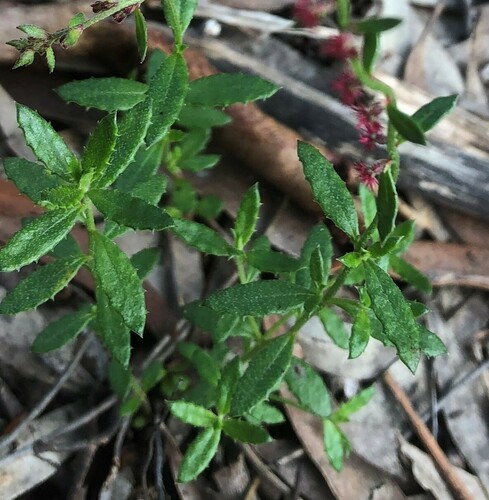
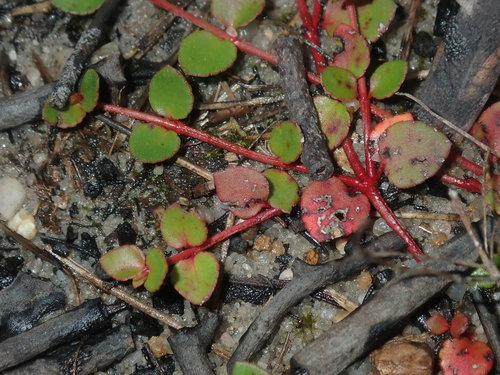
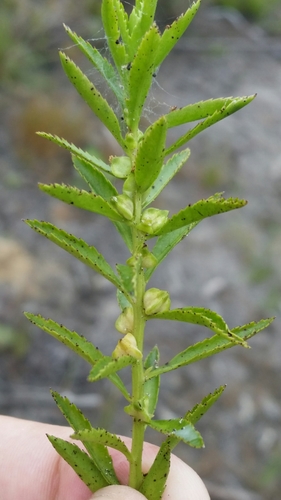
Submerged leaves are sessile, 2–6 cm long, deeply divided into linear, thread-like segments. These submerged leaves contain weak phloem and no xylem. Emergent (non-submerged) leaves are broad with serrated margins, and have a fully developed strong vascular system. Intense high light or elevated temperatures most strongly affect submerged shoots of long-day plants of this species, triggering the production of transitional leaf forms. The stem can range in color from green, brown, orange, to pink, and bears bright green to orange frond-like leaves. Leaves are arranged in an alternate pattern along the stem.
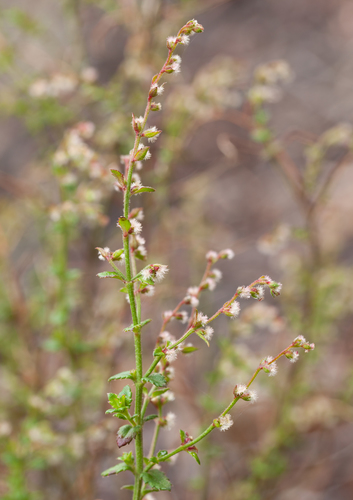
This species has radially symmetrical flowers with petals fused into a cup-like shape. Its fruits are dry, do not split or burst when ripe, and have concave sides with sharp or winged angles. Lower submerged leaf blades of this species measure 20 to 40 mm from tip to base, and are divided into 7 to 14 pairs of segments. Flowers are subtended by toothed bracts.
Proserpinaca palustris is often confused with the related species Proserpinaca pectinata. The two can be distinguished by bract and leaf traits: P. pectinata has flowers subtended by pinnately lobed or divided bracts, leaf blades 10 to 30 mm long, and lower leaf blades divided into 6 to 9 pairs of segments.
In the wild, Proserpinaca palustris grows in temperate regions of the Americas, in freshwater habitats including swamps, marshes, bogs, ponds, and shorelines. It does not grow in brackish or saltwater. It is native to the eastern half of North America, the Caribbean, Central America, and the southern coast of South America. It commonly occurs in disturbed areas such as roadsides and ditches, and has recently been recorded as a likely introduction in wetlands of the Southern Appalachian Mountains in North Carolina. It is most abundant in the coastal plain of eastern North America.
Global conservation assessments rank Proserpinaca palustris as a secure species: the Flora of the Southeastern US classifies it as globally secure, it is listed as a species of least concern on the IUCN Red List, and it is ranked secure by the Canadian Endangered Species Conservation Council. Despite this global ranking, populations in several U.S. states and Canadian provinces are considered Imperiled or Critically Imperiled.
Proserpinaca palustris is used commercially for aquarium decoration. In controlled aquarium environments, it grows much slower and stays smaller than it does in the wild, where it provides habitat enrichment and ornamental beautification for fish tanks.