About Prosena siberita (Fabricius, 1775)
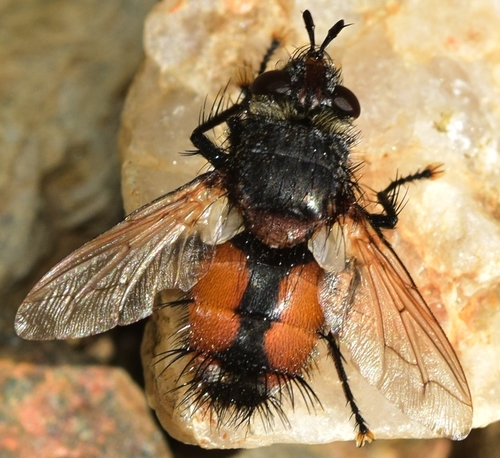
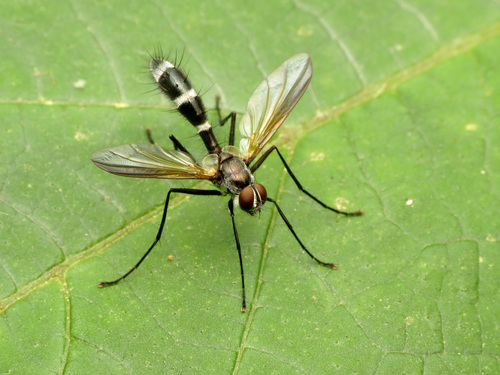
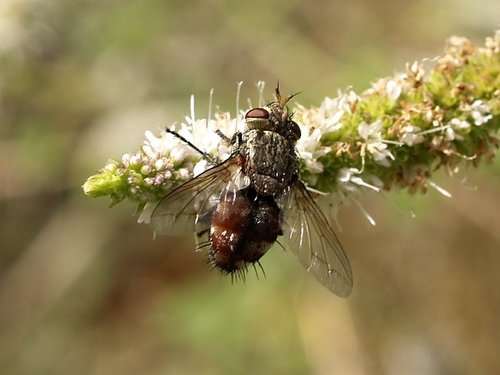
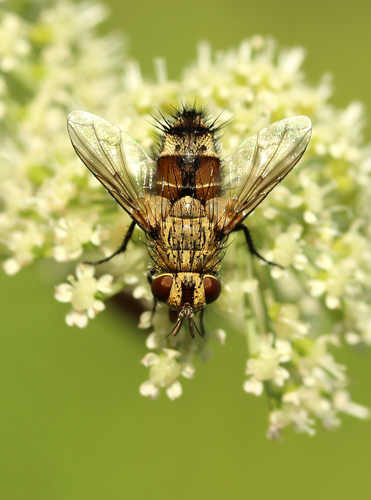
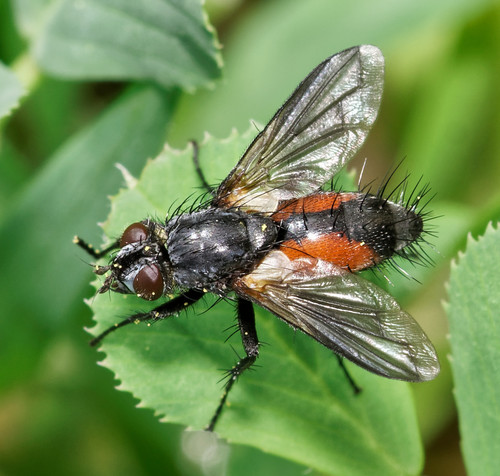
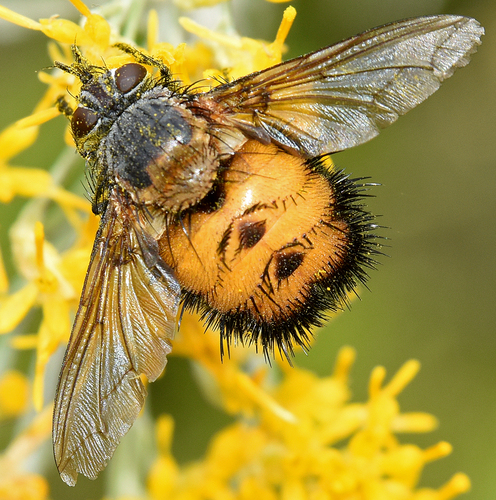
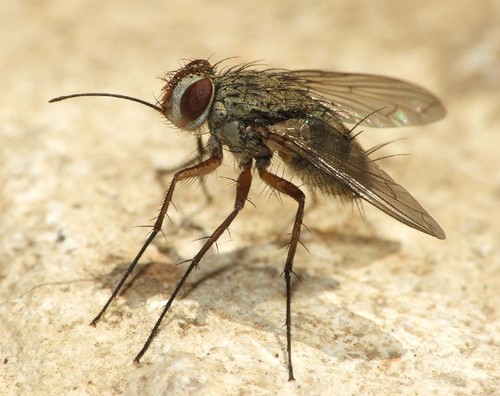
Prosena siberita is a species of fly that can reach a body length of 7.5–10.5 millimetres (0.30–0.41 in). Individuals of this species have a fuscous or testaceous body covered in grey dust. In males, the abdomen is largely testaceous, while in females the abdomen is fuscous and densely covered in grey dust. The thorax has yellowish hairs. This species has a very long, slender proboscis that is kept hinged under the body, and the proboscis is longer than the height of the head. Its palpi are highly reduced. The eyes are reddish-brown and bare, and the femora are reddish. The wings are hyaline, and are yellowish-brown at the base. This species is present across most of Europe, Central Asia, Japan, Mongolia, China, Russia, Transcaucasia, India, Indonesia, Malaysia, Myanmar, Nepal, the Philippines, the Ryukyu Islands, Sri Lanka, Taiwan, Australia, and New Caledonia. It has been introduced and established in the United States. The earliest introduction happened in 1925, when numerous specimens were released in New Jersey to establish a local population that would combat the spread of the Japanese beetle.