About Prosapia bicincta (Say, 1830)
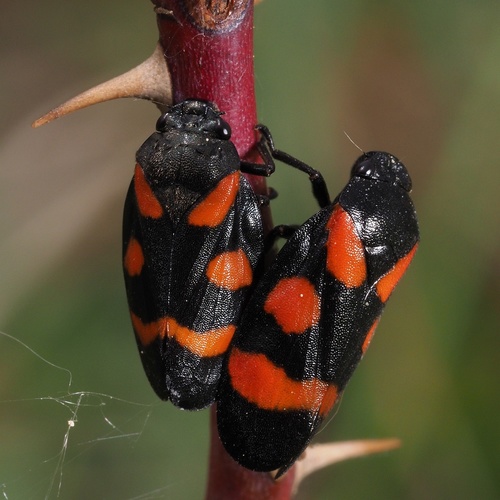
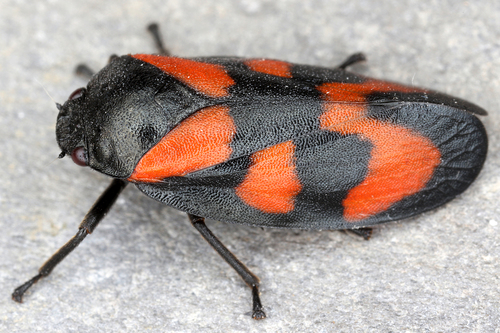
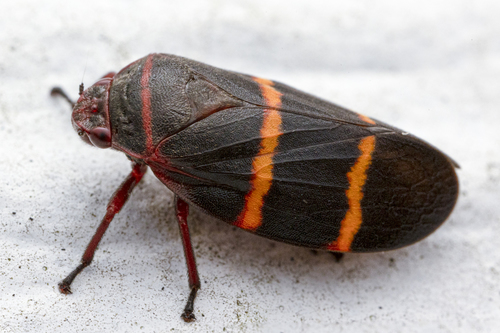
Prosapia bicincta, commonly known as the two-lined spittlebug, is a species of insect in the family Ischnorhinidae, which was previously classified under Cercopidae. Adult two-lined spittlebugs are black with two red or orange lines crossing their wings, and reach a body length of 8 to 10 millimeters. This species is widespread across the eastern half of the United States. A closely related species, Prosapia simulans, occurs throughout Central America, where it is classified as an agricultural pest. Two-lined spittlebug nymphs feed on various grasses, including centipedegrass, bermudagrass, and corn. They feed from inside a protective foam, which they produce from their host plant's juices as their own spittle. Adult two-lined spittlebugs feed on the leaves of both native and introduced holly species, as well as the leaves of the eastern redbud tree. Prosapia bicincta is a pest of forage and turf grasses, including lawn grasses. Its feeding on these plants causes economic damage throughout the southeastern United States. Since 2016, P. bicincta has been linked to dying patches of pasture on the island of Hawaiʻi. By 2022, this infestation had expanded to cover over 70,000 hectares, and caused serious, widespread, long-term damage to large areas of the island's rangelands and pastures.