About Propithecus edwardsi Grandidier, 1871
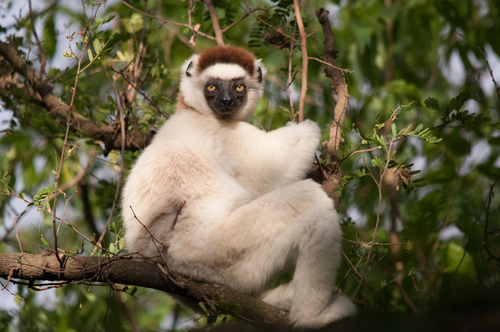
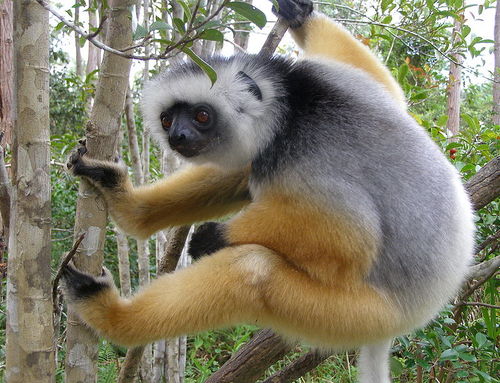
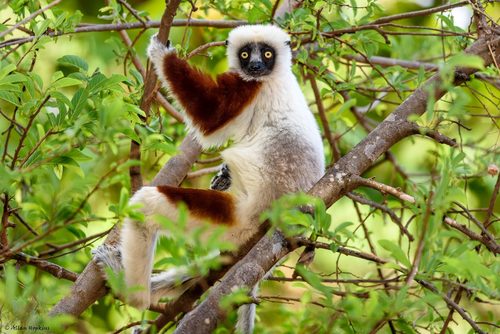
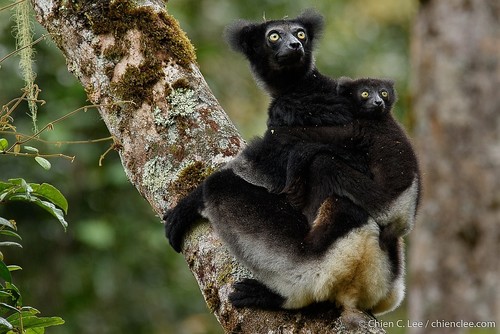
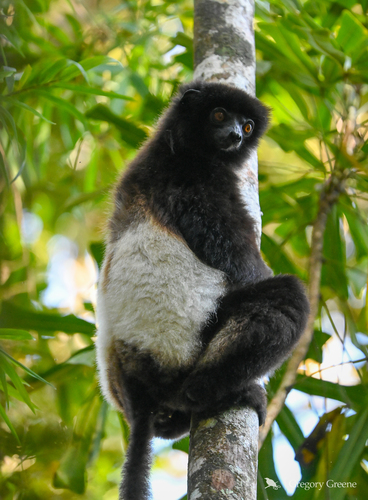
Milne-Edwards's sifaka (Propithecus edwardsi), also called Milne-Edwards's simpona, is a large, diurnal, arboreal lemur. This species is endemic to the eastern coastal rainforest of Madagascar, and belongs to the primate family Indriidae, which all sifakas are part of. It is characterized by a black body with a light-colored saddle on the lower back. It is closely related to the diademed sifaka, and was classified as a subspecies of the diademed sifaka until recently. Its scientific name honors French zoologist Henri Milne-Edwards, who lived from 1800 to 1885. Milne-Edwards's sifaka is endemic to the island of Madagascar, which lies off the southeastern coast of Africa. It inhabits primary and secondary rainforests in the southeastern region of the island, at elevations ranging from 600 to 1,600 m (2,000 to 5,200 ft). Among all members of the diademed sifaka group, Milne-Edwards's sifaka has the southernmost distribution. The Mangoro and Onive rivers form the northern border of its range; its southern range extends to Andringitra National Park and the Rienana River. Milne-Edwards's sifakas reach sexual maturity at 2 or 3 years of age. They have one mating season each year, which occurs in austral summer during the months of December and January. After a 179-day gestation period, females give birth during the austral winter months of May and July.