About Procyon cancrivorus G
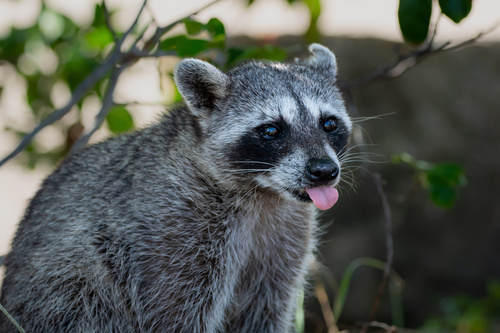
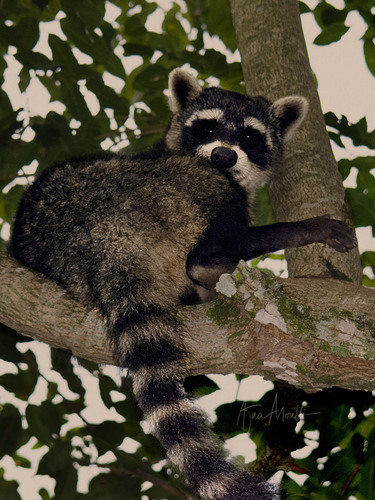
The crab-eating raccoon, also called the southern raccoon or South American raccoon, has the scientific name Procyon cancrivorus. It is a species of raccoon native to marshy and jungle habitats of Central and South America, including Trinidad and Tobago. Its range extends from Costa Rica south through most of South America east of the Andes Mountains, all the way to northern Argentina and Uruguay. Contrary to what its common name suggests, this species does not only eat crabs, and the common raccoon also actively seeks out and eats crabs where crabs are available. In the Tupi–Guarani languages, this species is called aguará or agoará popé. Its confirmed distribution includes Costa Rica, Panama, Colombia, Venezuela, Suriname, Guyana, French Guiana, Ecuador, Brazil, Peru, Bolivia, Paraguay, Uruguay, Argentina, and Trinidad and Tobago. Crab-eating raccoons breed between July and September, with a gestation period of 60 to 73 days. Offspring are born in crevices, hollow trees, or abandoned nests built by other animals. Litters contain between 2 and 7 kits, with an average litter size of three. Typically, crab-eating raccoons breed only once each year, but if a female loses all of her kits early in the breeding season, she will mate again to produce a second litter. Males do not participate in raising the young. When caring for offspring, females become far more territorial and will not tolerate other raccoons near them.