About Proceratophrys cristiceps (Müller, 1883)
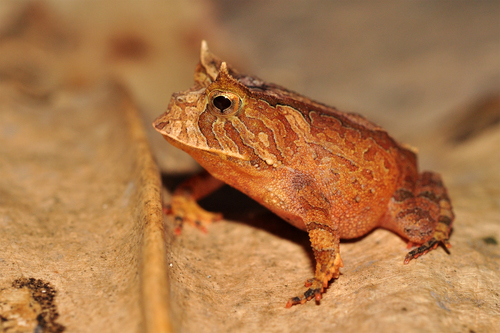
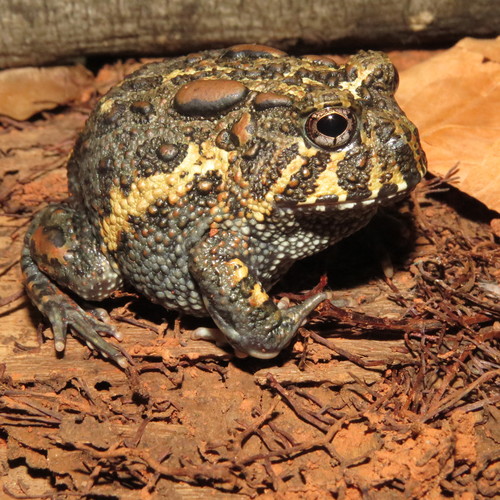
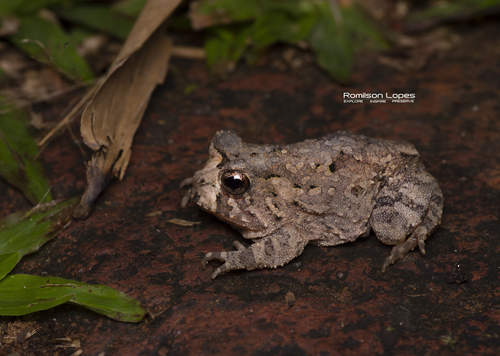
Adult males of Proceratophrys cristiceps measure 40–50 mm (1.6–2.0 in) in snout–vent length. For adult females, snout–vent length is 44–45 mm (1.7–1.8 in), based on only two known specimens. The head of this species is wider than it is long. Viewed from above, the snout is rounded, but it is obtuse when seen from the side. The tympanum is not visible from the outside. Canthal crests are poorly defined, while the frontoparietal crest is not developed at all. The toes are only partially webbed. The dorsum is scattered with multiple warts and small granules. Apart from the hands and feet, all ventral surfaces are covered in many small, circular, uniform warts and small granules. Dorsal coloration is marbled with various shades of brown over a cream base, and sometimes has a reddish tinge. The species was originally described by Müller, F. (1883) in "Dritter Nachtrag", part of Katalog der herpetologischen Sammlung des Basler Museums, published in Basel by J. G. Bauer. Proceratophphis cristiceps occurs in the Atlantic Forest and its ecotone that transitions toward the Caatinga dry forest. For reproduction, males call near temporary streams. Eggs are laid in temporary pools and streams, where tadpoles later develop. At developmental stage 39, tadpoles have an oval-round body. The body makes up approximately 41% of the tadpole's total length. Tadpoles of this species have large eyes. The dorsal skin of the tadpole is olive-colored with dark brown blotches. The anterior portion of the tadpole's ventral area is white, while the posterior portion is darker. The internal organs of the tadpole are visible through its skin.