About Pritchardia pacifica Seem. & H.Wendl.
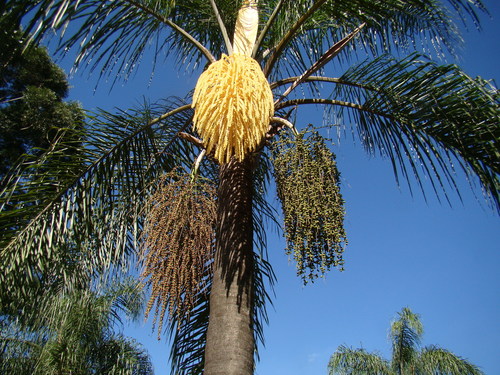
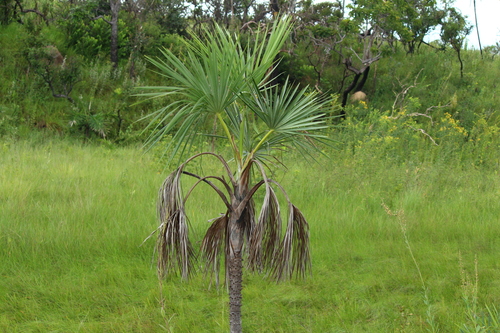
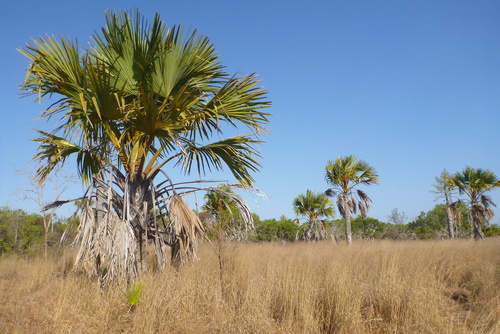
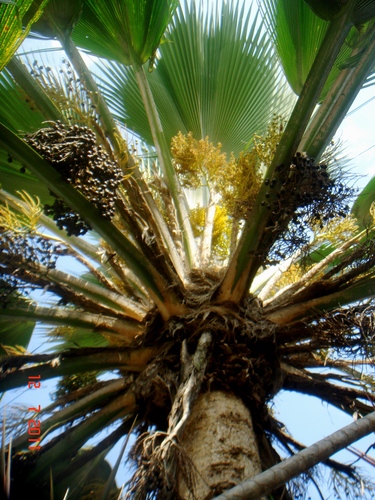
Pritchardia pacifica Seem. & H.Wendl., also called the Fiji fan palm, grows up to 15 metres (49 ft) tall. It has a smooth, grayish tan trunk that measures 10 inches (25 cm) in diameter. This palm produces 20 to 30 leaves, each 4 feet (1.2 m) wide and equally long, borne on 4-foot (1.2 m) petioles. Its large, flat, rounded leaves are divided between one-quarter and one-third of the way into many stiff-tipped segments. Its inflorescences are made up of 1 to 4 panicles, which are shorter than or equal in length to the petioles. The panicles branch into two orders, with glabrous rachillae. After flowering, the plant forms small, shiny spherical fruits that are dark brown to purplish black and 0.4 inches (1.0 cm) in diameter. Pritchardia pacifica is recognized as a host for the plant disease Lethal Yellowing, which occurs in Florida, Puerto Rico, and Guam. In traditional Fijian use, the leaves of this palm were historically made into fans called Iri masei or Ai viu, which were reserved exclusively for village chiefs. A light, flexible wood was used to add a border to the leaves. In the Fijian language, the term Ai viu refers to both a fan and an umbrella, because the leaves were also used to shield against sun and rain. When used in rain, the leaf was held directly above the head, so that rain would roll off the leaf behind the head. The palm's trunk was occasionally used to make ridge-beams. This species was associated with upper social classes, and usually only one or two trees grew in a village, as this number provided enough leaves to meet the needs of the village chiefs. Today, Pritchardia pacifica is desired by palm enthusiasts for cultivation, and it is widely grown as an ornamental plant across the Pacific and Southeast Asia. Fresh seeds of this species germinate well in high light conditions in moist but well drained soil, and the mature plants can tolerate coastal spray.