About Pristimantis unistrigatus (Günther, 1859)
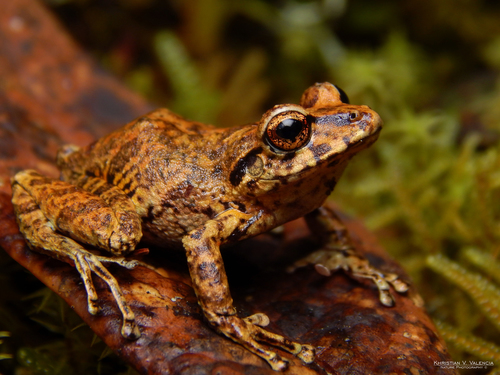
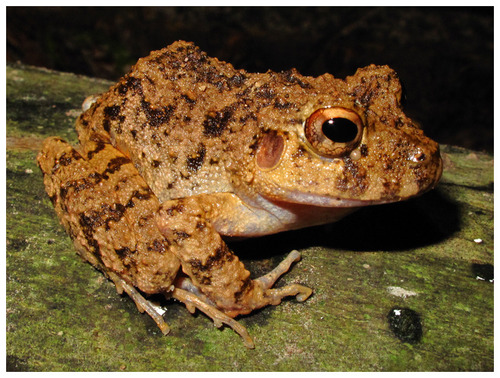
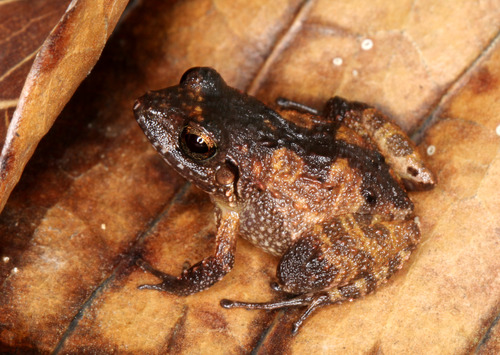
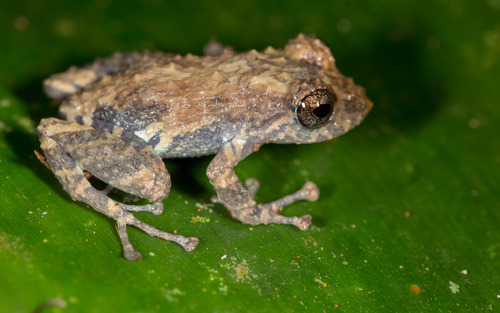
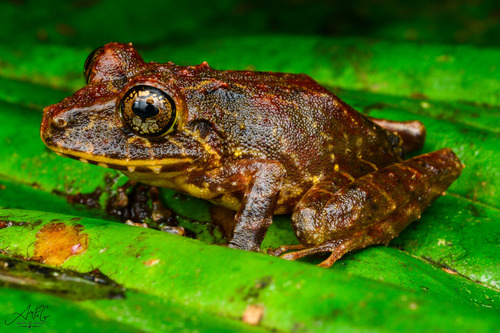
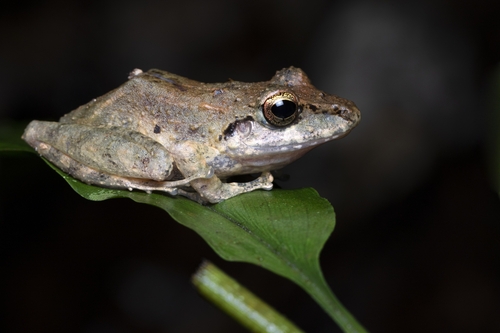
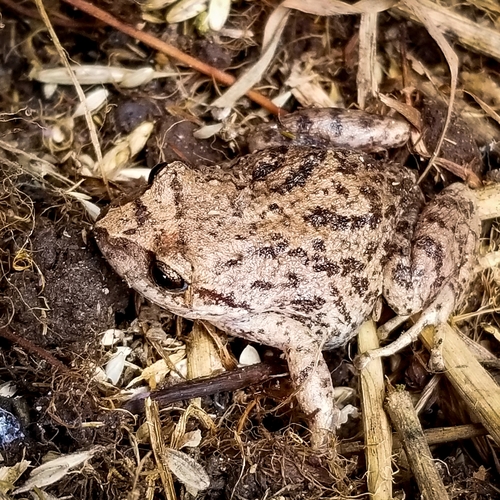
Pristimantis unistrigatus is a species of frog first described by Günther in 1859. In terms of physical description, adult males measure 15–29 mm (0.6–1.1 in) in snout–vent length, while adult females measure 23–39 mm (0.9–1.5 in). The head is wider than the body in females, but equal to or narrower than the body in males. When viewed laterally, the snout is rounded; when viewed dorsally, it ranges from subacuminate to subovoid. The tympanum is visible but not distinct, and it is partly obscured by the supratympanic fold. Discs are present on the tips of the fingers and toes. Coloration of this species is highly variable. The most common color morph is pale brown on the upper body, with an indefinite darker interorbital triangle and a series of brown spots that form dorsal chevrons. A second morph is similar to the most common morph, but has a narrow, cream-colored vertebral stripe that runs the full length of the body. The third color morph is striped, with multiple tan, medium-brown, and dark brown stripes across the back. Males of this species have an external subgular vocal sac, and the male advertisement call is a hollow click. This species is distributed in the Colombian Massif of southern Colombia, specifically in the Putumayo and Nariño Departments, as well as in the inter-Andean valleys of Ecuador extending all the way south to Chimborazo Province. Pristimantis unistrigatus is a common species. It can be found in a variety of open habitats including grasslands, cultivated areas such as pastures and croplands, ditches, and shrubs. It also occurs at forest edges, and even in urban areas, at elevations between 2,200–3,400 m (7,200–11,200 ft) above sea level. During the day, these frogs hide under objects on the ground, and occasionally hide in arboreal bromeliads. At night, they are active on both vegetation and the ground. The only known threat to this species is heavy agrochemical pollution, and its geographic range overlaps with multiple protected areas.