About Pristimantis croceoinguinis (Lynch, 1968)
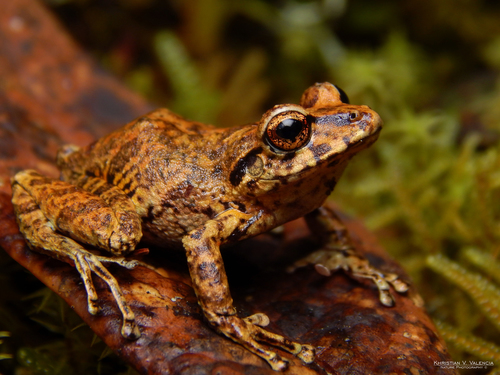
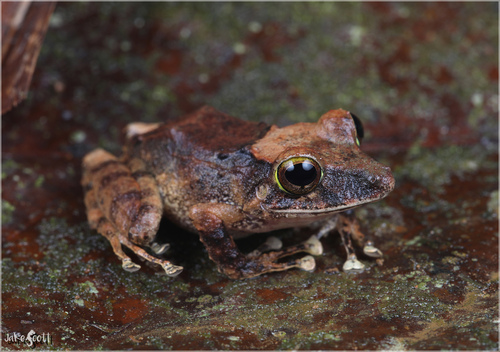
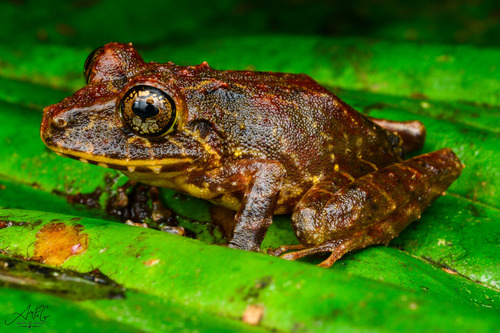
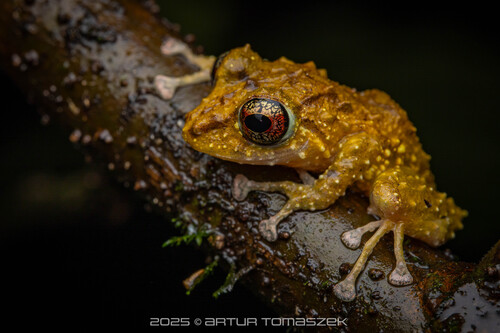
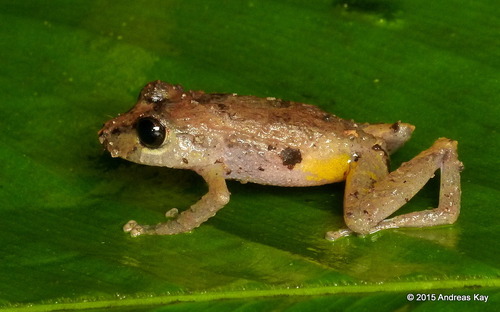
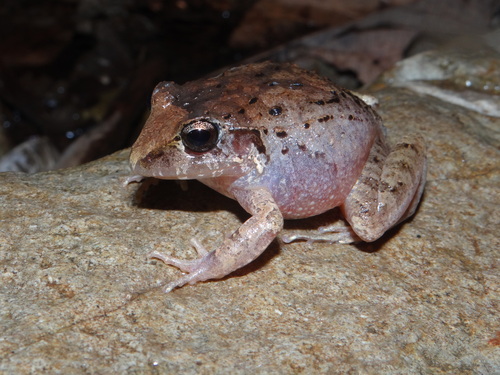
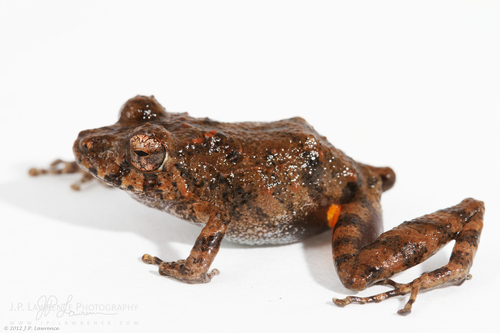
Description: Adult males of Pristimantis croceoinguinis measure 13–18 mm (0.5–0.7 in) in snout–vent length, while adult females measure 18–22 mm (0.7–0.9 in). The snout is subacuminate when viewed from above, and has a rounded profile when viewed from the side. The tympanum is hidden under the skin. The fingertips have small adhesive discs, but lack lateral fringes. The toe discs are slightly smaller than the finger discs, and also have no lateral fringes or webbing. The dorsal skin has a pustulate texture. The dorsum ranges from yellow-brown to brown, marked with dark brown spots and scattered white or yellow flecks. The flanks are brown to black, with darker brown blotches and white or yellow flecks. Each side of the groin has two yellow to reddish-orange spots. The venter ranges from gray to black, most often brown, and has cream flecks. Dark brown bars are present on a lighter brown background, and the anal triangle is also brown. Habitat and conservation: Pristimantis croceoinguinis lives in lowland primary rainforest at elevations between 0 and 1,289 m (0–4,229 ft) above sea level. It can also survive in lightly disturbed habitats. It is a nocturnal species that is typically found on low vegetation 0.5–1.5 m (2–5 ft) above the ground. Its development is presumed to be direct, meaning there is no free-living tadpole larval stage. This species is not currently facing any major threats. Large areas of suitable habitat still exist, and the species is also found in a number of protected areas.