About Prionotus carolinus (Linnaeus, 1771)
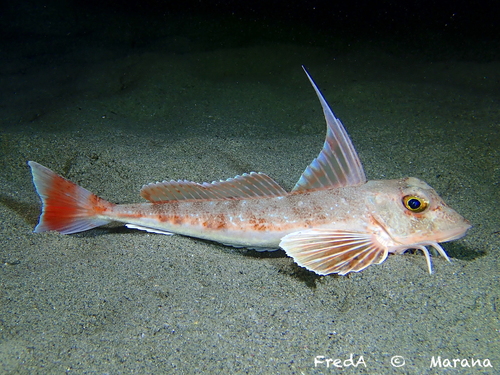
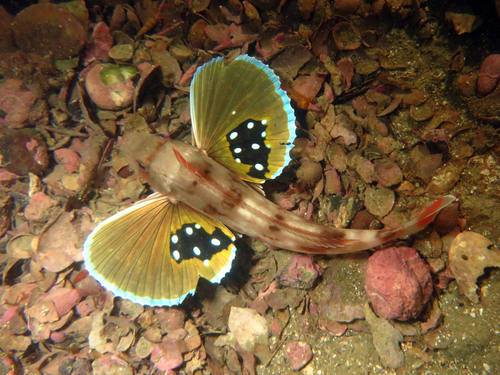
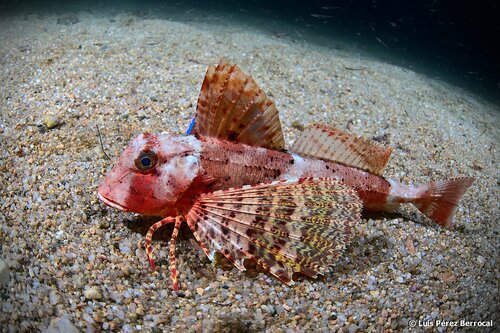
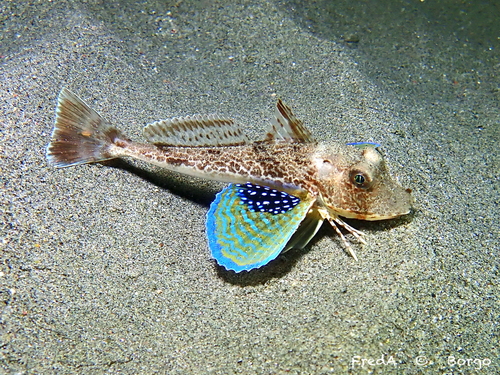
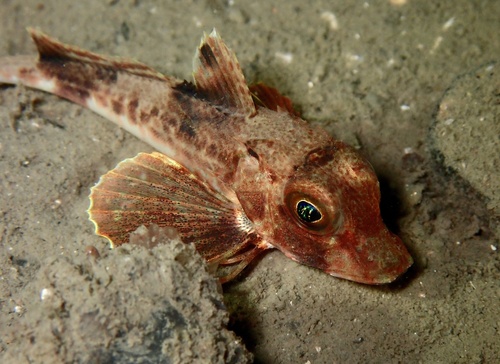
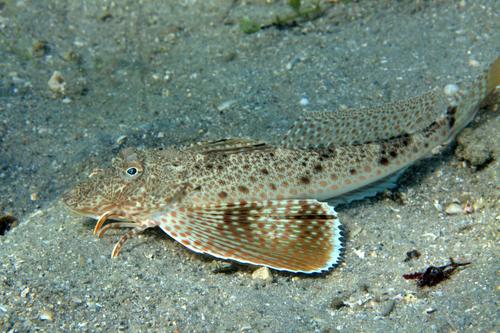
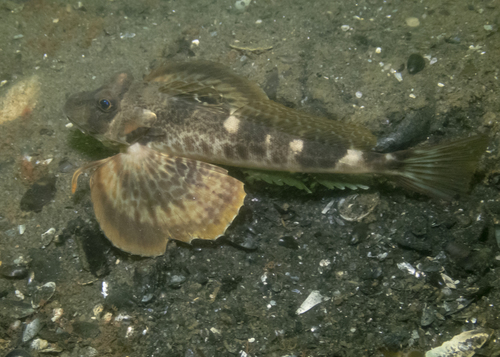
Prionotus carolinus, commonly known as the northern sea robin, can be identified by its broad spiny head, tapering body, blue eyes, and large, wing-like pectoral fins. Its dorsal surface is reddish or grayish, its chin is black, its belly is pale, and its fins are reddish-brown with darker edges that fade to grayish-white at the bases. Three lower rays of its pelvic fins act as feelers that it uses to "walk" along the seabed, stirring up bottom sediments to find food. Adult northern searobins grow to an average length of 17 inches (43 cm). Prionotus carolinus occurs in shallow waters of the western Atlantic Ocean, with a range extending from Nova Scotia along the Atlantic coast of the United States, through the Gulf of Mexico, and as far south as the upper Florida Keys. It can be found from estuaries out to the edge of the continental shelf, and prefers sandy seabed habitats, where it feeds by kicking up sediment to locate food using its specialized pelvic fin "legs". Prionotus carolinus is primarily fished for sport, as it puts up a strong fight when hooked. While its spines make cleaning difficult, its flesh is edible and comparable in quality to that of kingcroaker or whiting, and can be prepared by broiling or baking. Additional uses of northern sea robin include processing into fish meal, pet food, or fertilizer. It is also used as bait for lobster pots and handlines targeting flatfish, and its eggs have been used as a substitute for caviar.