About Prionochilus maculatus (Temminck, 1836)
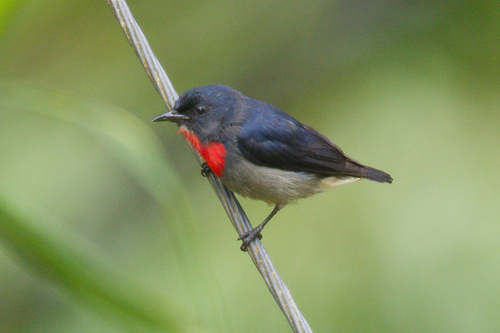
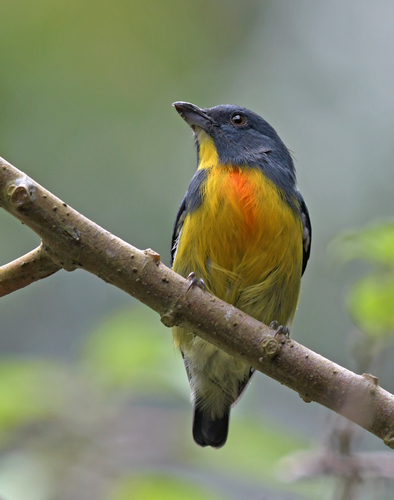
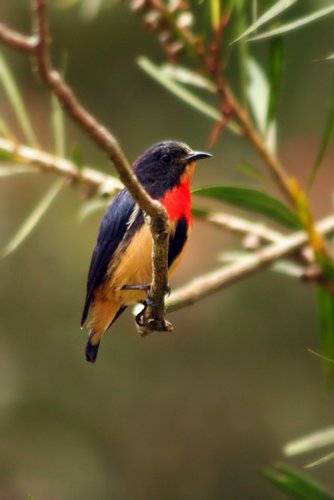
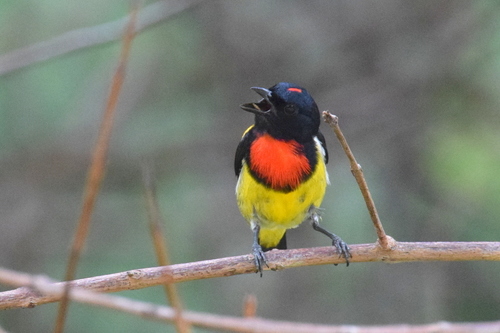
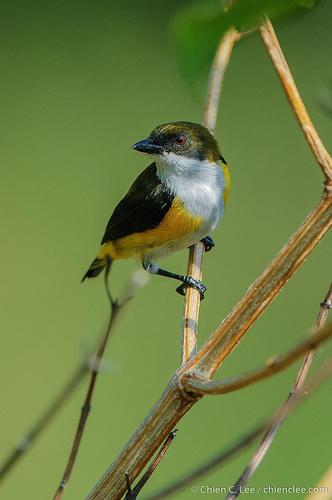
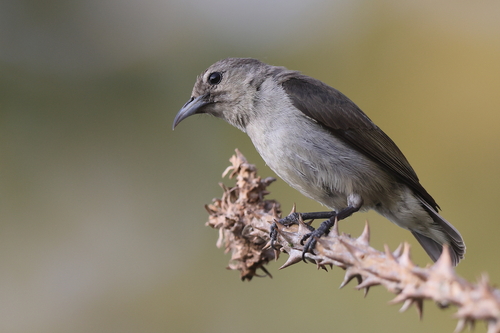
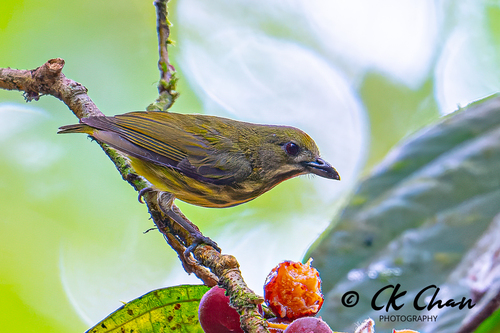
The yellow-breasted flowerpecker (Prionochilus maculatus, first described by Temminck in 1836) has an olive green back, a bright neon orange patch on the top of its head, and a yellow underbelly with black streaks along the sides. It has a red iris, clusters of white feathers on its throat, and gray anisodactyl legs. Males and females of this species look generally similar, with females only showing slight differences in coloration. Male yellow-breasted flowerpeckers measure between 7.5 and 11.8 inches in length, while females measure between 7.8 and 7.9 inches. This species produces high-pitched chirps, and its average lifespan is 2.4 years. The yellow-breasted flowerpecker occurs in subtropical forest habitats. It forages in the middle and upper levels of lowland and foothill forests, as well as along forest edges. It has a broad range spanning southern Asia, and is native to Brunei Darussalam, Indonesia, Malaysia, Myanmar, and Thailand. It is currently considered extinct in Singapore. The yellow-breasted flowerpecker is non-migratory and stays resident within terrestrial habitats. Its diet consists mainly of fruit, nectar, and pollen, with recorded food items including fruit from Benjamin fig, Ficus villosa, Melastoma malabathricum, Straits rhododendron, and Hairy Clidemia.