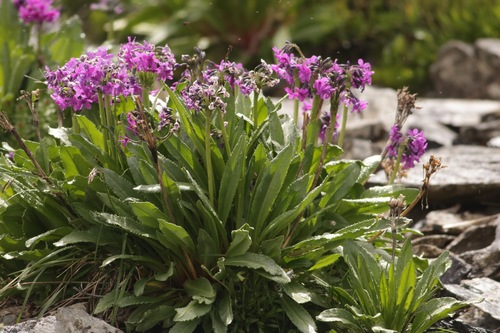
About Primula nivalis Pall.
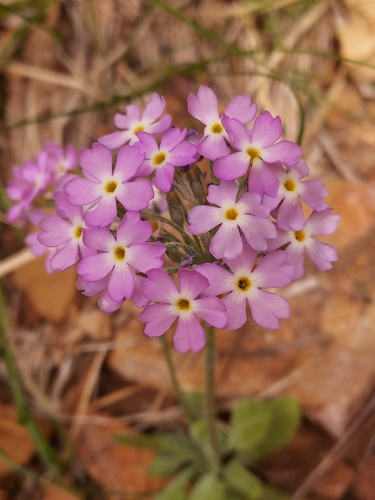
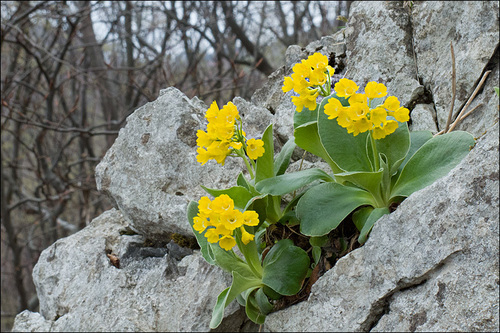
The genus Primula is complex and highly varied, with species growing in a broad range of habitats from alpine slopes to boggy meadows. Most Primula plants bloom in spring. Their flowers typically form spherical umbels on thick stems that grow from basal leaf rosettes, and flower colours can include purple, yellow, red, pink, blue, or white. Some Primula species have a white powdery bloom called farina on different parts of the plant, and many species are adapted to grow in alpine climates. There are over 400 total Primula species, and around 75% of these are found along the eastern Himalayan mountain chain and in Yunnan, western China. This area is the main centre of diversity for the genus. Additional centres of diversity are located in western Asia, encompassing the Caucasus and European mountain ranges from the Pyrenees through the Alps to the Carpathian Mountains, the mountains of East Asia, and the mountains of western North America. Primula occurs in mountainous or high latitude regions of North America, Europe, and Asia. The genus also extends into South America, the mountains of Ethiopia in Africa, and the tropical Asian islands of Java and Sumatra. Approximately 25 Primula species occur in North America, where the genus is grouped into five sections. Primula grows in humid, moderate climate regions of the Northern Hemisphere, most commonly in the forest belt, plain meadows, alpine lawns, and nival and meadow tundras. Primulas serve as a food plant for the Duke of Burgundy butterfly. Primula species have been widely cultivated and hybridized. Most cultivated hybrids are derived from Primula elatior, Primula juliae, Primula veris, and Primula vulgaris. One popular hybrid group is Polyanthus (Primula × polyantha), which has produced a wide array of strains in all colours. Polyanthus is usually grown as an annual or biennial, and is sold as both seeds and young plants. Another large group of Primula cultivars, known as auriculas, comes from crosses between Primula auricula and Primula hirsuta, as well as other species. Specialist nurseries and auricula societies support the cultivation and exhibition of these select strains.