About Pratapa deva (Moore, 1857)
Scientific name: Pratapa deva (Moore, 1857)
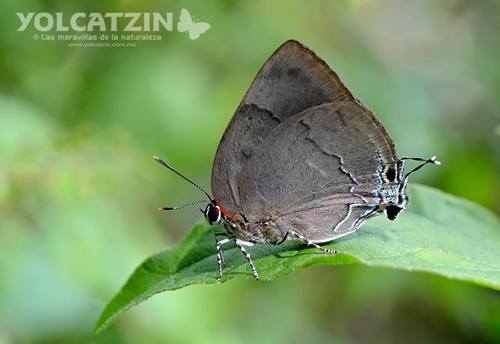
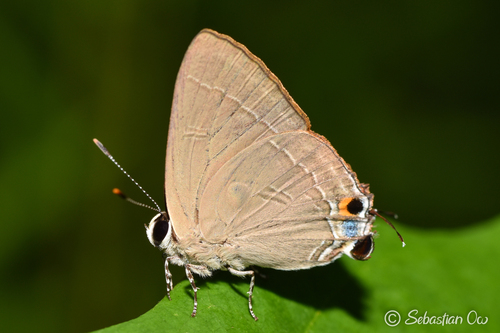
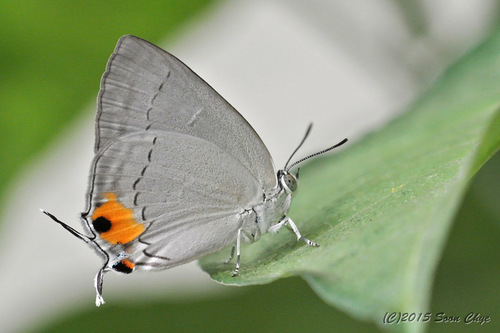
Male description: Upperside is blue with a mauve tint. On the forewing, the median vein, the basal portion of vein 3, and the sub-median veins are black. The apical black band is very broad, occupying more than one-third of the wing; its inner margin is rounded, and it narrows gradually along the outer margin. The band remains fairly broad near the hind angle, narrows rapidly along the costa, and is quite narrow across the basal third of the wing. On the hindwing, the costa is broadly black, bulging hindwards below the glandular patch of scales. There is a narrow outer marginal black band, with some blackish suffusion along the abdominal area; the abdominal fold is grey. The marginal band ends in black spots in the three anal interspaces. Tails are black, with white tips. Cilia are black, with pale tips. The underside is cream-colored. A series of very thin, disconnected, brown discal linear marks crosses both wings; these marks are generally obsolescent on the forewing, and curve round to the abdominal margin a little above the anal angle on the hindwing. The tuft of hairs attached to the strongly outward-bowed portion of the forewing's inner margin is black, very long, and thick. On the hindwing, there is a black anal spot and a second black spot in the first interspace; both spots are capped with very pale orange. There is a submarginal series of pale grey lunules, and faint indications of a second series close to the margin. Antennae are black, ringed with white; the club has a red tip. The frons is white, with two brown lines. The head and body, both above and below, match the color of the wings.
Female description: Upperside is paler and duller in color than the male. The marginal black bands are similar in shape to the male's, but the costal band of the hindwing lacks the bulge seen in males, since females do not have the male sex mark. The outer portion of the blue area on the forewing is often much paler than the rest of the wing, and all veins on both wings are distinctly black. The underside matches the male's, but the discal and submarginal bands are more prominent.