About Powelliphanta hochstetteri (L.Pfeiffer, 1861)
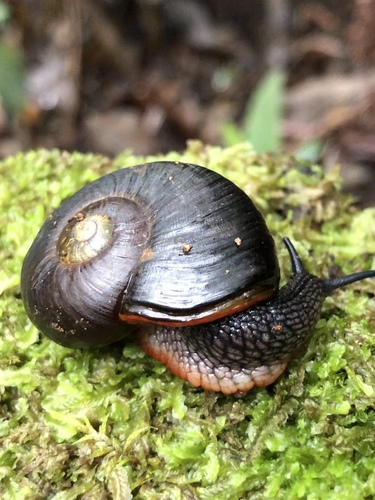
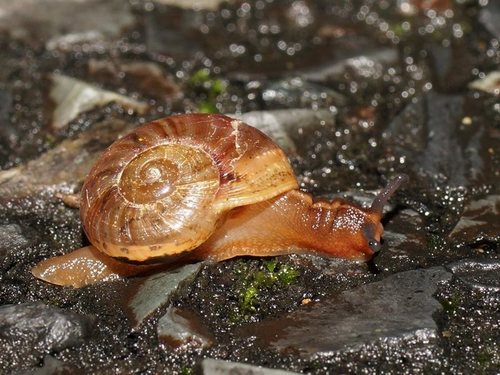
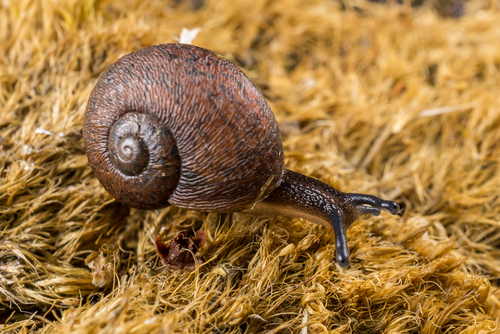
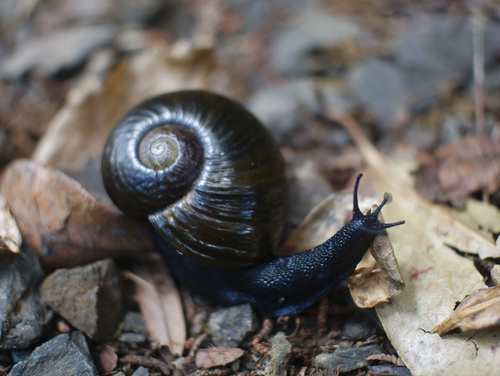
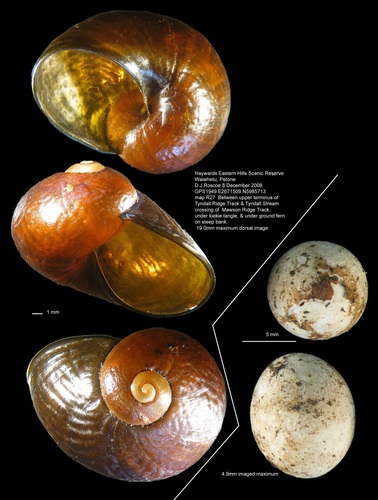
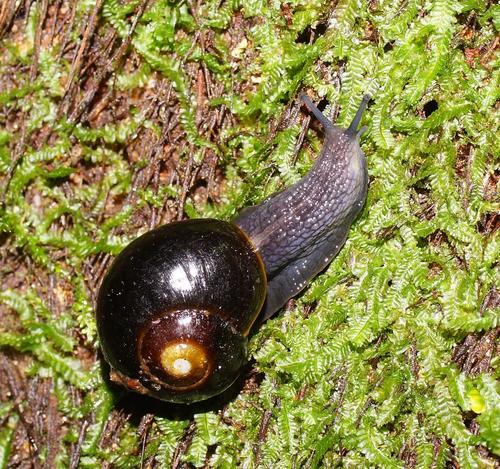
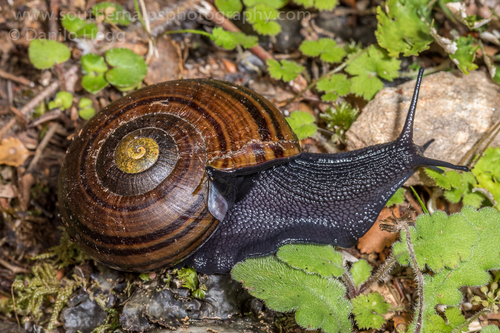
Powelliphanta hochstetteri was originally described under the name Helix hochstetteri by German malacologist Ludwig Karl Georg Pfeiffer in 1862. Pfeiffer based his description only on the shell, which German geologist Ferdinand von Hochstetter had brought from New Zealand. The specific epithet hochstetteri honors Ferdinand von Hochstetter. This species is endemic to the Marlborough and Nelson provinces of the South Island of New Zealand. There are five recognized subspecies: Powelliphanta hochstetteri anatokiensis Powell, 1938; Powelliphanta hochstetteri bicolor Powell, 1930; Powelliphanta hochstetteri consobrina Powell, 1936; Powelliphanta hochstetteri hochstetteri (Pfeiffer, 1862); and Powelliphanta hochstetteri obscura Beutler, 1901. In terms of its life cycle, the eggs of this species are oval-shaped, and their dimensions are seldom consistent. A typical egg measures around 12 by 10 millimetres (0.47 in × 0.39 in).