About Pouteria sapota (Jacq.) H.E.Moore & Stearn
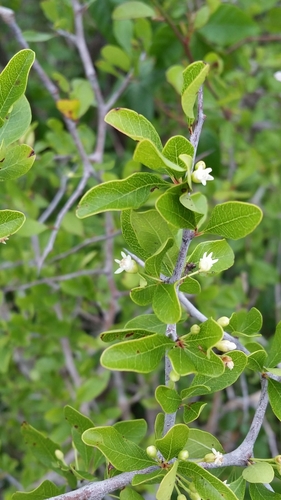
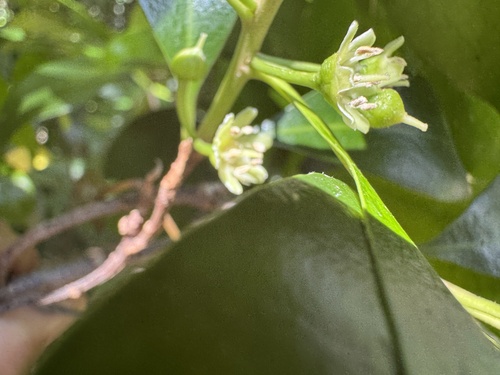
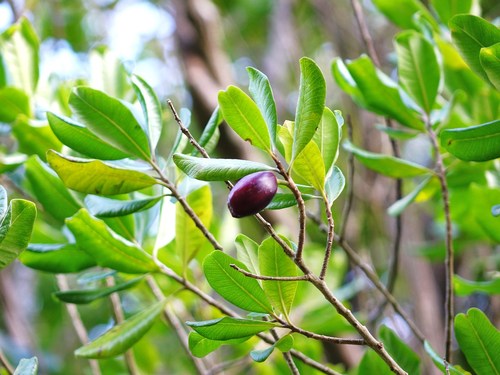
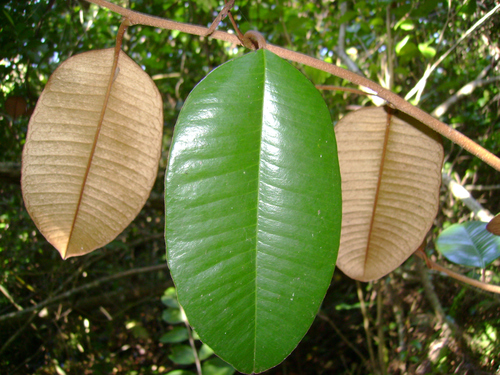
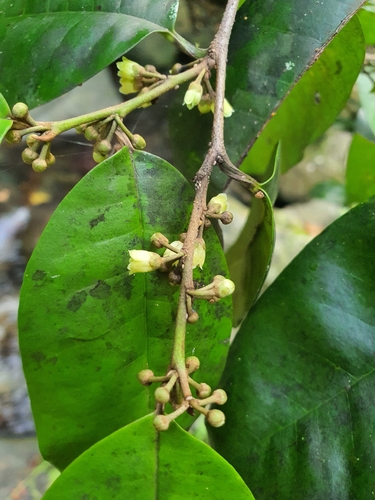
Mamey sapote (Pouteria sapota (Jacq.) H.E.Moore & Stearn) is a large, mature evergreen tree that reaches 15 to 45 meters (49 to 148 feet) in height. It is sometimes cultivated both for its ornamental value and for its edible fruit. Botanically, the fruit of this species is classified as a berry. It measures roughly 10 to 25 cm (4 to 10 in) long and 8 to 12 cm (3 to 4.5 in) wide, with flesh that ranges in color from pink to orange to red. The fruit’s brown skin has a texture that falls somewhere between the roughness of sandpaper and the soft fuzz of a peach. The fruit’s flesh has a creamy, soft texture, and its flavor blends notes of sweet potato, pumpkin, honey, prune, peach, apricot, cantaloupe, cherry, and almond. A mamey sapote is ripe when the flesh appears vibrant salmon-colored after a small fleck of skin is removed, and the flesh should give slightly when pressed, similar to an overripe avocado. The species’ leaves are pointed at both ends, 4 to 12 inches long, and grow in clusters at the ends of branches. Mamey sapote belongs to the same botanical family, and is closely related to, other commonly known sapotes: sapodilla (Manilkara zapota), abiu (P. caimito), and canistel (Lucuma campechiana). However, other fruits that share the common name "sapote" are much less closely related, including black sapote (Diospyros nigra) and white sapote (Casimiroa edulis). The native range of mamey sapote is thought to extend from the southern Mexican states of Veracruz, Tabasco, and Chiapas through Nicaragua, Belize, and northern Honduras. This native range is not confirmed, because the tree was already widely cultivated across tropical Americas before European colonization. Today, mamey sapote is cultivated in most Mexican states, many Caribbean islands, and tropical mainland America from Florida to Brazil. The first documented cultivation of mamey sapote in south Florida dates back to the 1880s. The species has also been introduced to the Philippines, Indonesia, Malaysia, and Vietnam. For cultivation, mamey sapote prefers smooth sandy, deep clay, fertile soils with a pH between 5.5 and 6.5. It cannot tolerate low temperatures, extended drought, poorly drained soils, or soils with a very high water table. The species is primarily propagated by grafting, which guarantees that new plants retain the same characteristics as the parent plant, especially fruit traits, because mamey sapote does not grow true to seed. Grafting also results in trees that produce fruit much earlier than seed-grown trees: grafted trees produce fruit in 3 to 5 years, while seed-grown trees need 7 or more years of growth before they begin fruiting. Mamey sapote seeds lose viability within one month of harvest, so they must be sown immediately after collection. Mature Pouteria sapota trees are quite productive fruit producers. A typical mature tree yields 200 to 500 fruits per year, and healthy, well-established trees can produce more than twice that number. In 2017, the average production for Mexican growers was 12.4 tons per hectare. In Florida, the fruit is harvested from May to July, though some cultivars produce fruit year-round. Mamey sapote fruit is eaten raw, or processed into milkshakes, smoothies, ice cream, and paletas. It can also be used to make marmalade and jelly. Oil pressed from the species’ seeds, called sapayul oil, is used as an ingredient in some beauty products.