About Potamon fluviatile (Herbst, 1785)
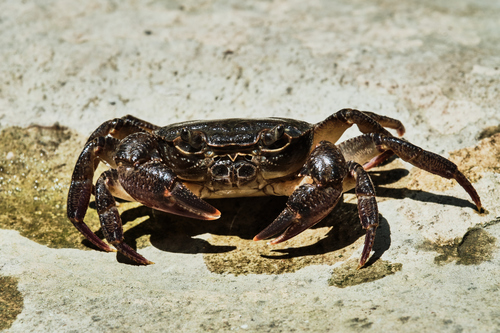
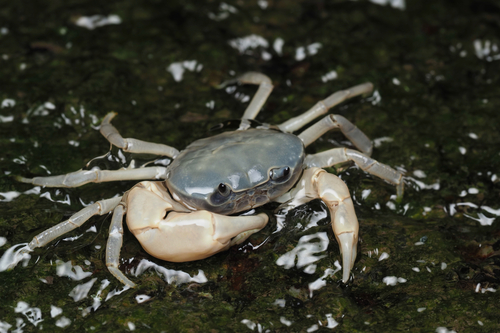
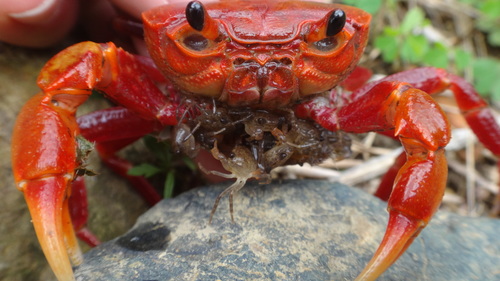
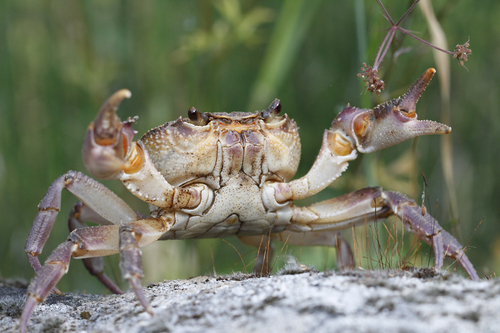
Adult Potamon fluviatile can reach a carapace length of 50 millimetres (2.0 in), and females are generally smaller than males. Like other crabs, its body is roughly square, with a reduced abdomen tucked beneath the thorax. The thorax has five pairs of legs, the first of which bears large claws. The typical lifespan of P. fluviatile is 10–12 years. Moulting does not take place during winter. Mating can last anywhere from 30 minutes to 21 hours, and spawning usually occurs in August. Females carry eggs on their pleopods, which are abdominal appendages, until the eggs hatch directly into juvenile crabs; the larval stages develop inside the egg. P. fluviatile is edible, which is reflected in its alternative specific epithet edulis. The species was known to ancient Greeks, and it is likely the species they depicted on medals found at Agrigento, Sicily. More recently, it was featured on the 5¢ coin in the last series of Maltese coins issued before the Euro was introduced to Malta in 2007. The natural range of Potamon fluviatile is highly fragmented, spanning parts of many countries along the Mediterranean coastline. It occurs in mainland Italy and across the Balkan Peninsula from Dalmatia to the Axios River in Greece. It is also found on multiple islands, including Sicily, Malta and Gozo, the Ionian Islands, the Aegean Islands, the Sporades, and Andros in the Cyclades. While the species as a whole is widespread, its population is declining, and these island populations are especially vulnerable. Potamon fluviatile has a generalist diet: it eats vegetable debris, scrapes algae off surfaces, and preys on frogs, tadpoles, and various invertebrates including insect larvae, snails, and worms. No predator is known to specialize in preying on P. fluviatile, but a number of animals hunt it opportunistically, including rats, foxes, weasels, birds of prey, and jays. Humans are likely the most significant predator; individual foragers can catch 3,000 to 10,000 P. fluviatile in a single season. Adult crabs live in burrows, while smaller individuals shelter under stones. Burrow entrances can be more than 5 m (16 ft) from a stream edge and are always located above water level. Burrows can reach over 80 cm (31 in) in length, and likely protect the crabs from extreme cold. Potamon fluviatile is an aggressive species, and 90% of individuals are right-handed, so they mostly attack with their larger right claw. In the Tosco-Emilian Apennines, P. fluviatile is only found south of the watershed, unlike the crayfish Austropotamobius pallipes which occurs on both sides of the mountains. While their ranges overlap, the two species do not share the same water courses. This appears to be because P. fluviatile outcompetes the native crayfish, forcing A. pallipes into less favorable habitats where the crab cannot survive. Non-native crayfish may be a greater threat to P. fluviatile than native crayfish, but the biggest threats to the species are still pollution, overfishing, and the draining of wetlands.