About Porpidia crustulata (Ach.) Hertel & Knoph
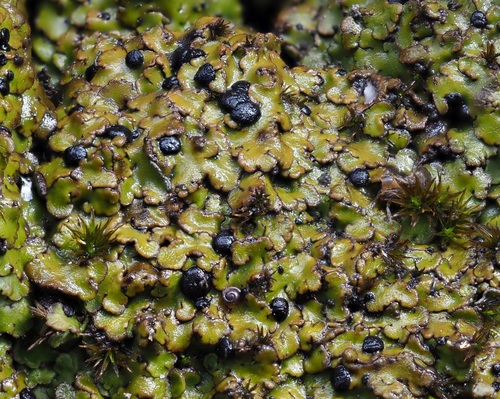
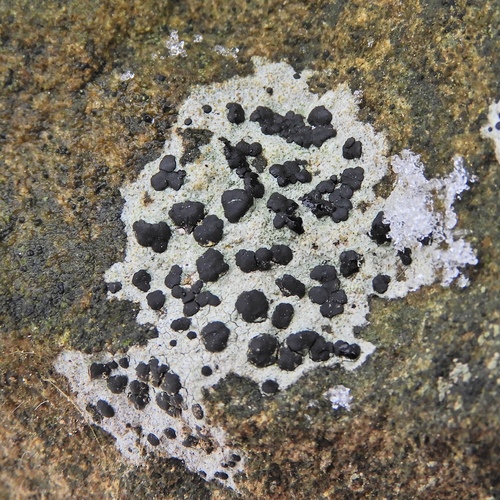
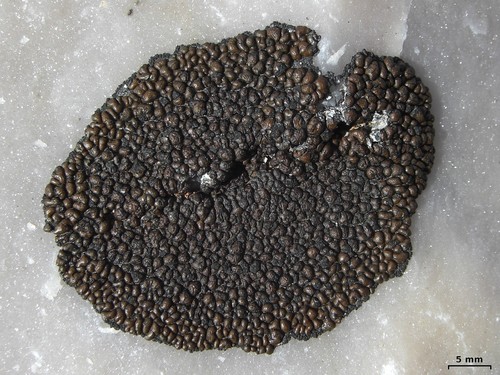
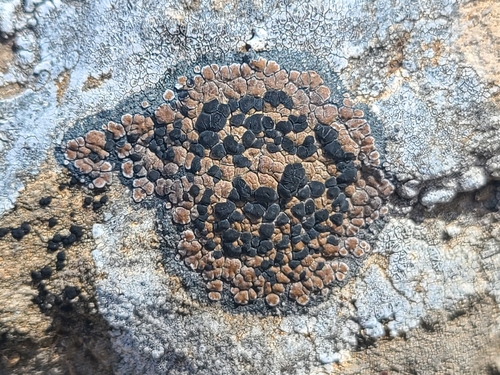
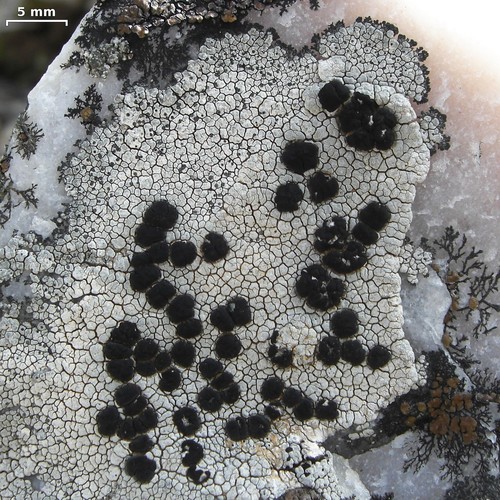
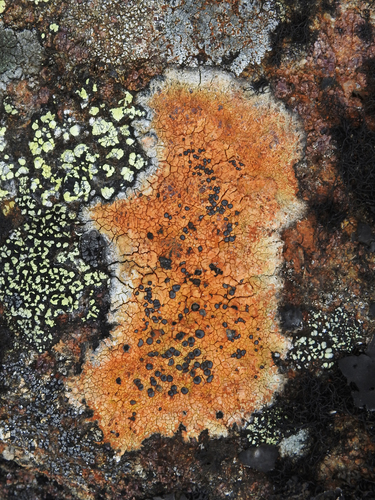
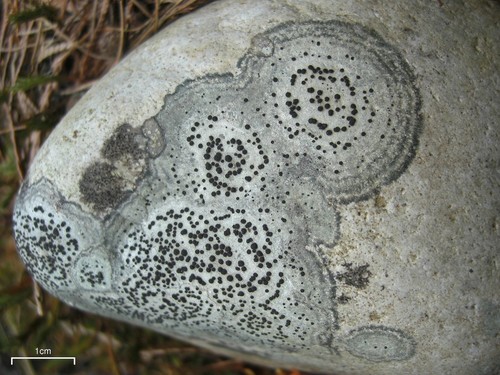
The common name "concentric boulder lichen" for Porpidia crustulata refers to the striking concentric rings of dark apothecia, the lichen's fruiting bodies, that often form on the surface of its light gray thallus. Specimens of P. crustulata are sometimes confused with its close relative Porpidia macrocarpa, but P. crustulata can be told apart by its smaller apothecia and thinner margin. This lichen grows 0.4–0.6 mm in diameter each year. One study found that as the lichen grows, its photobiont layer becomes thinner, which potentially limits the maximum diameter of individual Porpidia crustulata to around 8 cm. In the same study, scanning electron microscopy identified that the photobiont partners of the sampled lichens are two members of the genus Chlorella: Chlorella "sp. GC" and the free-living species Chlorella sorokiniana. Porpidia crustulata has been observed across a wide geographic range, including the Americas, Africa, Eurasia, Australia, and Greenland. It can grow in climates ranging from temperate to alpine and arctic. In North America, it is more common in eastern temperate zones and southern boreal regions, and rarer in the west. Porpidia crustulata is believed to prefer growing on siliceous rocks, especially pebbles, in exposed locations. It has also been found growing on non-calcareous rocks such as sandstone and granite, as well as bricks, mortar, an old leather shoe, and wood.