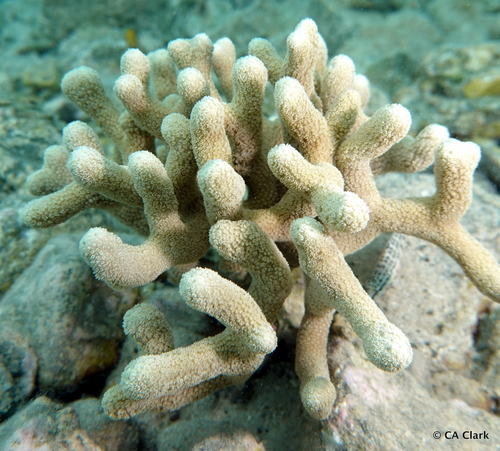
About Porites porites (Pallas, 1766)
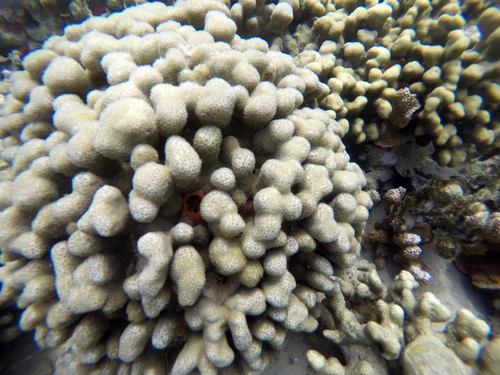
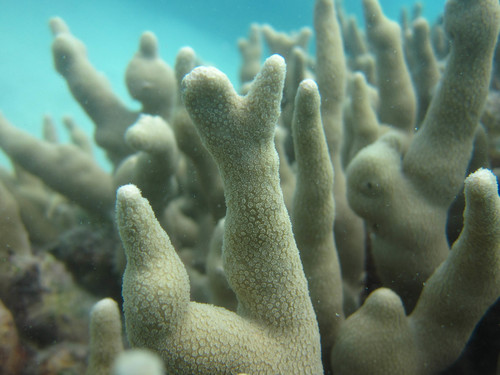
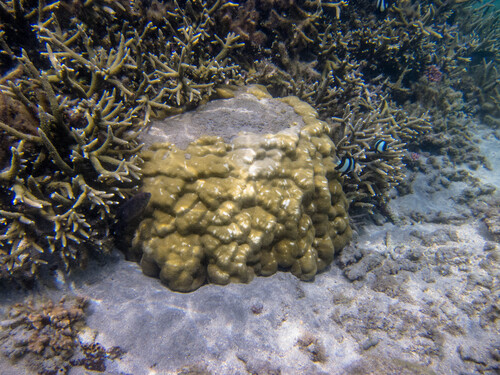
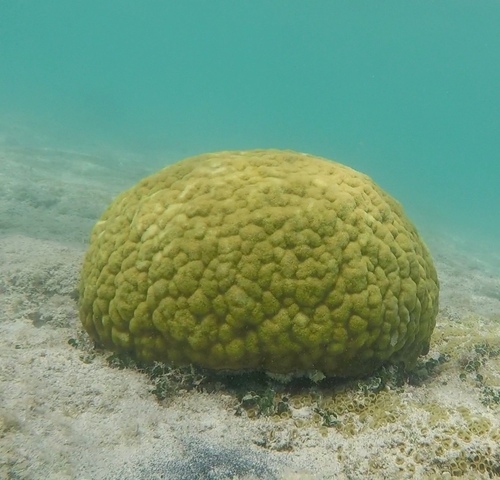
Porites porites (Pallas, 1766) forms irregular patches of short, finger-like lobes with blunt, slightly swollen tips. Sometimes these lobes are densely packed, while in other locations they are widely spaced. The lobes can reach up to 2.5 cm (1 in) wide; this width distinguishes this species from other members of the Porites genus, which have narrower lobes. Lobes may be curved or hooked and grow in all directions. The colour of Porites porites is usually white or pale blueish-grey. This coral is formed by tiny polyps that attach to one another at the base of their skeletons and branch outward. Because of this coral's very slow growth rate, some Porites porites colonies are counted among the oldest living forms of life on Earth. Scientists estimate that some Porites coral colonies can be up to 1,000 years old, and can reach heights of eight meters and maximum widths of five meters. Porites porites is distributed across the Gulf of Mexico, the Caribbean Sea, the Bahamas, southern Florida, and extends south as far as Venezuela. It is also found in shallow tropical seas off the west coast of Africa. This species occurs from the low water mark down to a depth of approximately 20 metres (66 ft), and grows on both fore reefs and back reefs where water is not overly turbid. It can also grow on the prop roots of mangroves, and among seagrass of the genus Thalassia.