About Pontia chloridice (Hübner, 1813)
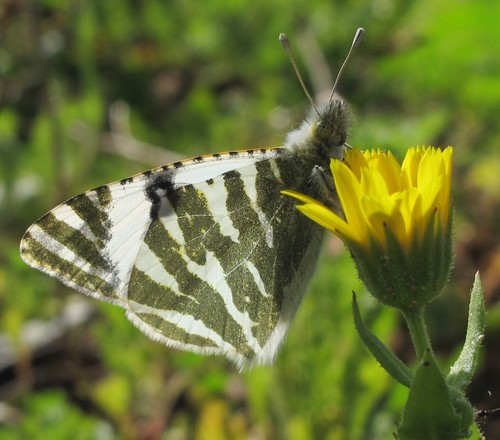
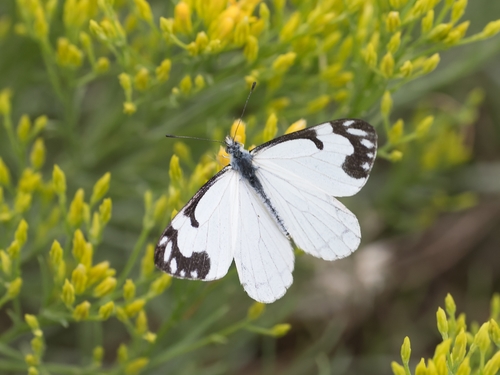
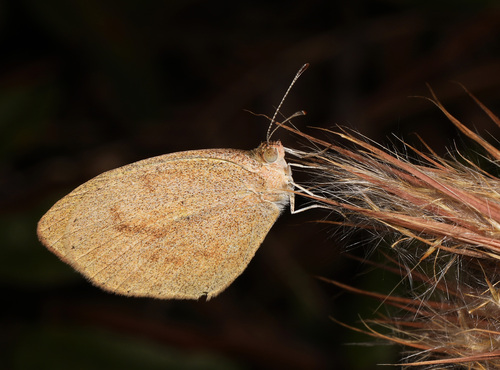
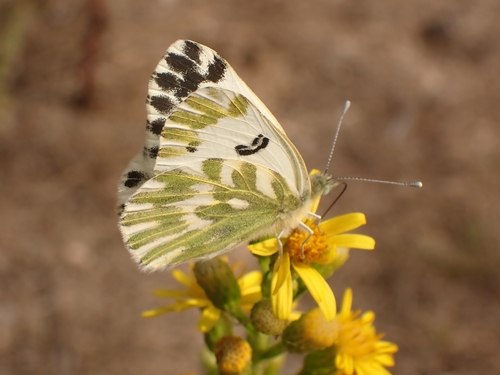
Pontia chloridice (Hübner, 1813) has the following morphology. For males: The ground colour of the upperside is white. On the forewing, the discocellulars are broadly edged with black on both sides; a short, broad transverse preapical black bar extends from the costa to vein 6, and a second similar short bar sits further outwards from vein 6 to the middle of interspace 4. This is followed by three outward-pointed, somewhat oval black terminal spots just below the apex. The hindwing is uniform and lacks markings. The underside is white. On the forewing, markings match those on the upperside, except the markings at the apex are green, with a few scattered superposed black scales on the upper preapical bar. On the hindwing, the basal area is green, with an oval white spot in the middle of the cell, a transverse white bar in the middle of interspace 7, and the precostal area edged with white above. Beyond the cell lies a highly sinuous, curved discal white band, followed by a complete series of longitudinally rectangular white terminal spots. The space between the discal band and the white spots is green, and this green colour continues along the veins that separate the spots all the way to the termen. The antennae, head, thorax, and abdomen are fuscous; the antennae have pale tips, and the thorax has some white hairs. On the underside, the head, thorax, and abdomen are whitish. Females differ from males in the following traits: On the upperside of the forewing, the black edging to the discocellulars is broader; there is a curved, postdiscal, irregular macular black band. The upper three and lowest spots that form this band are large, while the spot in interspace 2 is small and sometimes almost unnoticeable. The middle two spots of the band coalesce outwardly with the series of terminal black spots, and there are six terminal spots in females (males have between 3 and 5 terminal spots). On the hindwing, there is an anterior, postdiscal, short, curved macular black band, which is often almost unnoticeable, followed by a more or less complete terminal series of spots at the apices of the veins. The underside, as well as the antennae, head, thorax, and abdomen, match the morphology seen in males.