About Pontederia cordata L.
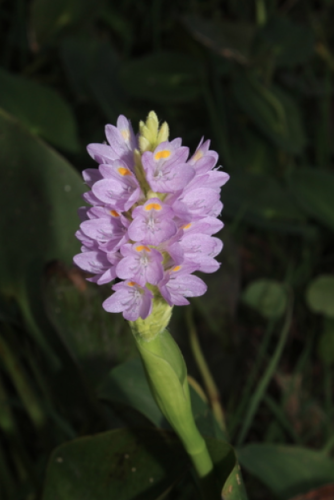
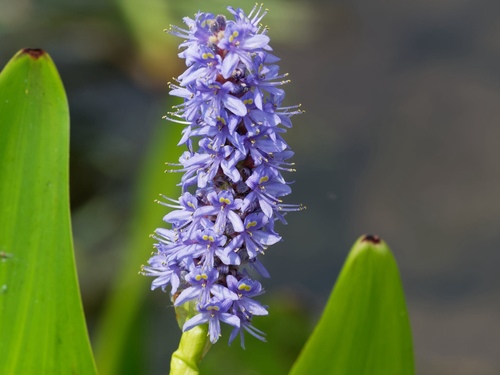
Pontederia cordata L., commonly called pickerelweed in the USA and pickerel weed in the UK, is a monocotyledonous aquatic plant native to the Americas. It grows in a wide range of wetland habitats, including the edges of ponds and lakes, across an extensive range from eastern Canada south to Argentina. Recorded locations where it grows include northern rivers, the Everglades, and Louisiana. This species is an emergent plant that grows in flooded conditions, and generally relies on aerenchyma in its stem to transport oxygen to its roots. Even so, its metabolism is tolerant of low soil oxygen. It is often found in areas with naturally fluctuating water levels, which experience spring flooding and exposure in late summer. In addition to flooding, soil fertility also affects where the species grows; it tends to grow in the more fertile bays of large lakes, for example. Like many aquatic plants, it is negatively impacted by salinity and grazing. It is also harmed by competition from other wetland plants. Similar to many other wetland plants, it can survive unfavorable conditions as buried seeds stored in soil. A 36-year study of this species in a sinkhole pond found it has an inverse relationship with American lotus (Nelumbo lutea): P. cordata declines in years when American lotus is abundant, and increases in years when American lotus is uncommon. This plant is cultivated as an ornamental for garden ponds, and has received the Royal Horticultural Society's Award of Garden Merit. For edible uses, its young leafstalks can be eaten raw (after unripe fruits are stripped off) or cooked. Its seeds are edible raw, and can be ground into grain.