About Pontastacus leptodactylus (Eschscholtz, 1823)
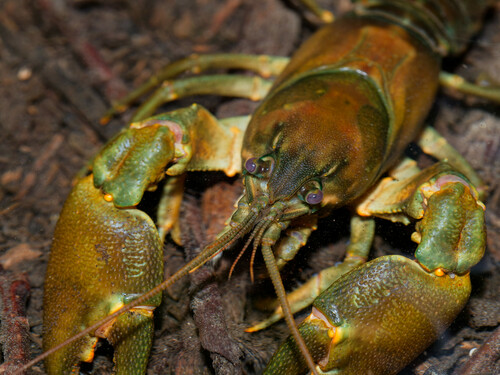
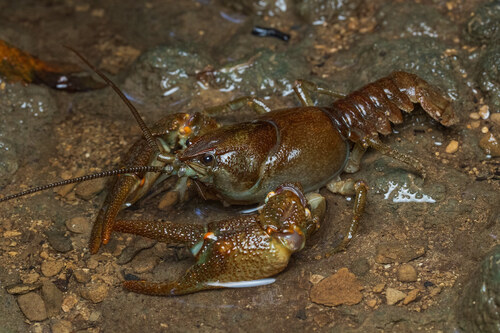
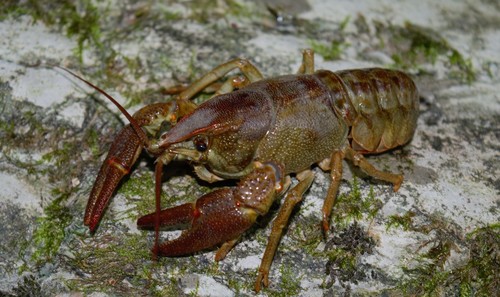
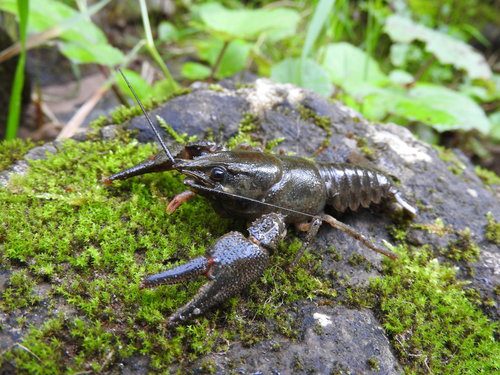
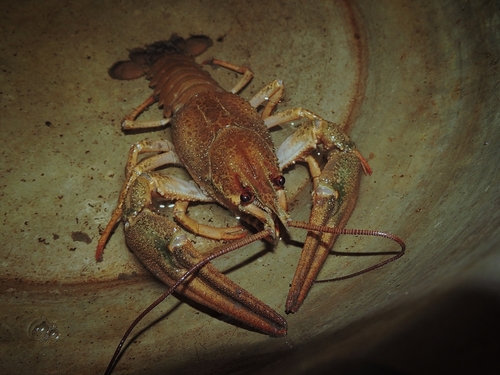
Pontastacus leptodactylus, commonly known as the narrow-clawed crayfish, reaches a maximum total length of 30 centimetres (12 inches), measured from the tip of the rostrum to the end of the telson (tail); most individuals grow to around 15 centimetres (6 inches) long. The sides of its thorax are very rough, and typically range in colour from pale yellow to pale green. This species has two pairs of post-orbital ridges, and the second pair may bear spines. It also has a prominent small nodule (tubercle) on the shoulder of its carapace. Its claws are long and narrow, which gives the species its common name. The upper surface of the claws is rough, while the underside matches the colour of the body. A tubercle is present on the fixed side of the claw. P. leptodactylus is most easily distinguished from the European or broad-fingered crayfish (Astacus astacus) by the relatively thinner claw fingers. Research has confirmed that P. leptodactylus can be coinfected by two or more different pathogens. In a study conducted by R. Salighehzadeh, 10 collected narrow-clawed crayfish were found to carry two pathogenic isolates at the same time: Aeromonas hydrophilia and Fusarium solani. Ecologically, Pontastacus leptodactylus is fairly docile, particularly large-clawed males. It prefers relatively still fresh and brackish water habitats, including lakes, lagoons, and canals, as well as flowing river waters. It is classified as a species of Least Concern on the IUCN Red List.