About Pomatias elegans (O.F.Müller, 1774)
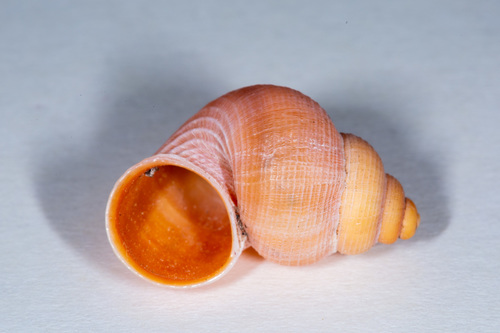
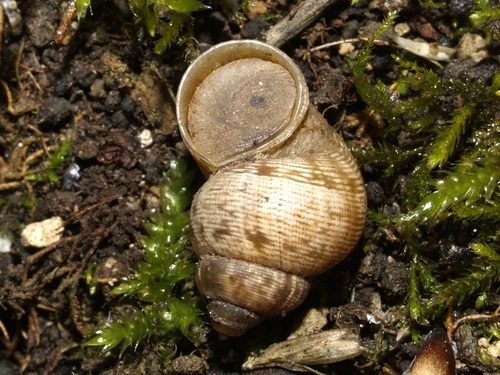
This species, with the scientific name Pomatias elegans (O.F.Müller, 1774), has a thick-walled shell that is ovoid and slightly conical. The shell is made up of 4 ½ to 5 convex spires, with the final spire being the largest. The shell surface is reticulated, marked with dark spots and interrupted bands of beige and violet. Its thick, chalky operculum has an eccentric calcified nucleus and features spiral sculpture. Shell length ranges from 12.5 mm to 15.8 mm, and shell diameter ranges from 7 mm to 11.5 mm. Contraction waves on the surface of the foot are longitudinal, and move from side to side across the foot. This species is very common across Southern Europe. Its total distribution extends east as far as Istanbul, and reaches across the Bosphorus from Istanbul. It is uncommon in Britain and central Europe, and its distribution in North Africa remains poorly documented. Ecologically, this snail only lives in areas with high calcium carbonate levels, such as on limestone or chalk rock, and where soil is loose and friable. It may also sometimes be found in coastal sand dunes where sand contains a large amount of mixed shell fragments.