About Pomaderris paniculosa F.Muell. & Reissek
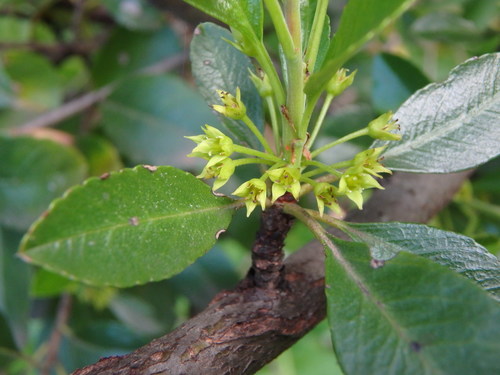
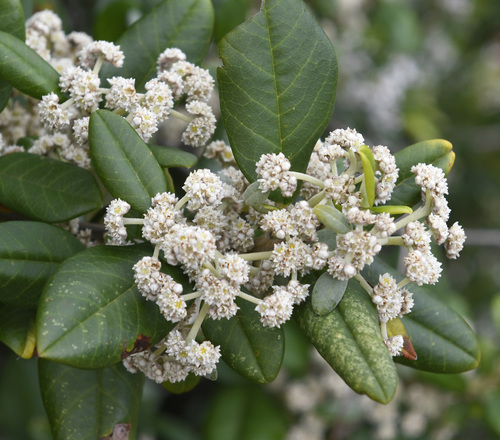
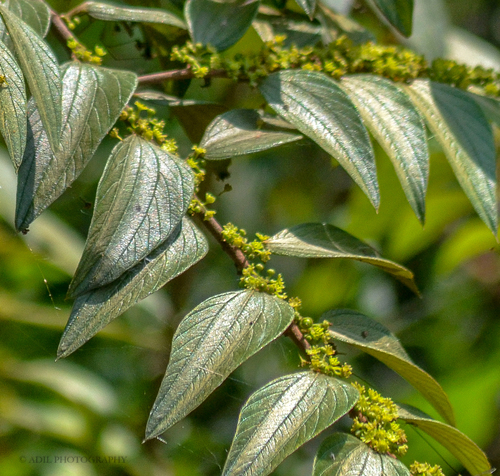
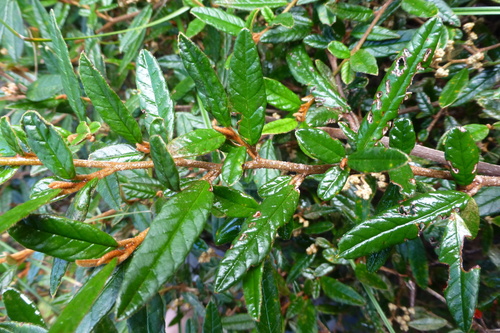
Pomaderris paniculosa F.Muell. & Reissek is a shrub that typically reaches a height of 1 to 3 meters (3 feet 3 inches to 9 feet 10 inches). It produces many branchlets covered in soft greyish to rust-coloured, star-shaped hairs. Its leaves are round, elliptic, or egg-shaped with the narrower end toward the base; leaf size varies depending on the plant's subspecies. Stipules measuring 2 to 4 millimeters (0.079 to 0.157 inches) long grow at the base of each leaf, but these stipules fall off as the leaf matures. The upper surface of the leaves is more or less glabrous, while the lower surface is densely covered in woolly white or rust-coloured, star-shaped hairs.
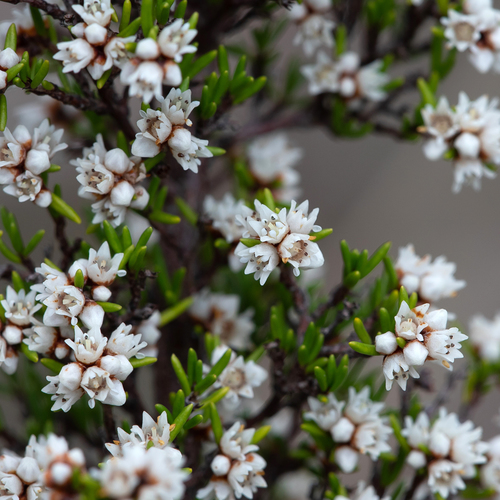
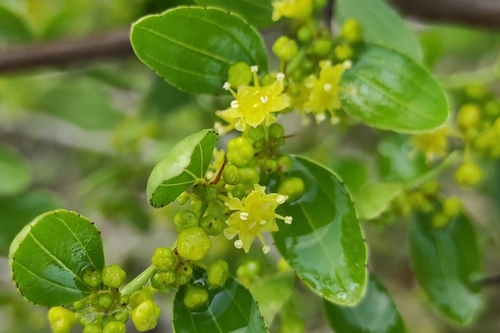
Flowers grow at the ends of branchlets or in leaf axils, usually arranged in panicles, with each flower positioned on a short pedicel. The flowers range in colour from cream to greenish, or are sometimes tinged with crimson, and are densely covered in soft, star-shaped hairs. The size of the petal-like sepals varies by subspecies, and this species does not produce any petals. Flowering occurs from July to November, and the fruit is a capsule approximately 3 millimeters (0.12 inches) long.
This pomaderris grows naturally in Western Australia, South Australia, Victoria, and Tasmania. In Western Australia, it grows along watercourses and near cliffs in the Esperance Plains biogeographic region. The subspecies paralia is only known from a single collection made on Middle Island. In Victoria, subsp. paniculosa grows in shallow soil in mallee woodland in the north-western areas of the state, while subsp. paralia grows along cliffs and on dunes in near-coastal areas. In Tasmania, subsp. paralia has been recorded at near-coastal sites along cliffs and near dunes in the north-east of the state, including on islands of the Furneaux Group and on King Island. This species is presumed extinct in New South Wales.