About Pomacea diffusa Blume, 1957
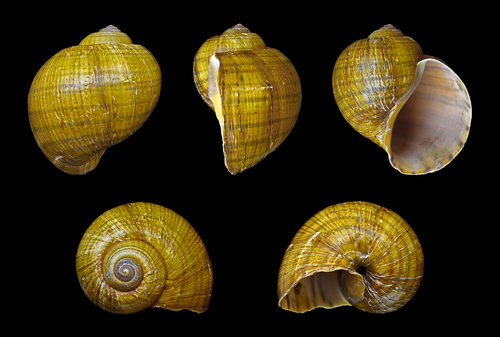
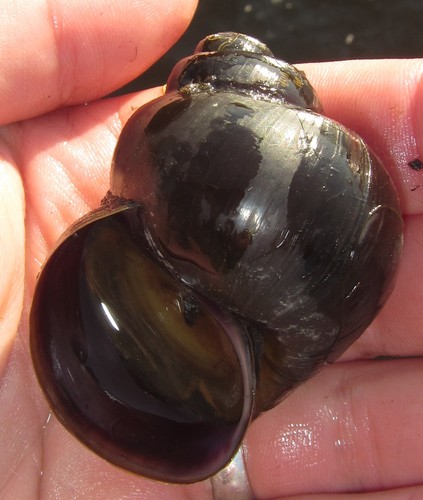
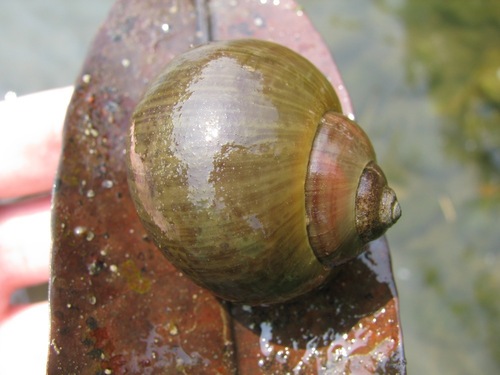
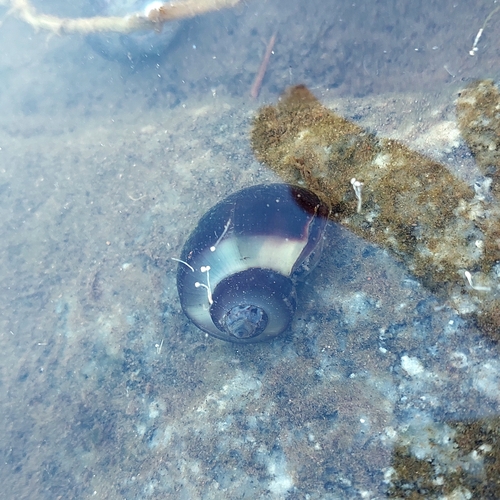
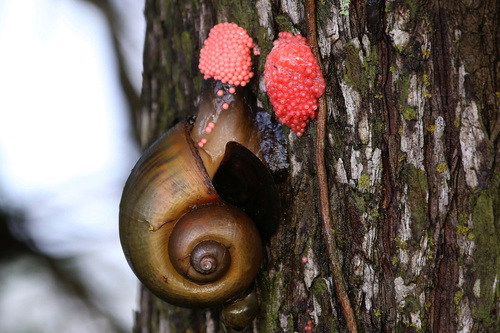
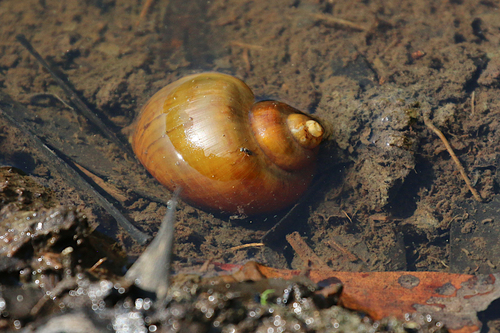
Pomacea diffusa, commonly called the spike-topped apple snail, gets this common name from its relatively raised spire. This species lacks a channeled suture, and overlaps in size range with Pomacea paludosa. Its egg masses have an irregular honeycombed appearance, similar to the egg masses of Pomacea haustrum, but are smaller. The egg masses range in color from tan to salmon, and are white when they are first freshly laid. The type locality of Pomacea diffusa is Santa Cruz de la Sierra, Bolivia, and the species is widespread across the Amazon Basin. Its non-indigenous distribution includes multiple counties in Florida, United States: Thompson recorded the species (identified at the time as Pomacea bridgesii) in Monroe, Miami-Dade, Broward, Palm Beach, and Pinellas Counties. The Florida Museum of Natural History (FLMNH) electronic database also lists specimens from Alachua County; records previously cited from the FLMNH database for Brevard County actually originate from Broward County. Rawlings et al. (2007) also collected this species in Hillsborough and Collier Counties. Pomacea diffusa was first recorded in Florida (as Pomacea bridgesii) by William J. Clench. The FLMNH holds specimens collected in Palm Beach County in 1967 (catalog number FLMNH 20295), and specimens from Miami-Dade and Broward Counties collected in the early 1970s (catalog numbers FLMNH 22175, 222247). Howells et al. (2006) reported that the species became established in Mobile, Alabama in 2003. It has also been recorded in Cuba. Pomacea diffusa is part of the ornamental pet trade for freshwater aquaria.