About Polytrichastrum alpinum (Hedw.) G.L.Sm.
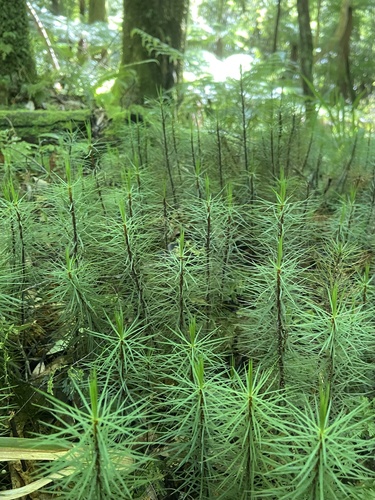
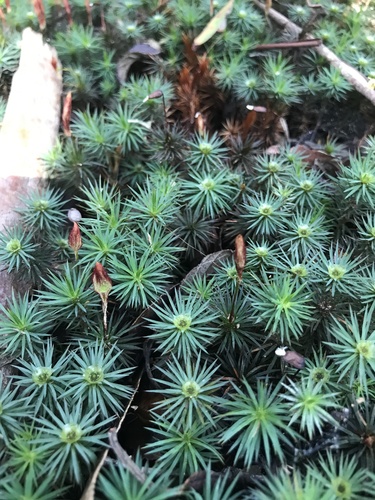
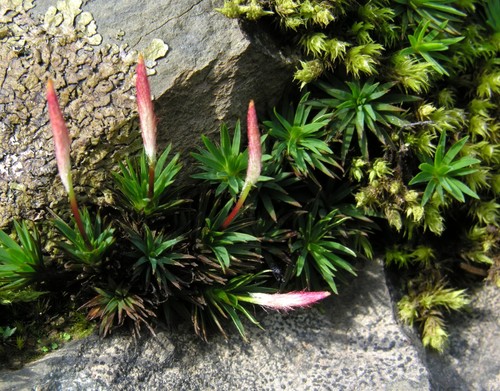
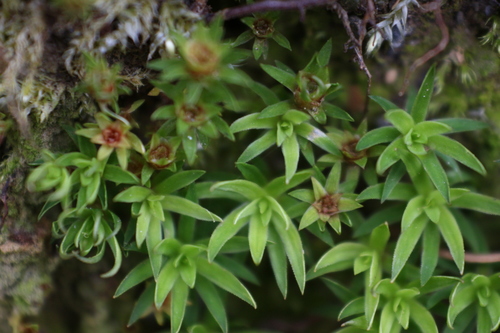
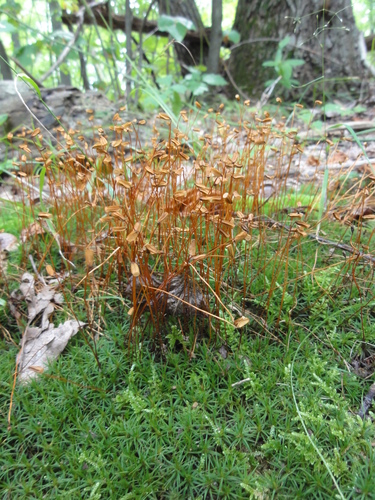
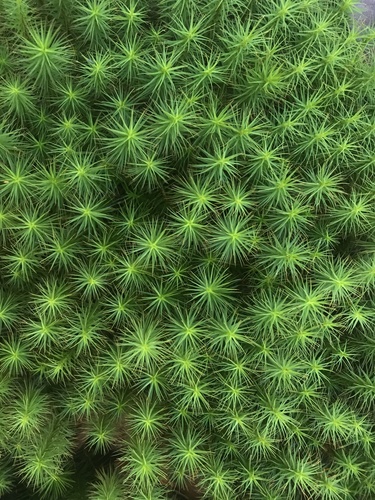
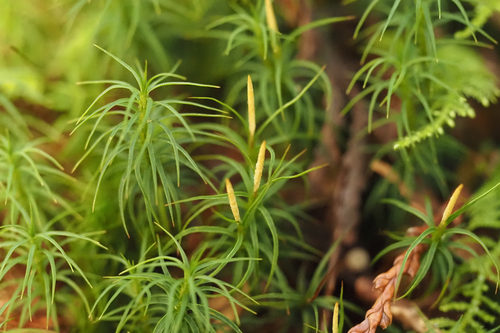
Polytrichastrum alpinum (Hedw.) G.L.Sm. grows to form a loose lawn that ranges in color from muddy green or bluish-green to brownish. It typically reaches heights of 15 to 20 centimeters (6 to 8 inches). Its upright to erect stems often bear tufted branches of equal length in their upper sections. On the lower portion of stems, leaves are small and scale-like, while leaves on the upper stem are larger, usually 7–10 mm long. The leaf base has a broad-oval, yellowish-to-brownish sheath; the overall leaf shape is linear-lanceolate, and the sheath makes up less than one third of the total leaf length. Leaf edges are serrated; leaves overlap when dry, and bend back to protrude outward when wet. The leaf rib is notched in the upper part, and emerges as a short spike from the back of the blade tip. The spreading section of the leaf is covered in up to 40 lamellae, located in the middle of the leaf, which are 5-9 cells high. In cross section, the end cell of each lamella is larger, ovoid, and papillose. Cells in the upper leaf are square to rectangular, while cells lower on the leaf are more elongated and have a hyaline (glassy) appearance. This moss is dioecious and produces fruit fairly often, with spores maturing in summer. Spores measure 14 to 20 μm in size and have fine hairs. The spore capsule can grow up to 5 centimetres (2 in) long, and is red on its lower portion and yellowish on its upper portion. The olive-brown to black seta (stalk) is slightly curved and tilted, with an elliptical-cylindrical shape. It has a contrasting neck that bears numerous large, single-celled stomata. This moss grows in a wide range of habitats, from shaded to sunny sites, on fresh to moist, nutrient-poor soils that can be either calcareous or base-poor. It may also colonize stony soil, boulders, and snowy grikes located above the treeline. In Europe, it is commonly found in arctic and boreal regions, and is restricted to montane landscapes and alpine areas further south. It is also distributed across Asia, Africa, the Americas, Australia, New Zealand, and Antarctica.