About Polytelis anthopeplus (Lear, 1831)
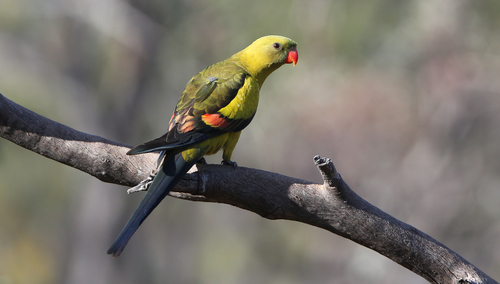
This species, Polytelis anthopeplus, is a yellowish-green, long and slender parrot. Both sexes share similar patterning, and individuals measure 14½–16½ inches (37–42 cm) in length, with an average weight of four ounces. Females are generally more green overall, while males are much yellower. The upper surfaces of the tail feathers are dark blue-green, and the undersides are black. Males are primarily yellow, with multiple shades of yellow on the head; their back is typically made up of various colorful shades of green, and their beak is generally red. Immature birds resemble females, and have duller plumage than adult males. For reproduction, this parrot nests in deep tree hollows at the base of large tree trunks, which can extend up to fifteen feet into the main stem. The nest site is usually a large eucalyptus, with a trunk hollow that often reaches almost to ground level. The female lays around four eggs, and broods a clutch of 3 to 8 eggs for approximately 21 days. During brooding, the female rarely leaves the nest, if at all, and is fed by the male. After the young hatch, both the male and female care for the chicks. During the chick-rearing period, the adult parents consume several times their normal portion of food, which they then bring to their young. Young birds fledge (begin to fly) at around 5 weeks old, and reach sexual maturity at about 2 years of age.