About Polystichum vestitum (G.Forst.) C.Presl
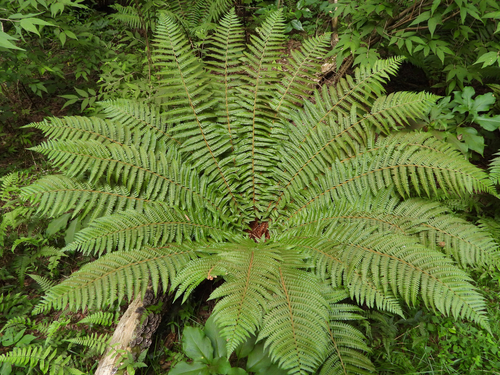
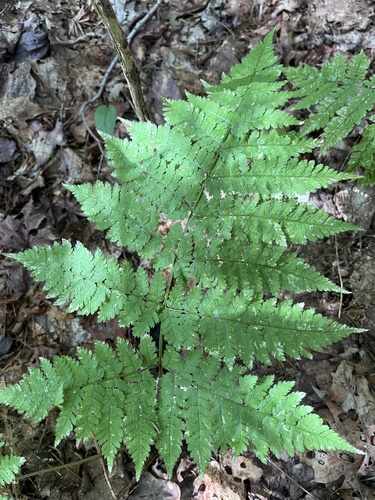
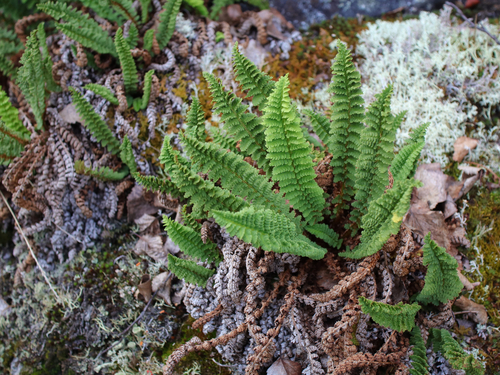
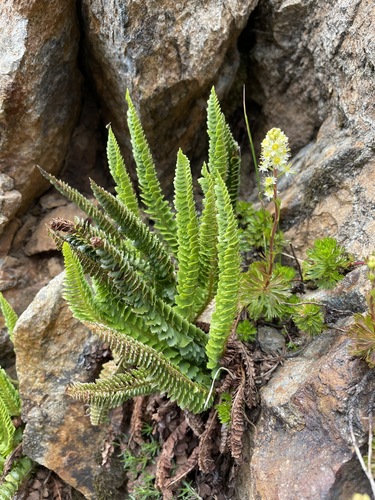
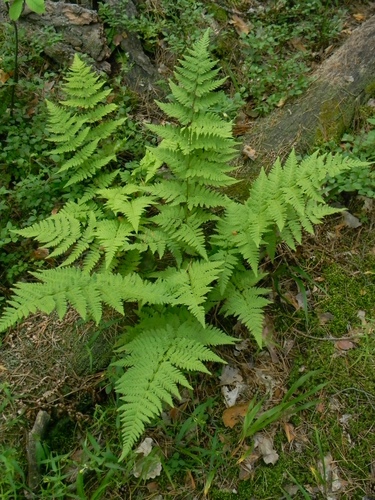
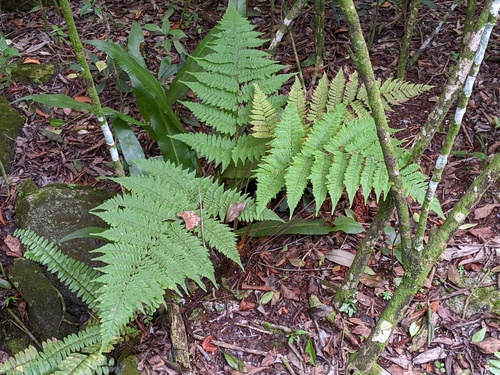
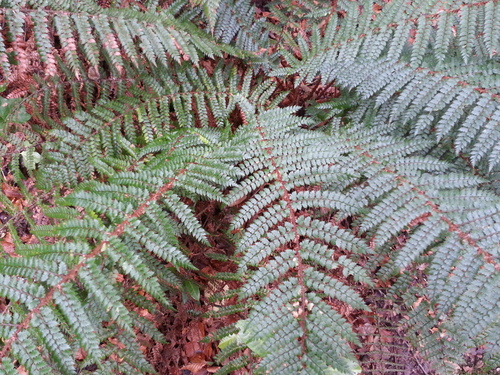
Polystichum vestitum, commonly called the Prickly Shield Fern, is a terrestrial fern with an erect, scaly rhizome that sometimes forms a short trunk, and reaches a total height of up to 700 mm. Its fronds are 220 to 600 mm long. Each pinnule bears 3 to 7 round sori, positioned halfway between the pinnule margin and midrib, and each sorus is covered by a light brown indusium. The scales of this fern are typically bicoloured, with a dark brown centre surrounded by pale brown margins. On individuals growing on the Chatham Islands and subantarctic islands, the dark brown centre may be reduced and less obvious.
The scientific name has descriptive origins: Polystichum comes from the Greek words polus and stikhos, translated as "many rows", which refers to the parallel rows of spore cases on the underside of the fronds. The specific epithet vestitum derives from the Latin verb vestire, meaning "to be clothed", which refers to the dense covering of scales on the fern's leaf stalks.
This fern is native to New Zealand (including its North and South Islands, Chatham Islands, and the subantarctic Snares, Antipodes, Auckland, and Campbell Islands), as well as Australia’s Macquarie Island. In New Zealand, it occurs across the North and South Islands, but it is not very common north of Auckland or the Coromandel Peninsula.
Its habitat varies between New Zealand's main islands: on the North Island, it is often found growing on hillsides and at higher altitudes where the climate is cooler. On the South Island, it occupies a wider range of habitats, including coastal and alpine regions, and lower altitudes. It is common in exposed landscapes such as gulley floors, forest margins, and tussock grasslands, and can also grow abundantly in cool, wet forests.
The spores of P. vestitum are produced in round sori protected by round indusia, which is a characteristic feature of the Polystichum genus. Individual spores of this species are monolete and bilaterally symmetrical, a trait that allows for unique identification of the species.