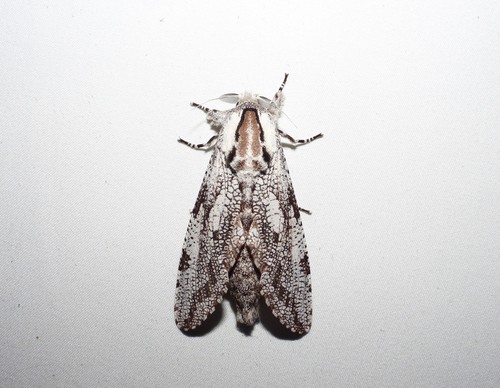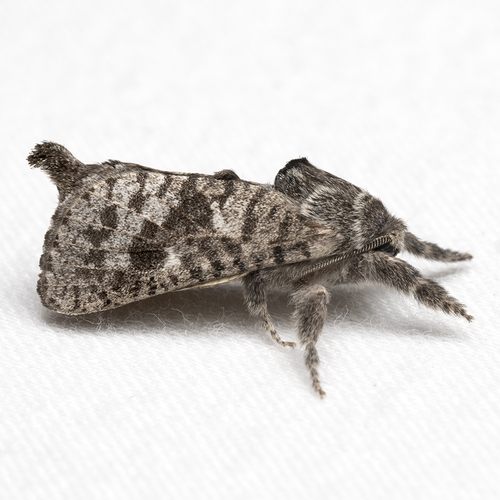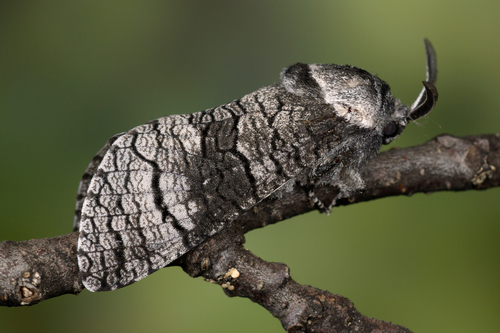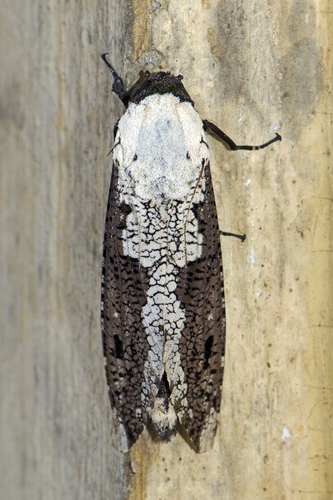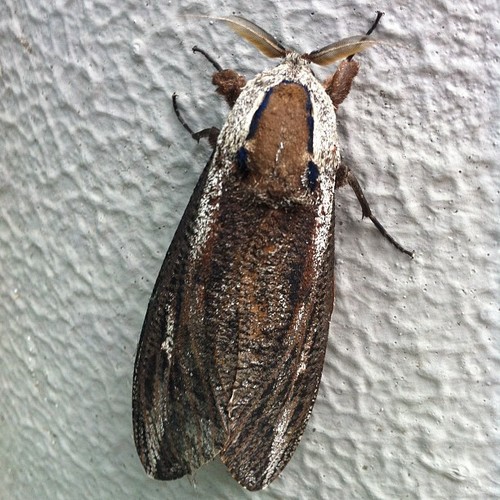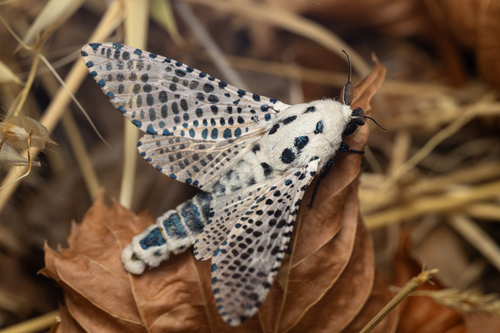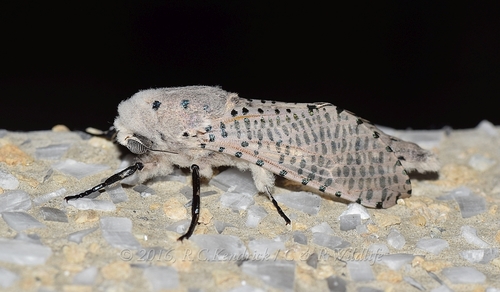
About Polyphagozerra coffeae Nietner, 1861
This species has a defining characteristic: vein 6 of the forewing originates from above the angle of the cell. All three segments of the thorax each bear a pair of small black spots. The abdomen is black and covered in white hairs. The spots on the forewings are small and black, and all of these spots are faded except those that lie along the costa, outer margin, and inner margin. The hindwing has a small number of faded small spots, plus a distinct series of marginal spots running from the apex to vein 2; these marginal spots sometimes join together. In female individuals, the spots on the forewing are fewer in number than in males, but they are more prominent and have a metallic blue tinge. Both larvae and pupae are reddish brown. Females lay eggs on the stems of host plants, arranging the eggs in several rows on plant branches. Larvae hatch from the eggs approximately ten days after laying. The larvae feed on a wide variety of plant genera, including Casuarina, Erythroxylum, Acalypha, Phyllanthus, Doryalis, Hydnocarpus, Annona, Cinnamomum, Persea, Phoebe, Amherstia, Cassia, Pericopsis, Xylia, Gossypium, Hibiscus, Cedrela, Chukrasia, Melia, Swietenia, Psidium, Grevillea, Crataegus, Eriobotrya, Coffea, Citrus, Santalum, Filicium, Nephelium, Schleichera, Cestrum, Theobroma, Cryptomeria, Camellia, Clerodendrum, Lantana, Tectona, and Vitex. Larvae occasionally become pests on coffee, tea, cotton, cocoa, kapok, coca, and teak. They bore into the stems or branches of their host plants. In Thrissur district, Kerala, India, larvae of this coffee carpenter moth were found damaging allspice for the first time.