About Polypedates otilophus (Boulenger, 1893)
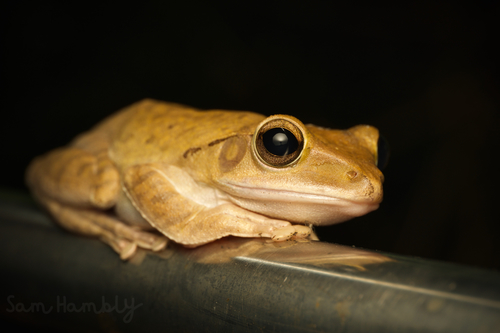
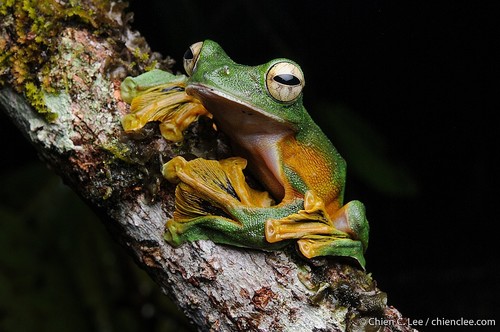
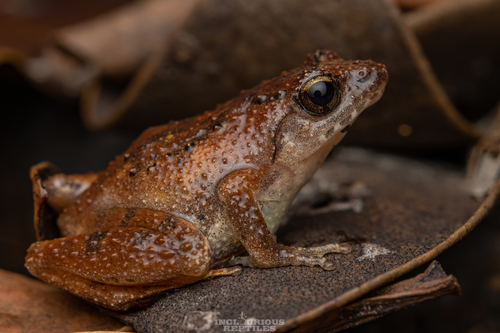
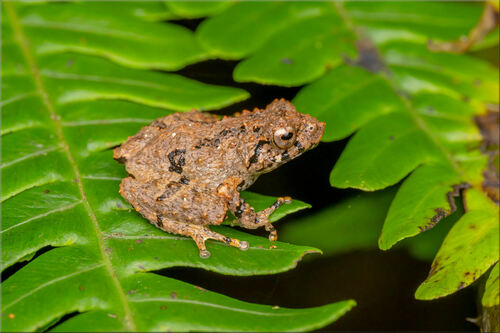
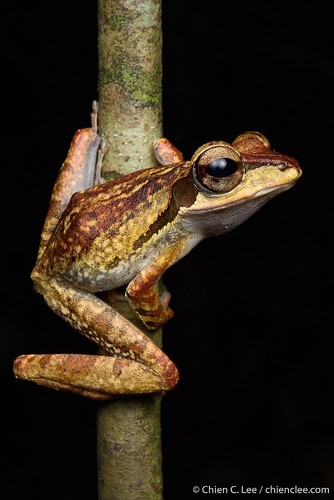
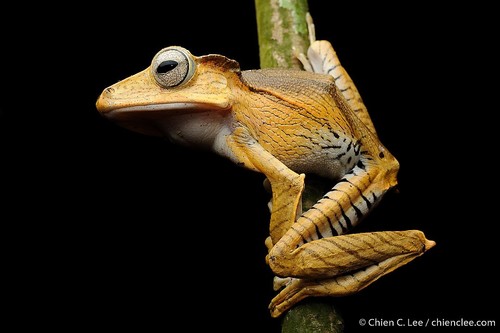
Scientific name: Polypedates otilophus (Boulenger, 1893). Males of this species reach up to 80 mm (3.1 in) and females up to 100 mm (3.9 in) in snout–vent length. Individuals have a robust body that is lemon yellow on the dorsal side, marked with many thin black stripes. The thighs also bear many black bars. The tympanum is conspicuous, with a serrated bony crest positioned above it. Fingertips are expanded into large discs, while the discs on the toes are smaller. Fingers only have rudimentary webbing, and toes have moderate webbing. Tadpoles of Polypedates otilophus are yellowish green on the upper side and white on the underside. They develop the same stripes seen in adult individuals well before they complete metamorphosis. The largest tadpoles reach 60 mm (2.4 in) in total length. This species most commonly occurs in secondary habitats, at the edges of primary forest, and in villages. Adults are easiest to locate at appropriate breeding ponds, where they perch on vegetation 1–4 m above the ground. The IUCN does not consider Polypedates otilophus to be a threatened species.