About Polyhymno acaciella Busck, 1900
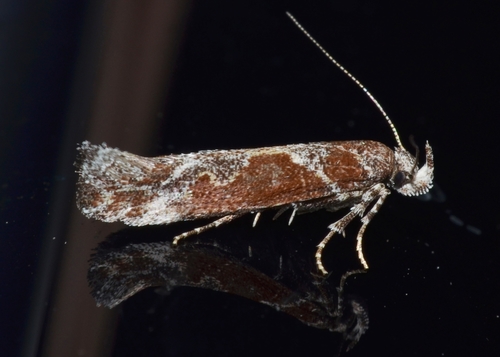
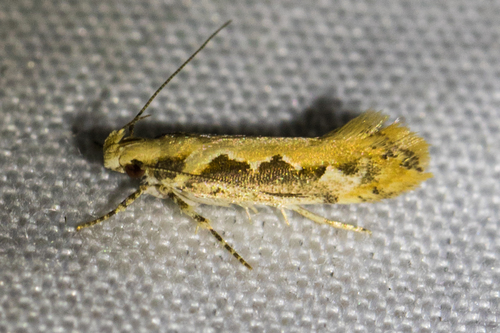
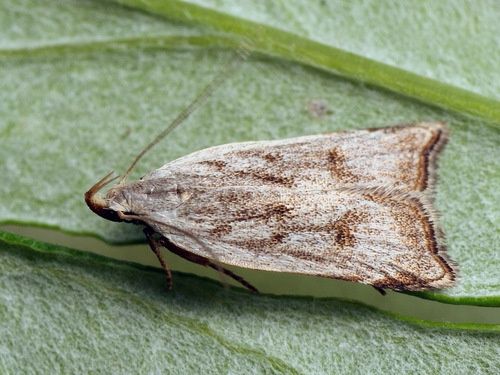
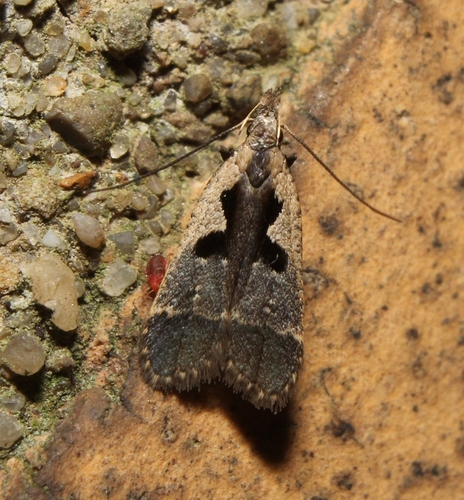
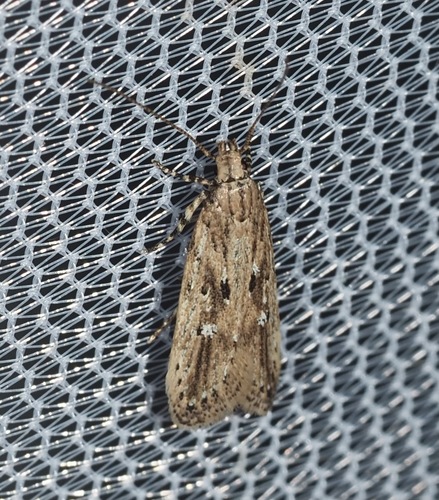
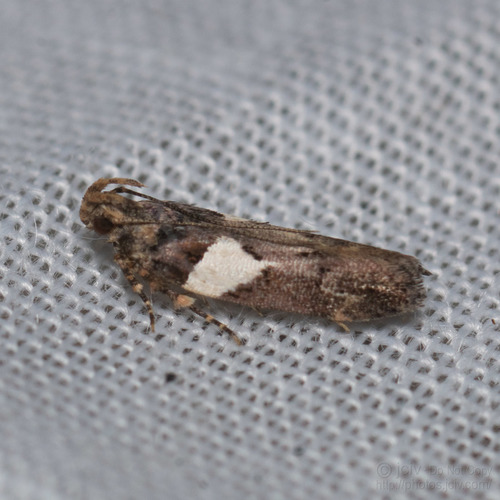
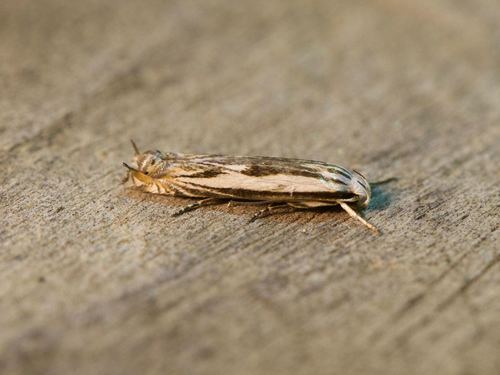
Polyhymno acaciella is a moth species that belongs to the family Gelechiidae. It was first described by August Busck in 1900. This species is found in North America, with confirmed records from the states of Oklahoma, Texas, Arizona, and California. The wingspan of adults ranges from 12.5–14 mm (0.49–0.55 in). The forewings are dark mouse brown, marked with a broad spindle-shaped longitudinal white band running through the middle of the wing from the base to beyond the end of the cell. Between this band and the dorsal edge, there is a short white longitudinal streak that starts around the middle of the wing, becomes narrower and fainter toward the outer edge of the wing, and ends in the dorsal cilia. At the end of the central white band, there are three white streaks—one below the end of the band and two above—that converge toward a common point just before the wing apex. In the costal cilia, three short, nearly perpendicular streaks also converge toward this same point, which is a lighter yellowish gray shade than the rest of the wing. The hindwings are dark gray. The larvae of Polyhymno acaciella feed on Acacia farnesiana. Mature larvae are very dark, appearing nearly black, and have black heads.