About Polygala virgata Thunb.
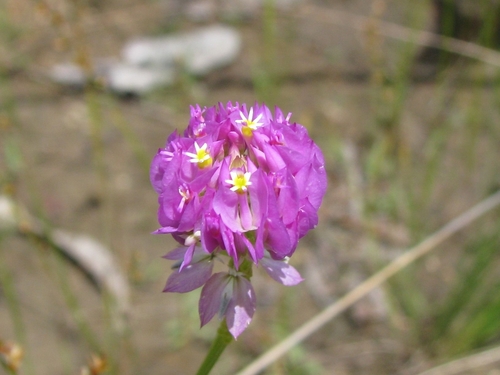
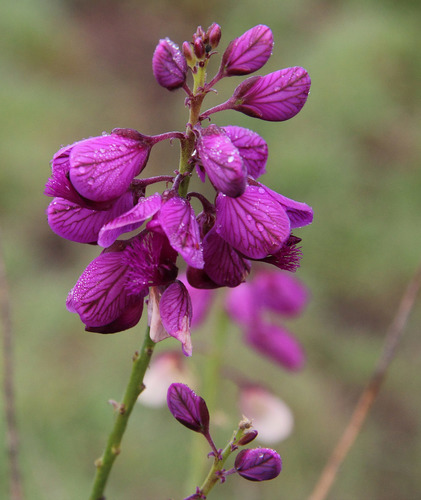
Polygala virgata Thunb. is an erect evergreen shrub that typically grows 1–3 m tall. It forms a single stem at the base, with slender hairless branches in its upper section. Lower branches are leafless, marked by irregular scars from fallen leaves, and the main stems are thinly hairy. Its leaves range from linear or oblanceolate to slender, and can be somewhat egg-shaped; they measure around 1–5 cm long and 1–5 mm broad, and are only slightly hairy. Simple leaves are arranged alternately on younger branches, and typically fall before the plant blooms. This species is native across much of Africa. In South Africa, it occurs from Cape Town through KwaZulu-Natal to Mpumalanga. Outside South Africa, it is native to the Democratic Republic of the Congo, Eswatini, Lesotho, Malawi, Mozambique, Namibia, Tanzania, Zambia and Zimbabwe. Grown as a garden ornamental, it has escaped cultivation and become naturalized in coastal districts of eastern New South Wales (from southern Sydney to Myall Lakes), central Queensland, and southern Victoria in Australia, as well as in New Zealand. Polygala virgata tolerates drought, wind, and mild frost. It naturally grows on lower slopes and the borders of bushy hillsides, along stream banks, on sandstone, clay, or limestone slopes, and at forest margins. It is self-seeding: small seedlings sprout near the parent plant after the first flowering season. This species is rather short-lived.