About Polygala senega L.
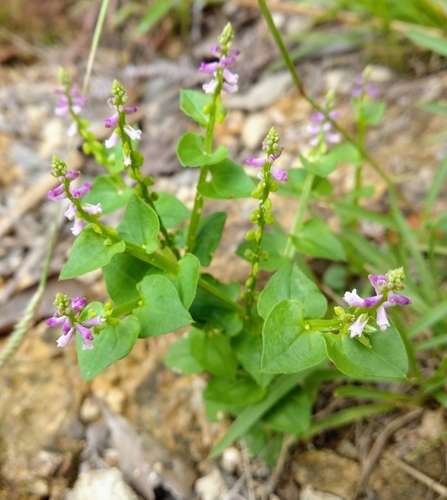
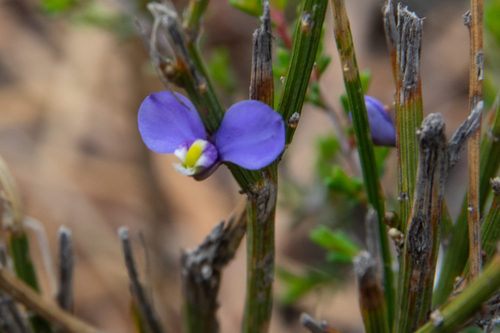
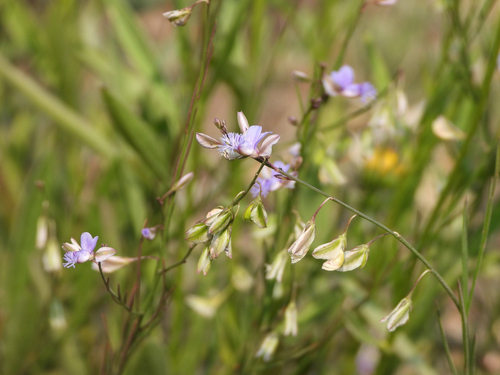
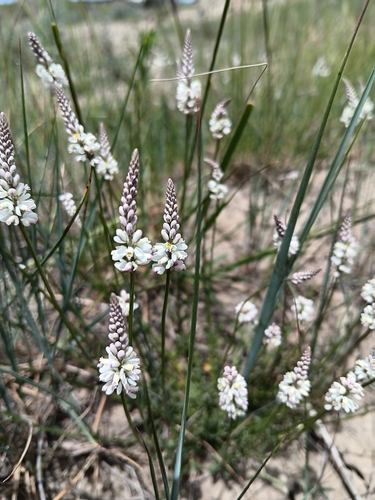
Polygala senega L. is a perennial herb that produces multiple stems, growing up to 50 centimeters tall. Most stems are unbranched, though older plants may develop branching stems. A mature individual can grow up to 70 stems from a hard, woody, horizontally spreading rootstock. Its leaves are lance-shaped and alternately arranged; lower leaves are reduced and take on a scale-like form. Its inflorescence is a spike holding rounded white or greenish flowers. The fruit is a capsule that holds two hairy black seeds. The root of this species is twisted and conical, with a scent similar to wintergreen and a very pungent taste. Two root morphs of this species exist: a northern morph found in Canada and toward Minnesota has larger roots, reaching up to 15 cm long and 1.2 cm wide, that are dark brown, sometimes purplish near the top; the southern morph native to the southeastern United States has smaller, yellow-brown roots. This plant grows in prairies, woods, and wet shoreline and riverbank habitats, preferring thin, rocky, usually calcareous soils. It also grows in disturbed habitats including roadsides. Native American groups used this plant for a range of medicinal purposes. The Cherokee used it as an expectorant and diuretic, and to treat inflammation, croup, and the common cold. The Chippewa used root preparations to treat convulsions and bleeding wounds. The Cree chewed the root to soothe sore throat and toothache. Canadian botanist Frère Marie-Victorin speculated the Seneca may have been inspired to use the root to treat snakebite due to its resemblance to a rattlesnake's tail. The root was exported to Europe in the 1700s, and was widely sold by pharmacists through the 1800s, marketed as a treatment for pneumonia. It remains in use as an herbal remedy today: it is ground and processed into patent medicines, most often for respiratory complaints, and is added to cough syrups, teas, lozenges, and gargles. This plant is toxic in large amounts; overdose causes symptoms including diarrhea and violent vomiting. Powdered root can act as a sternutatory, meaning it induces sneezing. The processed root product is known as Senegae Radix, Radix Senegae, or simply senega. Active compounds found in the root include saponins such as senegin, plus phenolic acids, sorbitol derivatives, methyl salicylate (oil of wintergreen), and sterols. Its expectorant effect comes from saponins irritating mucous membranes, which increases respiratory secretions and reduces their viscosity to produce a productive cough.