About Polygala myrtifolia L.
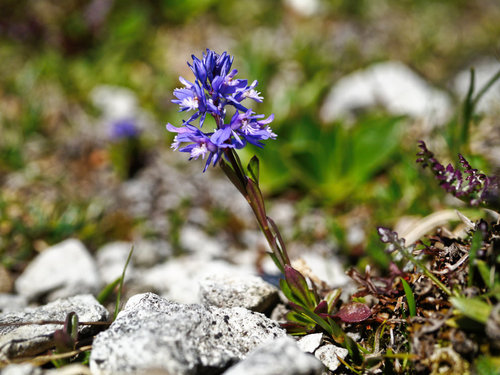
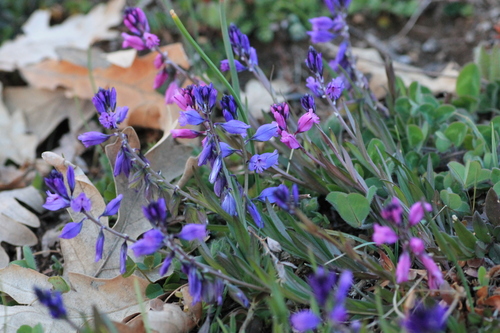
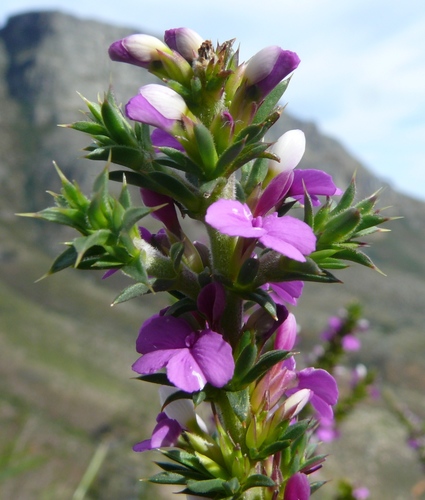
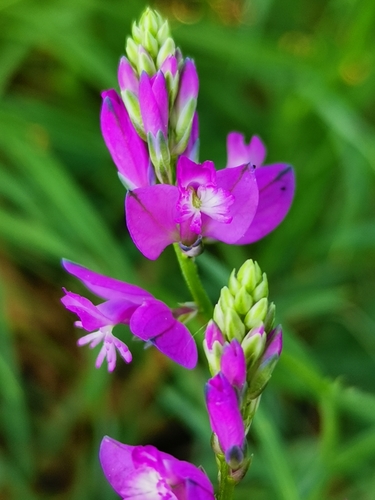
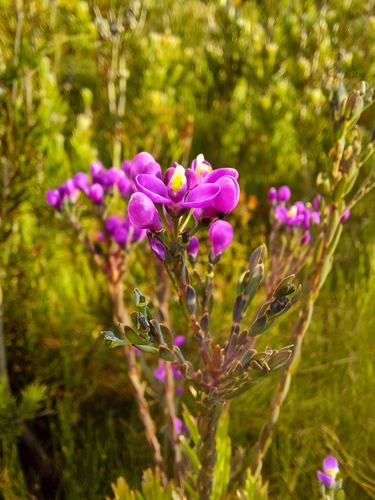
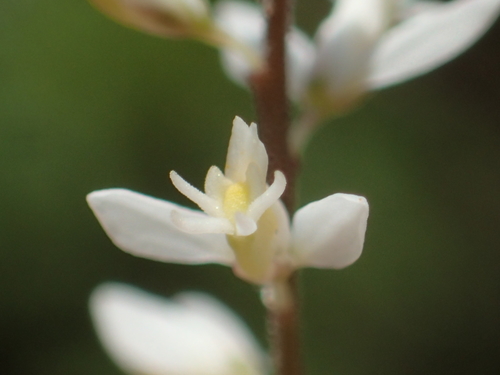
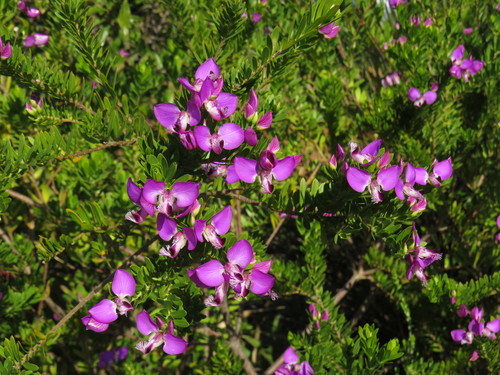
Polygala myrtifolia, commonly called myrtle-leaf milkwort, is an evergreen South African shrub or small tree that grows 2–4 meters tall. It grows along the southern and south-eastern coasts of South Africa, ranging from near Clanwilliam in the Western Cape to KwaZulu-Natal. It is a fast-growing pioneer plant and a typical component of fynbos. It can be found growing on dunes, in rocky areas, along forest margins, beside streams, and in open grassland. It is classified in the milkwort family, Polygalaceae. Its thin, oval leaves have a mucronate tip, are 25–50 mm long and up to 13 mm wide; leaves are arranged alternately with entire margins. Some forms of P. myrtifolia have thin, needle-like leaves instead. Its attractive flowers resemble sweetpea flowers, are most often mauve, but may also be pink, crimson, or white. Flowers close at night, and have a characteristic brush-like tuft that protrudes from the keel. Pollination occurs via an intricate piston mechanism. Its fruit is an oval, brown, dehiscent capsule with narrow wings. This species is frequently cultivated in South African gardens. P. myrtifolia is recorded to have antibacterial and antifungal properties. Research carried out by the University of KwaZulu Natal found that aqueous extracts of P. myrtifolia were effective against Candida albicans.