About Polygala amarella Crantz
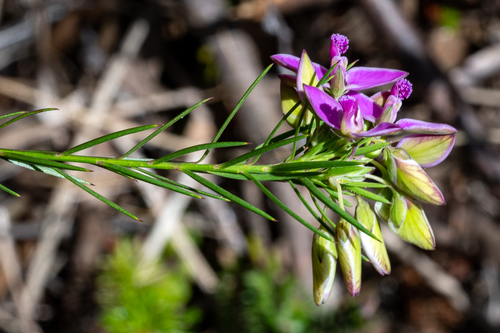
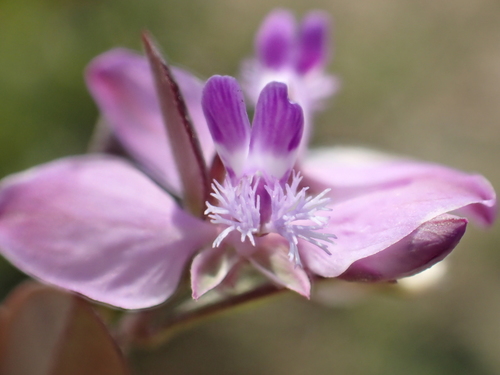
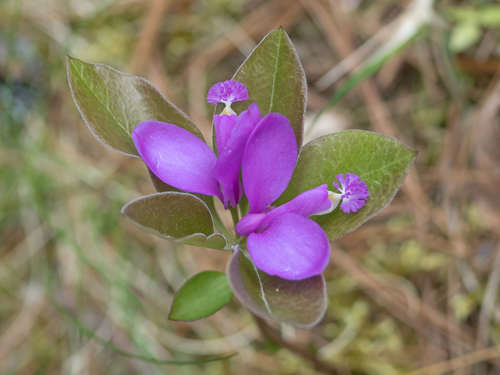
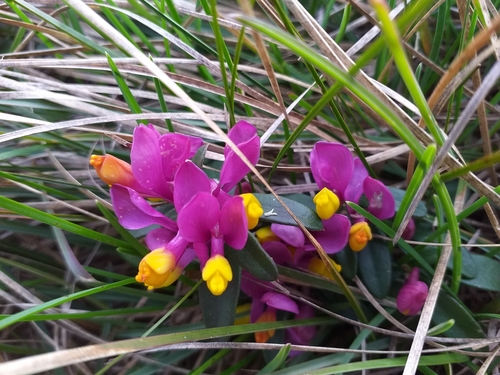
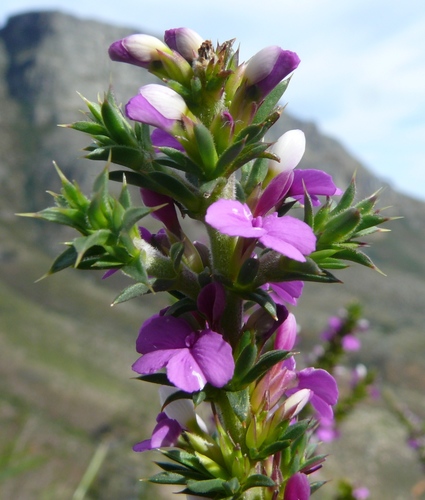
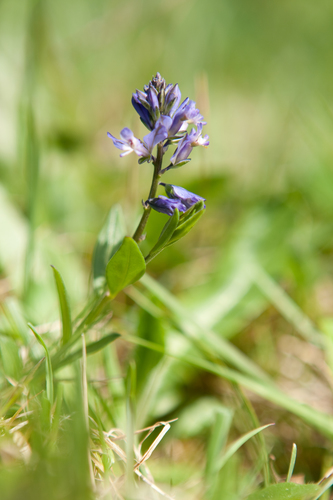
Scientific name: Polygala amarella Crantz, also known as dwarf milkwort. This is a tiny erect perennial plant, usually growing between 1.5 and 5 cm tall, though it can reach up to 20 cm. It forms a basal rosette of shiny obovate leaves. The unbranched stem has alternate, narrowly lanceolate leaves, and is slightly woody at its base. Dwarf milkwort typically produces 7 to 20 zygomorphic flowers arranged in a raceme. These flowers range in length from 2.5 to 5 mm, and vary in colour from pale mauve to white; populations in Kent, UK, often have green hints. The flower structure includes three tiny outer sepals, two large coloured inner sepals, and three small, white fused true petals. This species is very similar to chalk milkwort, but can be easily distinguished by three key traits. Dwarf milkwort has its rosette leaves positioned basally, while chalk milkwort's rosette leaves sit slightly raised on the stem. Dwarf milkwort also has a bitter taste, which chalk milkwort lacks, and the inner sepals of dwarf milkwort are longer than its petals. Dwarf milkwort is widespread across Europe, especially common in the Alps. In the UK, which forms the periphery of the species' range, it is currently only found in Kent and Yorkshire. In Kent it grows mostly on chalky grasslands of the North Downs, and in Yorkshire it grows on limestone outcrops in the Yorkshire Dales. Based on its Ellenberg values: L=9, F=6, R=9, N=1, S=0, this plant grows in full light, in moist, basic, infertile soils with no salinity. It is a short-lived polycarpic perennial. The Kent population of dwarf milkwort is believed to be shorter-lived than the Northern British population. It reproduces solely by seeds. Each seed has a small oily appendage called an elaiosome, which helps ants disperse the seeds. Seeds of dwarf milkwort persist in the soil for less than one year. Dwarf milkwort has a history of traditional use in herbal medicine.