About Polyerata decora Salvin, 1891
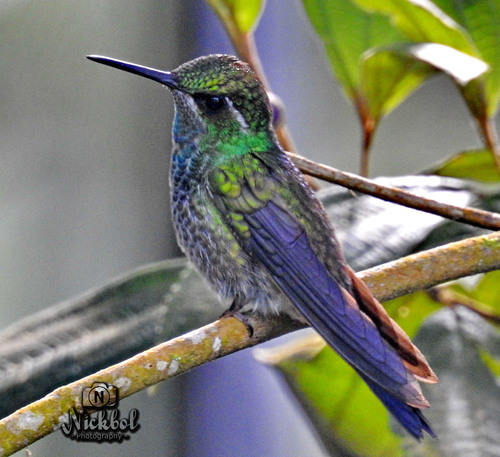
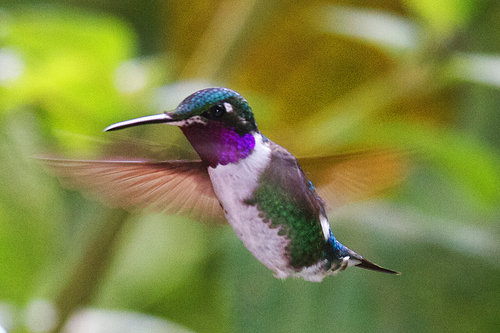
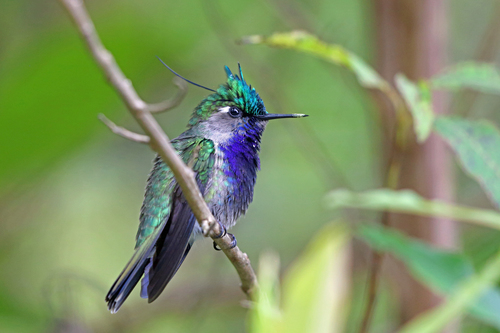
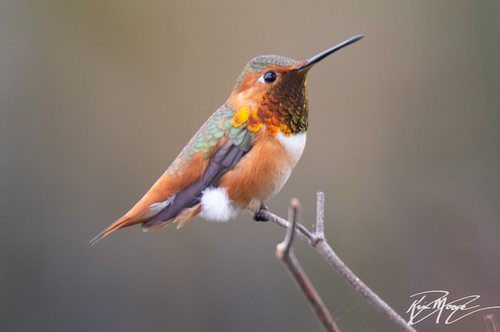
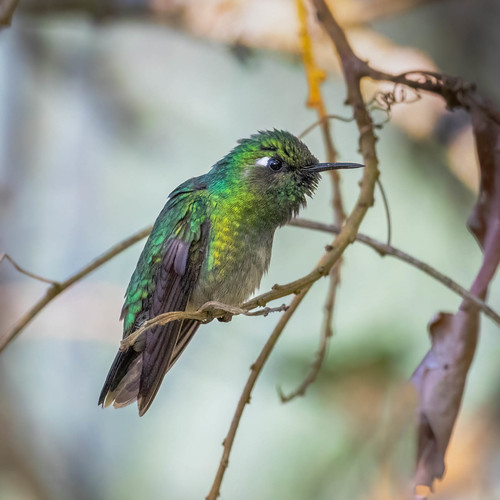
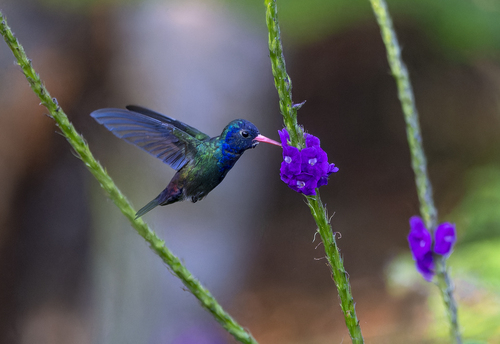
The charming hummingbird, also known as the beryl-crowned hummingbird, has the scientific name Polyerata decora Salvin, 1891. It is a species of hummingbird in the family Trochilidae, and it is found in Costa Rica and Panama. Its natural habitats are subtropical or tropical moist lowland forest and heavily degraded former forest. It stays along forest exteriors, where it searches for scattered flowers and various arthropods to eat. This species was split from the blue-chested hummingbird and recognized as its own separate species, based on its longer beak, longer wings, and subtle differences in coloration. Up to 12 male charming hummingbirds gather together in leks to sing in order to attract mates. This species was formerly classified in the genus Amazilia. A 2014 molecular phylogenetic study found that the genus Amazilia was polyphyletic. In a revised classification created to form monophyletic genera, the charming hummingbird was moved to the resurrected genus Polyerata.