About Polydesmus angustus Latzel, 1884
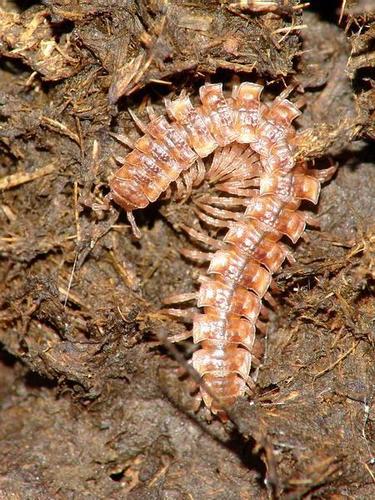
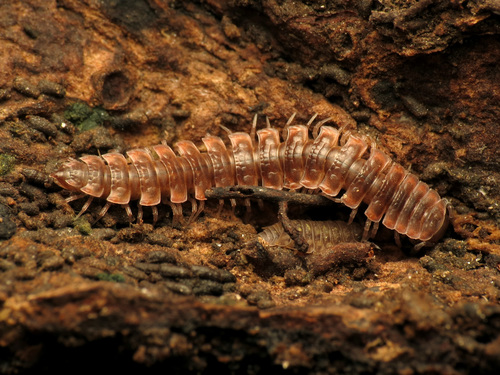
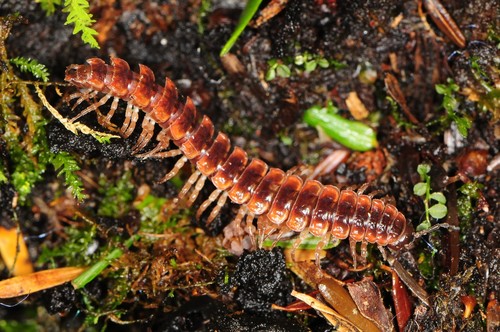
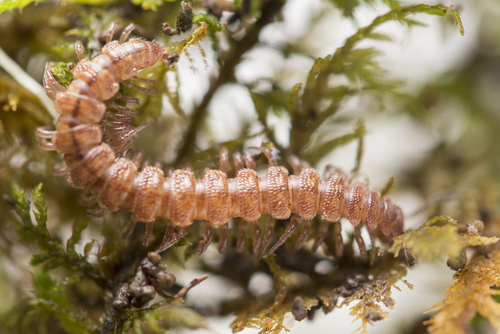
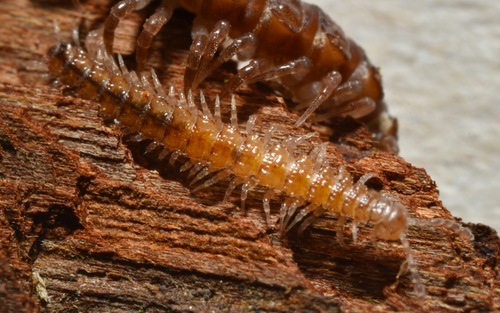
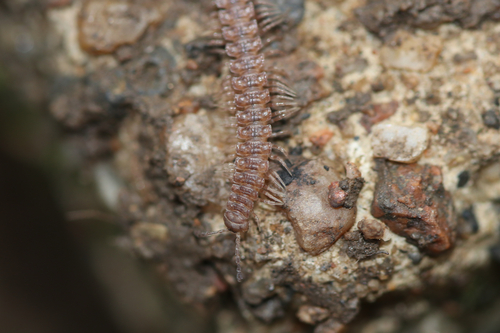
Polydesmus angustus, commonly called the flat-backed millipede, is a rather small millipede species. It typically reaches 24 millimetres (0.94 in) in length, but captive individuals have been recorded as small as 18 millimetres (0.71 in) and as large as 50 millimetres (2.0 in). This wide variation in size is attributed to differences in nutrition quality and humidity. As its common name suggests, Polydesmus angustus has a distinctly flattened body. The chitinous exoskeleton of all 20 body segments extends laterally, an adaptation that helps it dig and camouflage in leaf litter. It looks very similar to other species in the same genus, including P. coriaceus, P. denticulatus and P. inconstans, and can only be reliably identified by the shape of the male gonopods or female epigyne. Polydesmus angustus is most commonly found in Western Europe, including the British Isles. There have also been sightings in the eastern and western United States and southern Canada, where it is likely an invasive species. It was often thought that this millipede prefers woodland habitats, since it is commonly found in woodland leaf litter. However, more recent research indicates that the species actually prefers heath and moorland environments. This preference matches its tendency to favor peat soils and its avoidance of soils with more than 45% clay content.