About Polydesma umbricola Boisduval, 1833
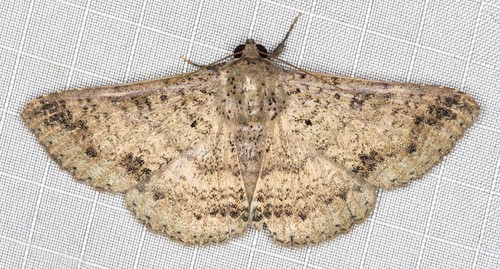
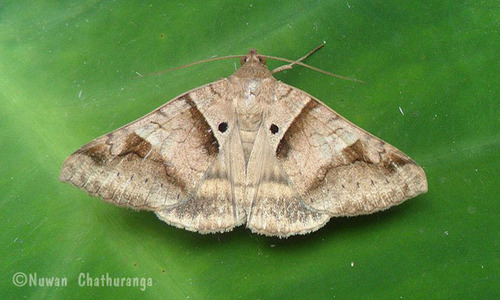
Polydesma umbricola has a wingspan of approximately 50 millimeters. Males have minutely ciliated antennae, palpi with a short third joint, and a ventral sub-basal area on the hindwings covered in long silky hair. The body is brown, suffused with fuscous color. The forewings have indistinct waved sub-basal, antemedial, medial, and post-medial lines, each starting from a black spot on the costa. There is a crenulate pale sub-marginal line with fuscous suffusion inside it, and a marginal series of lunulate spots. The hindwings have an indistinct antemedial and medial sinuous line, a crenulate sub-marginal pale line with fuscous suffusion inside it, and a marginal series of lunulate spots. On the ventral side, the area inside the crenulate submarginal line of both wings is broadly suffused with fuscous. Ecologically, the caterpillar of this species is a serious defoliator of many plants worldwide. Adult females lay eggs near the tips of terminal twigs. When larvae first emerge, they feed on the tender leaves of these twigs. There are six larval instars before pupation. Young larvae produce silk threads from their spinnerets and suspend themselves from twigs using these threads. This habit, plus the discharge of fluid from a saclike eversible gland, are the only known defense strategies for this species. Pupation typically occurs within cracks and crevices in bark. Both older larvae and adults are nocturnal. Recorded host plants for larvae include Albizia lebbeck, Pithecollobium dulce, Albizia saman, Acacia, Rosa, and Salix.