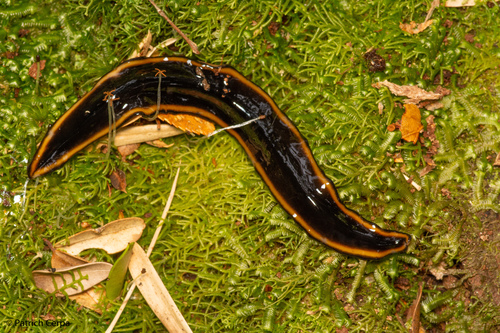
About Polycladus gayi Blanchard, 1847
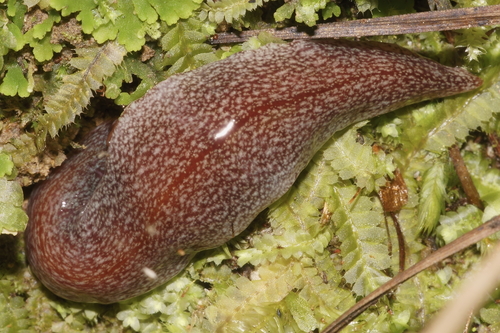
Polycladus is a genus of land planarians distinguished by a wide, flat, leaf-shaped body. The body width of members of this genus reaches approximately 40% of body length, making it the widest-bodied genus of land planarians. Its eyes are located only along the body margin, which differs from most other wide-bodied South American land planarian genera, where eyes extend onto the dorsum. The entire ventral body surface is covered in cilia, and both the mouth and gonopore are positioned further toward the posterior end of the body than they are in other land planarians. In terms of body musculature, Polycladus retains all the typical muscle layers seen in most Geoplaninid genera, but also has two extra muscle layers: an additional subneural layer of transverse fibers, and a transneural layer of longitudinal fibers. The transneural longitudinal fiber layer crosses the ventral nerve plate and intermingles with the subintestinal and subneural transverse layers. The copulatory apparatus of Polycladus has a well-developed permanent penis, and the female canal enters the genital antrum from the dorsal side. The current genus definition is incomplete, as it does not cover all anatomical structures that are currently required to define planarian genera.