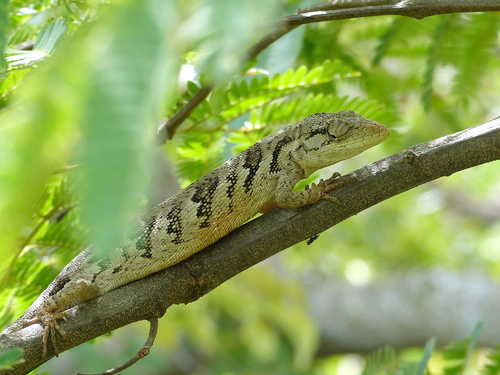
About Polychrus acutirostris Spix, 1825
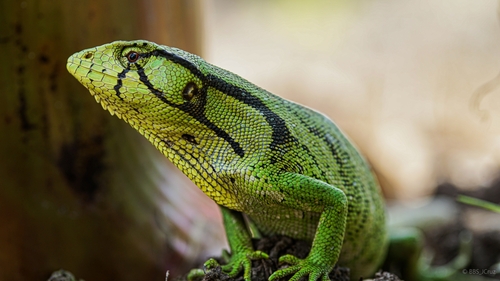
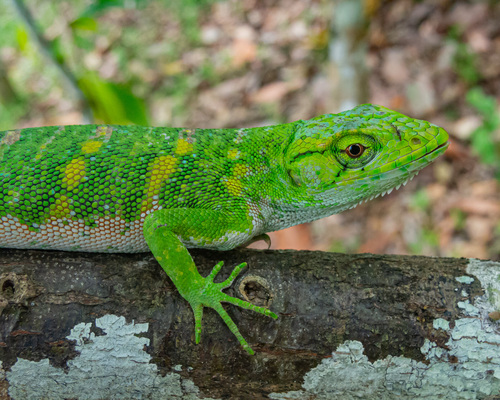
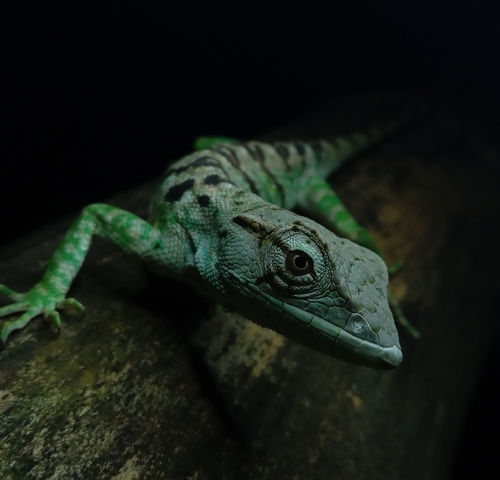
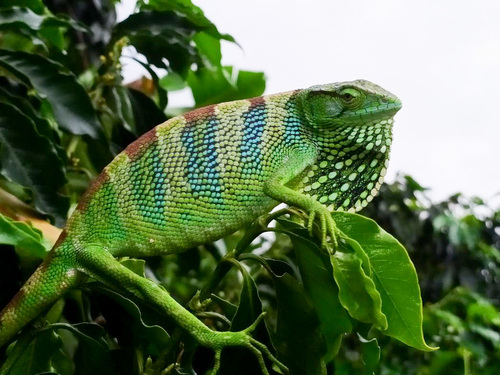
Polychrus acutirostris Spix, 1825 is an oviparous, arboreal, diurnal lizard species that occupies a large portion of South America, and can be found in savanna formations of the Andes from southern Pará to northern Argentina. It is commonly called the "sloth lizard" for its slow movement, which is especially slow compared to the agile locomotion of most other reptiles. It tends to stay motionless for most of the day to camouflage itself. Its slow mobility makes it easy prey. The species can change color: it uses color change for camouflage, and its color becomes brighter during the mating season. To attract mates, breeding males develop a reddish color on their heads. Along with its subtle color-changing ability, staying still to blend into the environment is its main defense. This camouflage ability also makes the species difficult to find, as it blends easily with its surroundings. It shares multiple traits with true chameleons, including independently moving eyes and the ability to change color, but it does not belong to the same family as chameleons. It does share a close enough relationship to be grouped with chameleons in the suborder Sauria. Its diet is primarily made up of insects, and its slow movement impacts how it feeds. It has a calm temperament and is not dangerous to humans. Males of the species are territorial. Reproduction occurs annually, and females typically lay between 7 and 31 eggs per clutch. The species is currently threatened by habitat loss, its slow movement and status as easy prey may also put it at risk of extinction.