About Polycera tricolor Robilliard, 1971
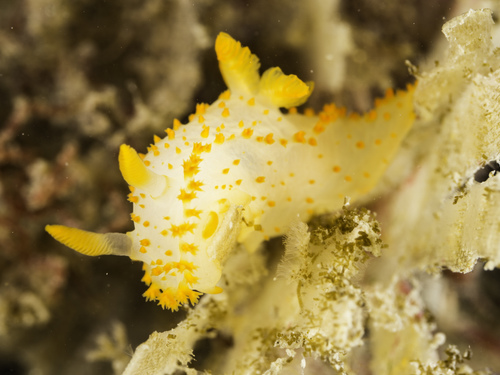
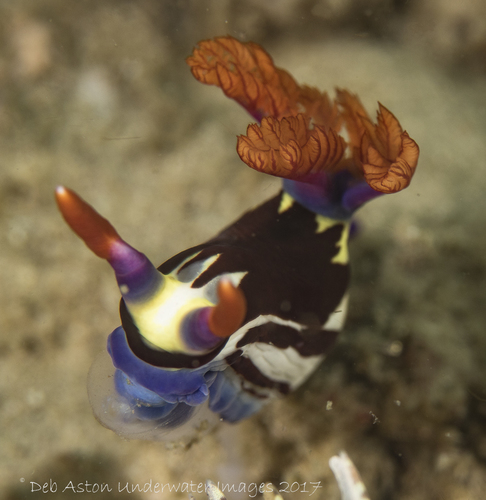
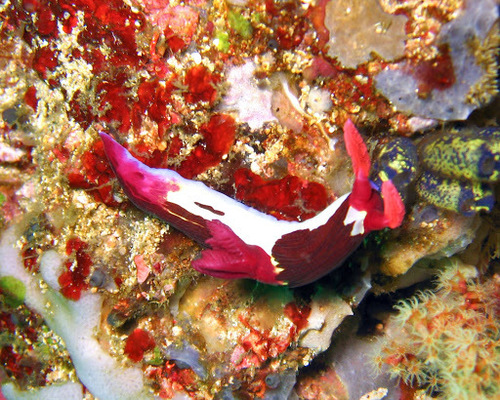
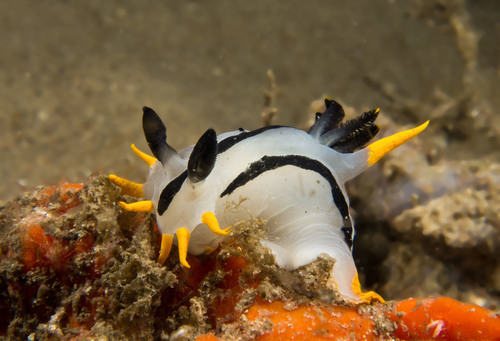
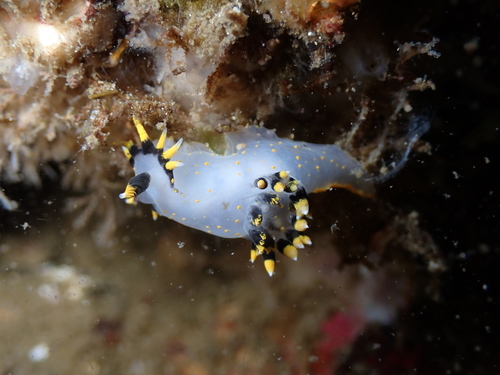
This nudibranch species grows to a length of approximately 2 cm (0.8 in). Its base color is pale, translucent bluish-white. The five to eleven frontal appendages, four to six extra-branchial appendages, rhinophores, and gills all have black bases, yellow transverse bands, and white tips. A yellow stripe runs along the midline of the back toward the tip of the tail, and an additional yellow line sometimes outlines the margin of the foot. Polycera tricolor is native to the northeastern Pacific Ocean. Its distribution ranges from Southern Alaska and British Columbia to Baja California in northern Mexico, and it occurs at depths down to approximately 60 m (200 ft). Nudibranchs in the family that this species belongs to feed almost exclusively on bryozoans. Since nudibranchs do not have a shell to protect themselves from predation, they secrete various defensive chemicals from glands on their surface. Many nudibranchs secrete sulfuric acid, which fish strongly dislike. Polycera tricolor contains a novel alkene-containing diacylguanidine. In this species, chemical defenses are secreted by glands that are mostly located in the dorsal papillae, the part of the animal that a predator is most likely to encounter first. If these papillae are eaten or damaged, the nudibranch can readily regenerate them.