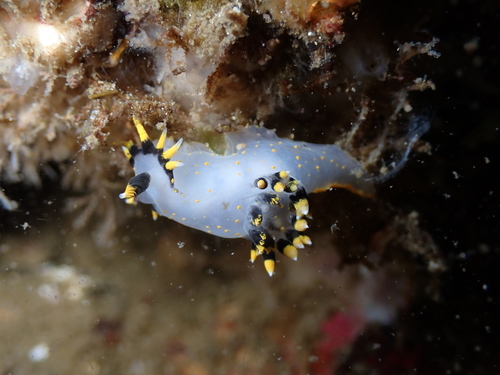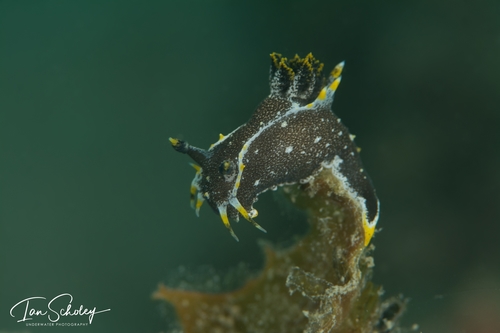
About Polycera hedgpethi Er.Marcus, 1964
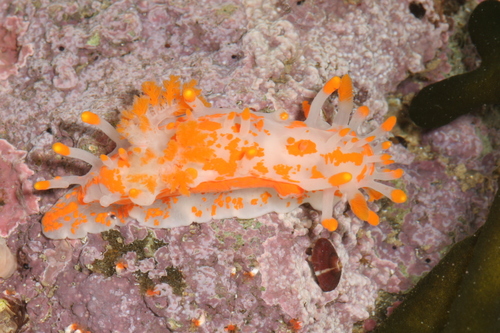
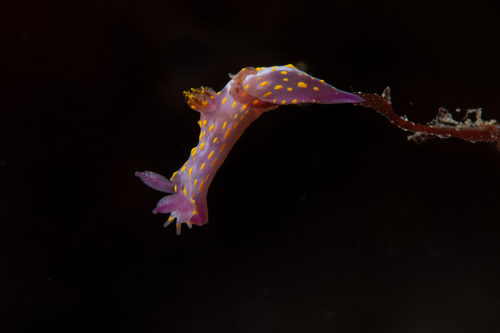
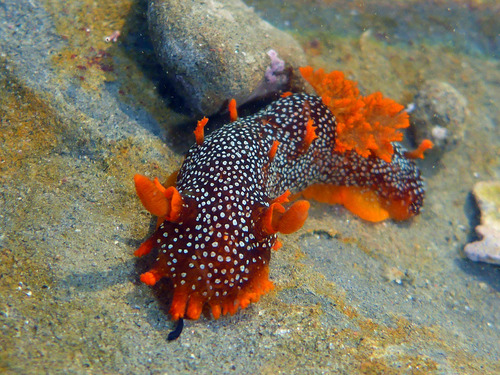
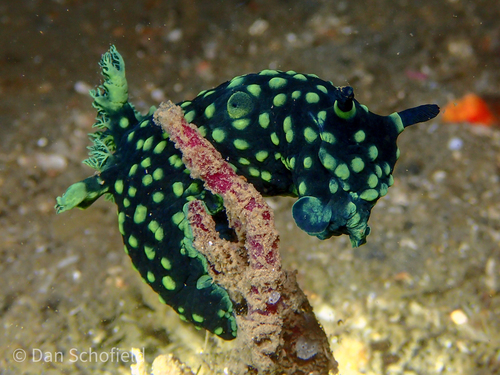
Polycera hedgpethi, commonly known as Hedgpeth's dorid, is a species of shell-less marine gastropod mollusc in the nudibranch group, belonging to the family Polyceridae. This is a widely distributed species of unknown native origin, and it is considered invasive in many parts of its current range. Polycera hedgpethi is widespread across temperate and subtropical waters around the world, and it is classified as a cryptogenic species because its native range is not confirmed. It was first described from specimens collected in California, USA, and is common in the northeast Pacific Ocean, where it occurs from the USA down through Mexico to Panama. It is also widely distributed in Australia, with a range that is still expanding along the country's east coast. Additional locations where Polycera hedgpethi occurs include Costa Rica, New Zealand, Morocco, Angola, South Africa, Japan, South Korea, northern Spain, and the Mediterranean Sea. It is recognized as invasive in Oceania, Africa, and the Mediterranean. In both the northern and southern hemispheres, Polycera hedgpethi occupies a latitudinal range of roughly 7 to 45 degrees, and its distribution is primarily limited by sea temperature. It is often found near ports and other human-made structures, and researchers believe it has been spread globally through biofouling on ships. The species' range continues to expand today; this dispersal is thought to be driven by human transport, and facilitated by climate change. Ecologically, Polycera hedgpethi feeds mainly on the bryozoan Bugula neritina, which is itself a widespread invasive species. Even though Polycera hedgpethi has an expanding range and holds invasive status, it is generally considered a benign invader, with no recorded negative ecological impacts on the ecosystems it colonizes.