About Pollia undosa (Linnaeus, 1758)
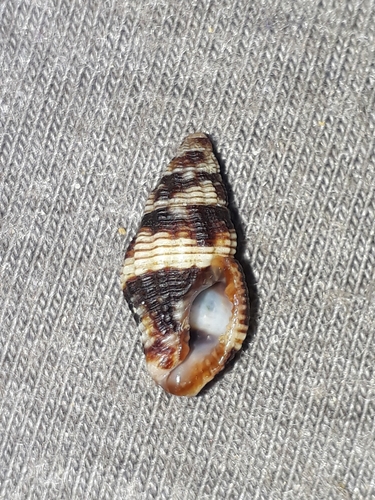
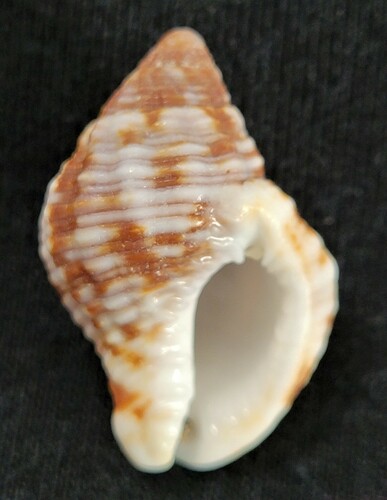
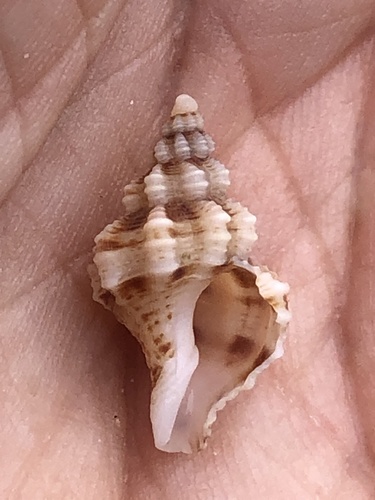
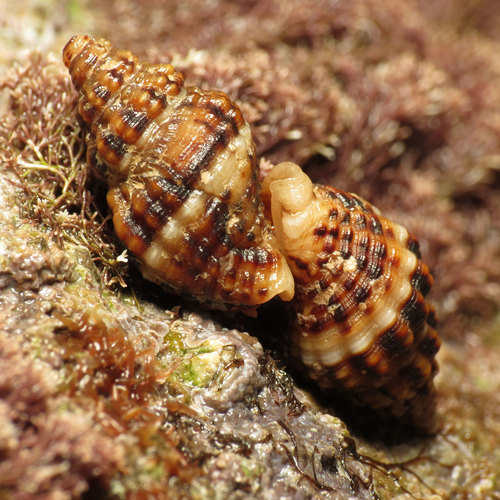
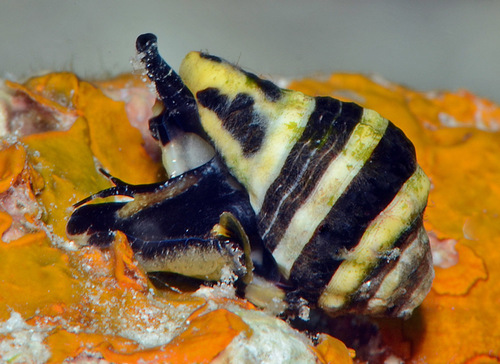
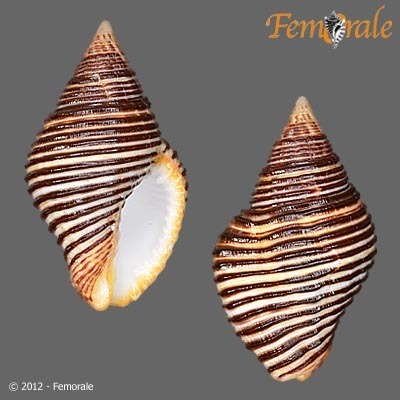
Pollia undosa (Linnaeus, 1758) is a species of marine mollusc. The size of its shell ranges between 20 mm and 45 mm, with an average shell size of 35 mm to 40 mm. The shell is typically ovate, bi-conic, thick and solid. Its base color is reddish white, and it is covered by a brown, velvety epidermis. Shells most often have a dark brown rib pattern over an orange background, though multiple different color variations exist. This species has six moderate, fairly distinct whorls, which bear decurrent, subnodulous striae that are brownish or blackish red in color. The intervals between these striae are white, and marked with very fine, barely visible striae. The body whorl is far larger than all the other whorls combined, and has five to six thick, obtuse longitudinal rib folds. These ribs rarely extend all the way to the shell base, and often only form tubercles, especially in older shells. The aperture is ovate and elongated, whitish in color, and edged with yellow. The siphonal canal is slightly elongated, and its emargination is shallow and oblique. The outer lip, which thickens with age, is denticulated along its entire length, and furrowed on the inside. The columella is wrinkled, and covered at its base by a thin, raised callosity. This species is an active hunter that preys on other molluscs, including snails, slugs, mussels and clams. This marine species is found in the Red Sea, the Indian Ocean off the coasts of Aldabra, Chagos and Tanzania, and the Western Pacific Ocean in French Polynesia. It primarily lives in reefs and lagoons, but can also be found across a wide variety of other habitats.