About Polites themistocles (Latreille, 1823)
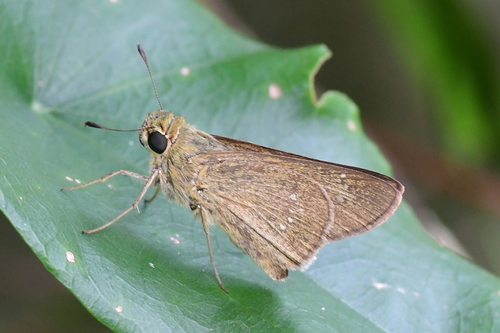
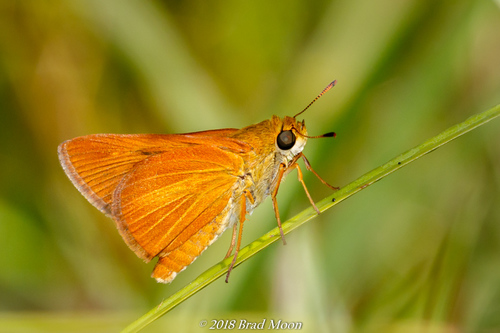
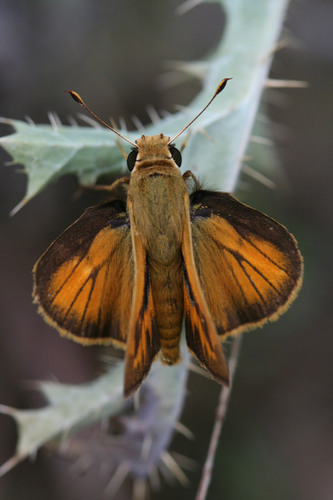
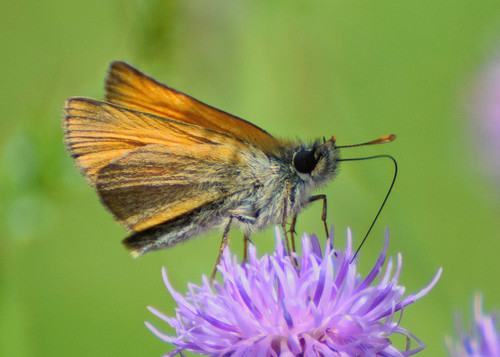
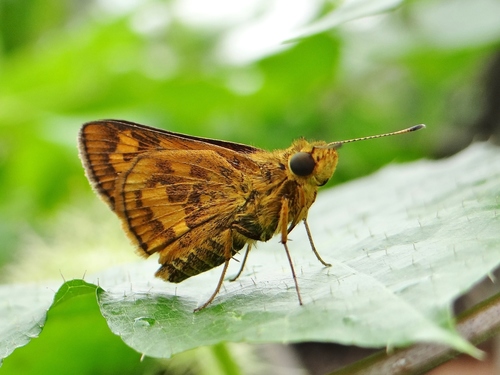
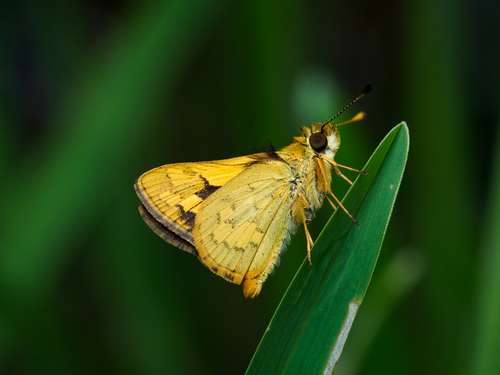
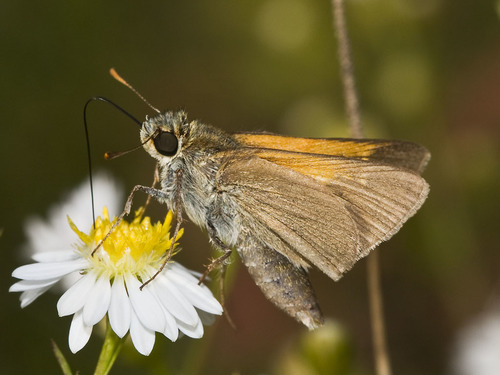
This species shows variation both across different geographic regions and within individual populations. On the upper side of the male’s wings, the base color is brown or olive brown. The forewing has bright orange coloring along the costa, which ends at the stigma. This stigma is thicker than the stigma of the closely related crossline skipper (Polites origenes), and it typically runs more parallel to the costa. On the upper side of the female’s wings, the base color is brown. The orange costa on the female’s forewing is less noticeable than the male’s. Near the end of the forewing cell, there are two rectangular pale spots, and three pale spots arranged in a row in the subapical area. The underside of the wings can range in color from light brown to brown to brownish-orange. Sometimes the hindwing has a crossband similar to the crossline skipper’s, but this crossband is usually much more faint. The tawny-edged forewing has a strong color contrast with the hindwing. The total wingspan of this species ranges from 3⁄4 to 1 inch (19–25 mm). This skipper occupies a broad variety of habitats, including alpine bogs, forest glades, grassy areas, moist meadows, savannas, and stream sides. For most of the day, males perch on grass blades or stems to wait for females. Females lay their greenish white eggs on or near the host plant. Larvae live in nests made by tying leaves together with silk. The variable brown larvae cannot be distinguished from the larvae of closely related species. This species overwinters in the pupal stage. Tawny-edged skippers produce one brood per year in the northeast and northwest, and two or three broods per year in the deep south.