About Polistes pacificus Fabricius, 1804
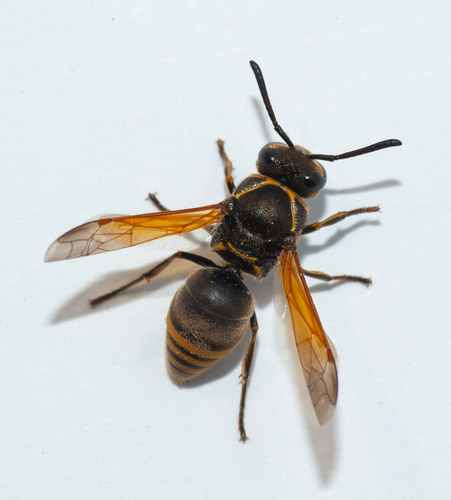
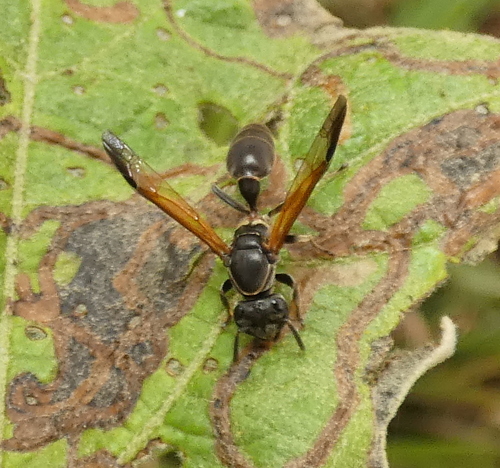
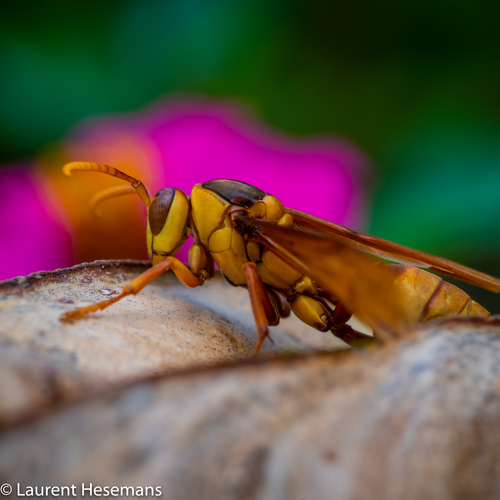
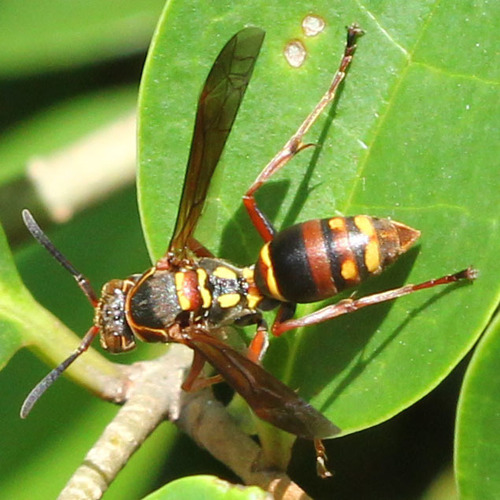
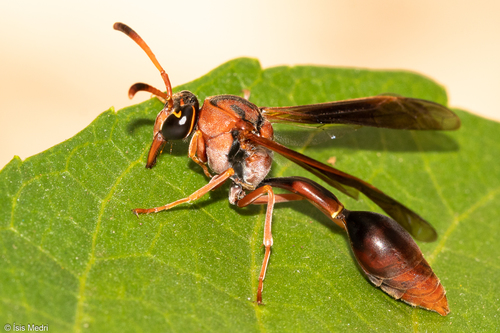
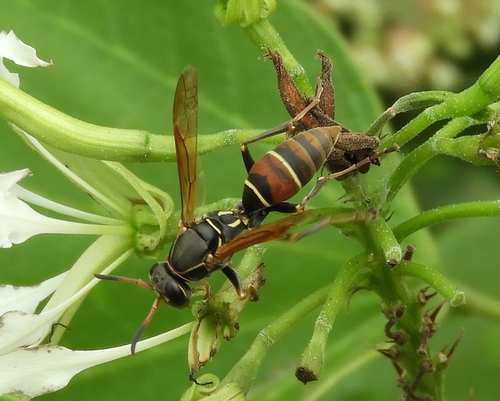
This section outlines the established morphological criteria used to identify Polistes pacificus. Males of this species have hooked antennae, their eyes touch the clypeus, and the clypeus itself has a pointed shape. There is extensive pigmentation on the head. The claws are symmetrical, and each mandible has two nearly equal-sized teeth. Setae on the underside of the thoracic segment are minute or short, while setae on the underside of the abdominal segment are long and hairy. For nest identification, P. pacificus builds relatively small paper nests. These nests are most often located in areas of low second-growth vegetation, and are frequently sheltered by large leaves. They hang from plants, supported by one or more pedicels, consist of a single comb of hexagonal cells, and do not have an envelope. Like other Polistes wasps, P. pacificus produces the water-resistant paper for its nest by collecting wood fiber and other plant material, then mixing it with saliva. The geographic distribution of P. pacificus ranges from the southern United States south to Uruguay and Argentina. Specific locations it can be found in include southern Texas, multiple areas of Mexico, Guatemala, Honduras, Nicaragua, Costa Rica, Panama, Colombia, Ecuador, Peru, Venezuela, Trinidad, Guyana, Suriname, French Guiana, parts of Brazil, Paraguay, Bolivia, and Uruguay. In terms of interactions with human food sources, P. pacificus pollinates avocados, contributing to the production of this calorie-dense plant-based food for humans. Additionally, the larvae of this wasp are commonly hunted and eaten by humans. While entomophagy is often described as an archaic practice, insect foods remain very important to the Yukpa-Yuko Indians of Venezuela and Colombia, as they add animal proteins and fats to supplement the Yukpa diet. The Yukpa name for P. pacificus is “nonawu,” and these Indians can identify the species’ nests, which are located low to the ground in second-growth vegetation. Though both men and women may help locate nests, only men collect the nests. When harvesting, men wait until sunset, then build a fire on the ground directly below the hanging nest. They use a hooked stick to detach the nest from the plant, and immediately place the detached nest into the fire. Once in the fire, adult wasps leave the nest quickly, while the larvae die as they are toasted. The combs holding the toasted larvae are then removed from the fire and brought back home. The toasted larvae are considered celebratory food; when a new boy is born, the boy’s father is responsible for collecting a nest alone.