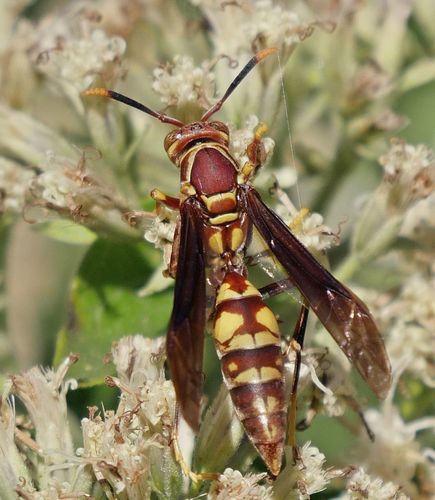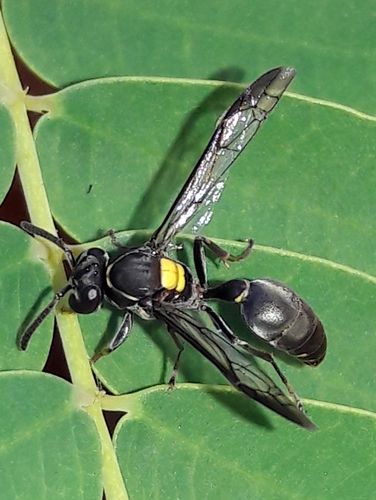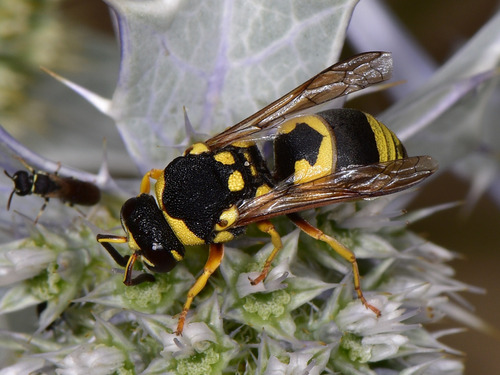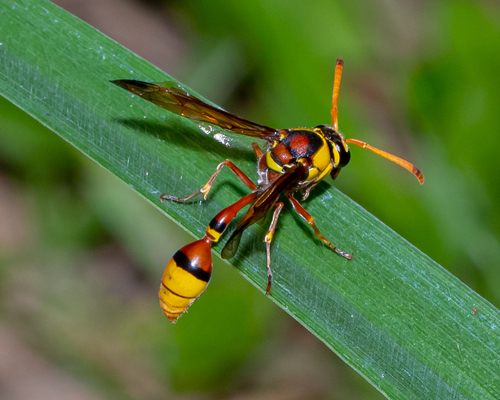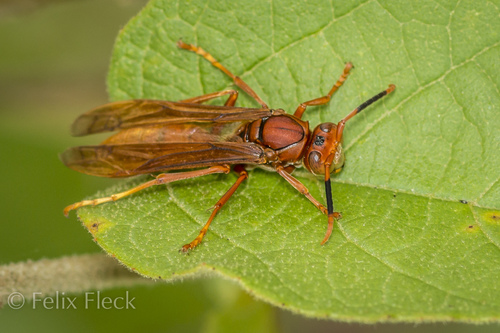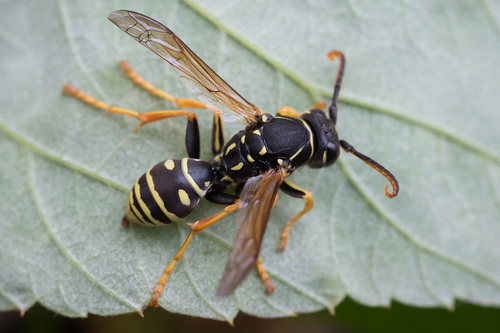
About Polistes nimpha (Christ, 1791)
Polistes nimpha (Christ, 1791) is generally more heavily marked with black than Polistes dominula, but it is very difficult to tell female P. nimpha and P. dominula apart based on morphology alone. For female P. nimpha, the malar area (the region between the mandible and compound eye) is yellow, and the 6th gastral sternum is black. For male P. nimpha, the clypeus (the broad plate on the front of the head) has lateral ridges, and the tips of the antennal segments are dark. The venom gland of P. nimpha has an oval-shaped muscular poison sac. The tip of the stinger curls inward at its peak toward the middle, the palps are shorter than the stinger, and the terminal palps are covered in dense, feathery structures. In terms of distribution and habitat, P. nimpha prefers low-elevation, relatively warm, uncultivated land. These wasps typically build their nests on plants, under the eaves of roofs and buildings, and in enclosed areas. Colonies founded by a single female build their nests on vegetation, while colonies with two or more founding females usually nest in covered, sheltered locations. P. nimpha colonies can be either haplometrotic (founded by a single female) or pleiometrotic (founded by two or more females). Fertile founding females overwinter, then start building a nest in early May. They rear the first generation of worker wasps, which emerge in the first half of June. Over the course of the summer, the colony grows and shifts from rearing workers to producing sexual individuals: these are males and future founding females. Males emerge in large numbers in August, and future founding females emerge only after this event. The colony begins to break apart in late summer and declines through autumn. After the reproductive individuals mate, the males and existing workers die. By the end of autumn, only the future founding females remain; these survive the winter to start the next colony cycle the following May. Colonies of this species found in Turkey are confirmed to be univoltine, meaning they produce only one brood of offspring per year. P. nimpha colonies are small, with an average of fewer than 100 workers per colony.