About Polistes humilis (Fabricius, 1781)
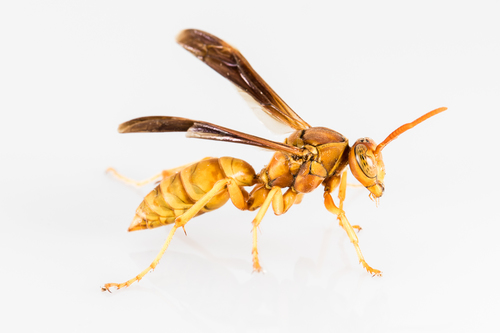
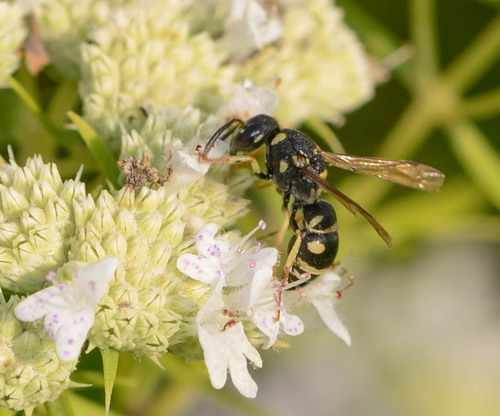
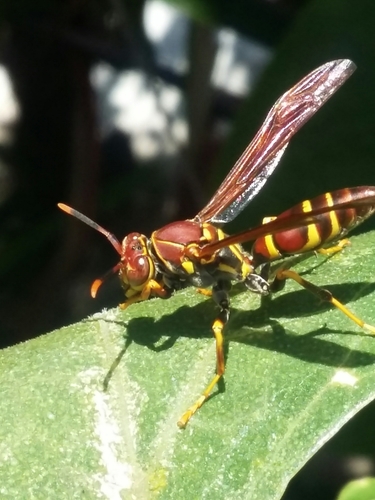
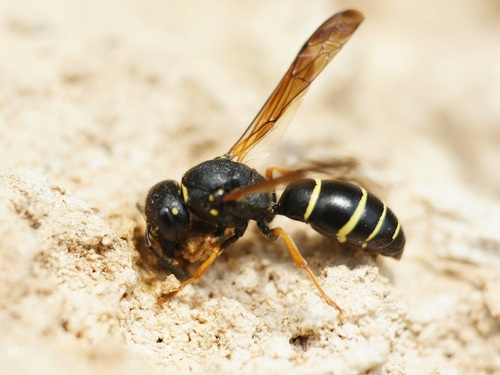
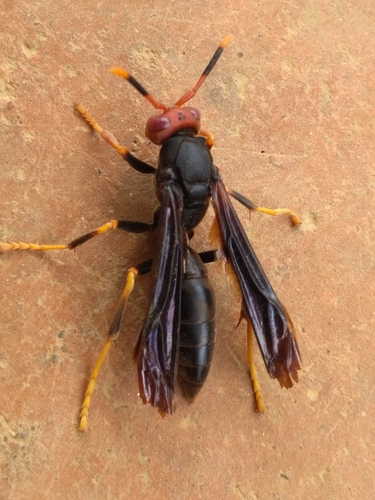
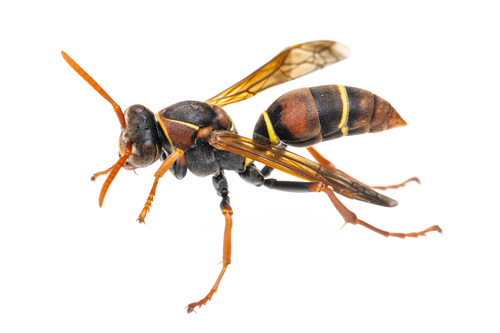
Polistes humilis, the wasp species described here, can be identified by its slender body and banded coloring. Adult individuals have yellow faces, a tannish-red overall coloration, and reach 10 to 15 millimeters in length. Males can be told apart from females by a yellow marking on the abdomen. This species is generally larger than most other paper wasps. Nests built by Polistes humilis are identifiable by their cone shape and contain multiple hexagonal cells. The nests are constructed from grey wood fiber, a material made from a mixture of the wasp’s own saliva and wood. Unlike most other wasp species, Polistes humilis colonies regularly reuse old nests year after year. Some colonies overwinter and shelter above the nest comb during colder months. Polistes humilis is mostly found in Australia, where it occurs particularly in southern Queensland, New South Wales, Victoria, and South Australia. Although this species is native to Australia, it was accidentally introduced to New Zealand in the 1880s and has established a stable wild population there. In New Zealand, its range is largely limited to the North Island, north of Tauranga and west of Te Kuiti. The highest numbers of P. humilis are found in shrublands, but the species can also occur in flax swamps and forest sites.