About Polistes fuscatus (Fabricius, 1793)
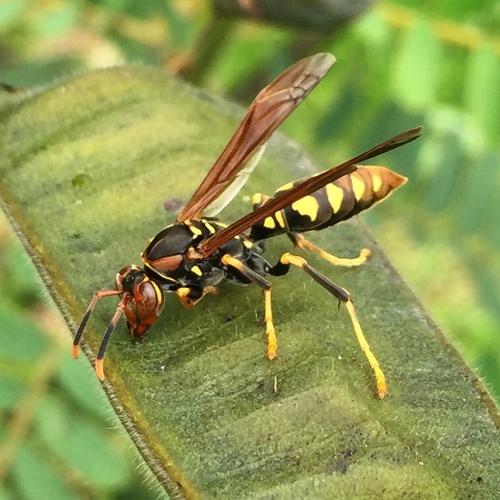
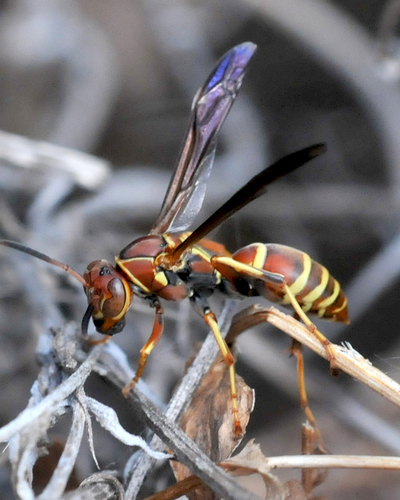
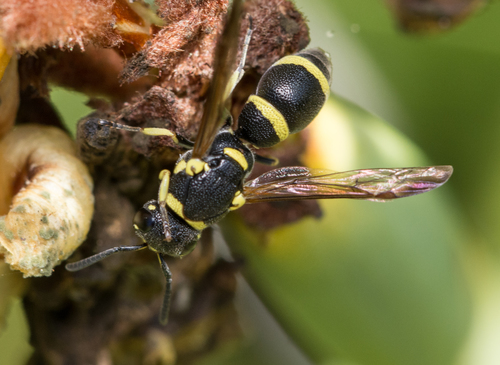
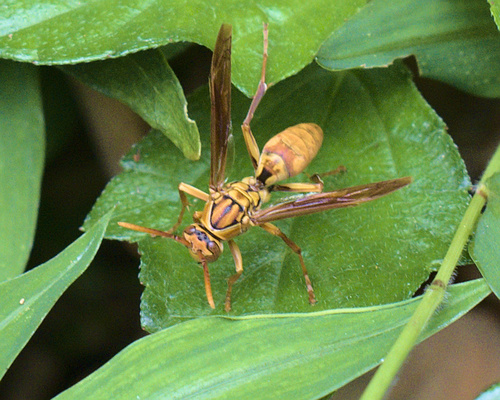
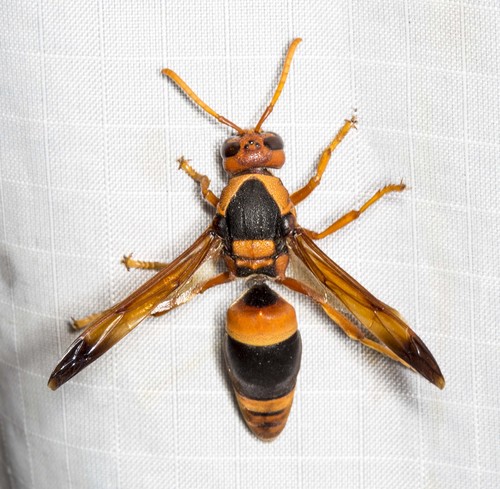
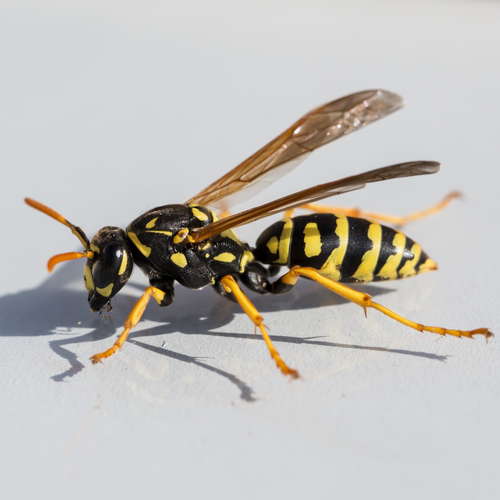
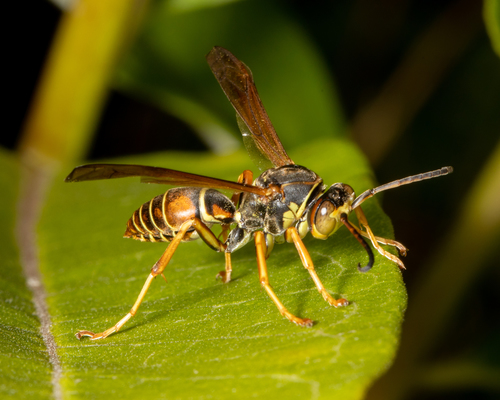
Polistes fuscatus, commonly known as the northern paper wasp, typically has a total body length ranging from 15 to 21 mm (0.59 to 0.83 inches). Forewing length falls between 11.5 and 17.0 mm (0.45 to 0.67 inches): male forewings are generally longer than 13.0 mm (0.51 inches), while female forewings are longer than 11.0 mm (0.43 inches). Both sexes have slender bodies with a narrow waist connecting the thorax and abdomen. Females possess a venomous sting, and the pain from a sting is commonly compared to being pricked by a large tattoo needle. Body length can vary based on the season an individual emerges from development, and overall physical traits are strongly shaped by the geographic location of the wasp’s habitat. Across the United States, three distinct color pattern trends correspond to different geographic regions. Males can be identified by darkened apical flagellomeres, including a darkened dorsal surface on this segment, a trait shared with many other wasp species. Northern female P. fuscatus are mostly entirely black, and may or may not have additional colored markings. Most southern individuals have extra markings, and can resemble individuals of other wasp species. Facial and abdominal markings on P. fuscatus are highly variable, including patterns such as small dots, long stripes, clypeus blotches, yellow abdominal dots, upper clypeus stripes, and combined coloration on the clypeus edge and tip. Some individuals have brown and black, rather than yellow, markings for these patterns. As with overall coloration, marking colors are typically shaped by the wasp’s geographic location. P. fuscatus is distributed across the eastern half of North America, ranging from southern Canada down through the United States. Its northernmost recorded range reaches Chilcotin, British Columbia, and it extends as far south as Texas and Florida. The species prefers wooded areas, which provide readily available resources for nest building, but it is also commonly found in areas inhabited by humans. Nests are constructed from local wood, which the wasps chew and mix with mouth fluids to create a pulp-like nest material. A recently mutated form of P. fuscatus has developed an attraction to cooler lamps such as fluorescent lamps, and often uses areas around these lamps as oviposition habitat. Another eusocial wasp, Polistes dominula, is recognized as a threat to P. fuscatus. P. dominula has displaced P. fuscatus from many areas that were once dominated by P. fuscatus. This displacement likely occurs through indirect exploitative competition, consistent with findings that P. dominula is significantly more reproductively productive than P. fuscatus. The mating season for P. fuscatus occurs in spring and summer, after the original nest has been abandoned. Female venom contains a sex pheromone that triggers copulatory behavior in males. Continuous release of this venom causes males to attempt copulation with unreceptive females on the nest, interrupting normal colony activity. After mating, the founding female (foundress) lays an initial generation of infertile female workers. Later in the nest cycle, the foundress produces male and fertile female offspring. Eggs that will develop into new foundresses are laid during the summer. Summer laying ensures larvae have access to abundant food under favorable environmental conditions. These eggs hatch before fall, and the resulting new offspring hibernate through fall and winter. New foundresses (or co-foundresses) emerge in spring to start new nests and lay their own eggs. After laying eggs that will develop into the next generation of foundresses, the original foundress dies, along with all existing workers and males. Unlike many other eusocial insects including other vespid wasps, P. fuscatus has not been found to preferentially mate with siblings, nor does it have sibling recognition mechanisms to support kin selection during reproduction. This is an unexpected observation, given the many advantages of inbreeding for haplodiploid organisms.